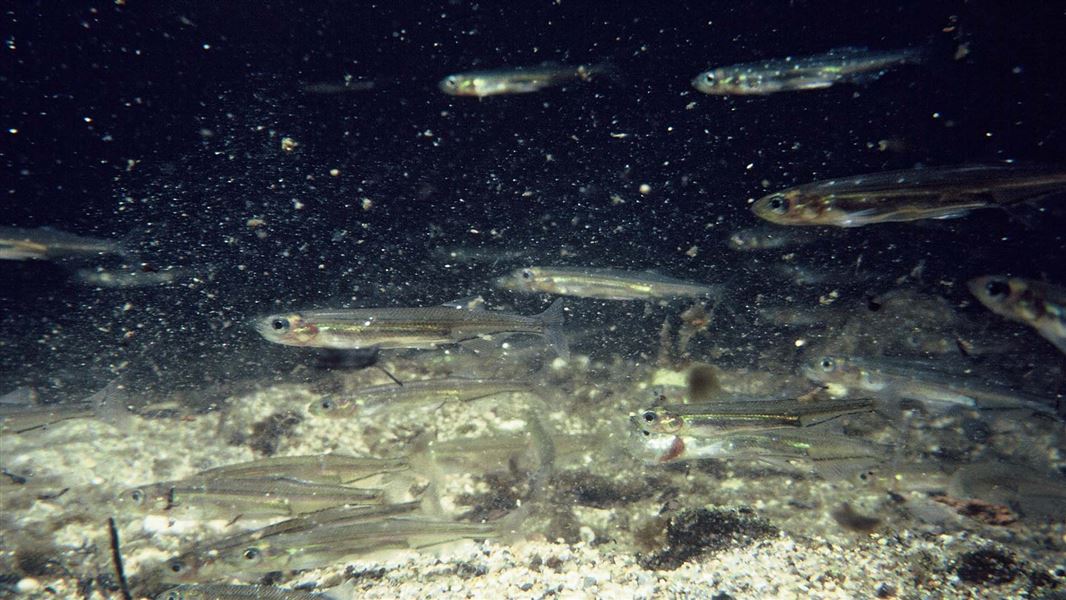
Whitebait are migratory galaxiids
Each year, during the whitebaiting season, fishers catch the juvenile fish as they migrate upstream.
The fish caught as whitebait are:
Īnanga make up about 85% of the whitebait catch. Kōaro and banded kōkopu each contribute 5–10%, with the remaining species making up less than 1%. This mix of species can vary around the country and at different times during the whitebait fishing season. Sometimes other species like eels are caught along with the common whitebait species.
The name galaxiid comes from the patterns on the skin of adult fish that look like a galaxy of stars. Although galaxiids are found in many places in the Southern Hemisphere, banded, giant and shortjaw kōkopu only exist in New Zealand.
Our galaxiids are generally nocturnal and very good at hiding. They find shelter and food in lowland streams, rivers and lakes.
Migratory galaxiids all have a similar lifecycle, and spend time in freshwater as well as the ocean. Their lifecycle follows these stages:
- adults release eggs and milt (sperm)
- eggs are laid and fertilised in vegetation beside streams and rivers
- eggs hatch and larvae are washed downstream into the ocean
- larvae grow into juvenile fish and migrate from the sea upstream in the spring
- juvenile fish grow into adults.
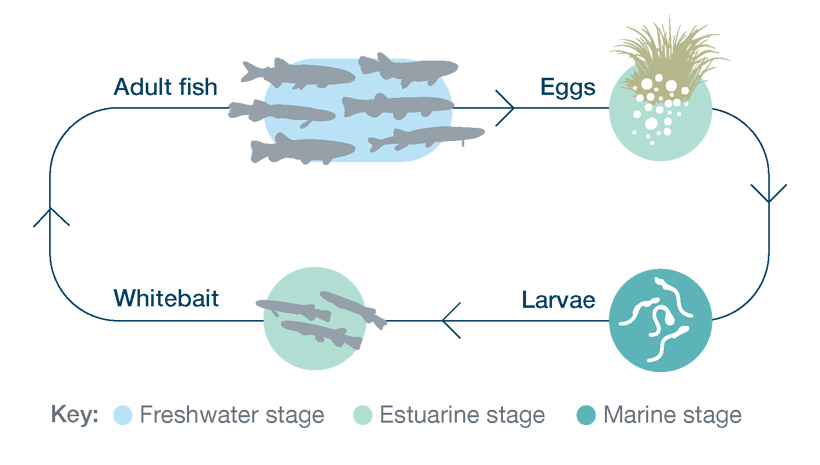
Whitebait species lifecycle
Image: DOC