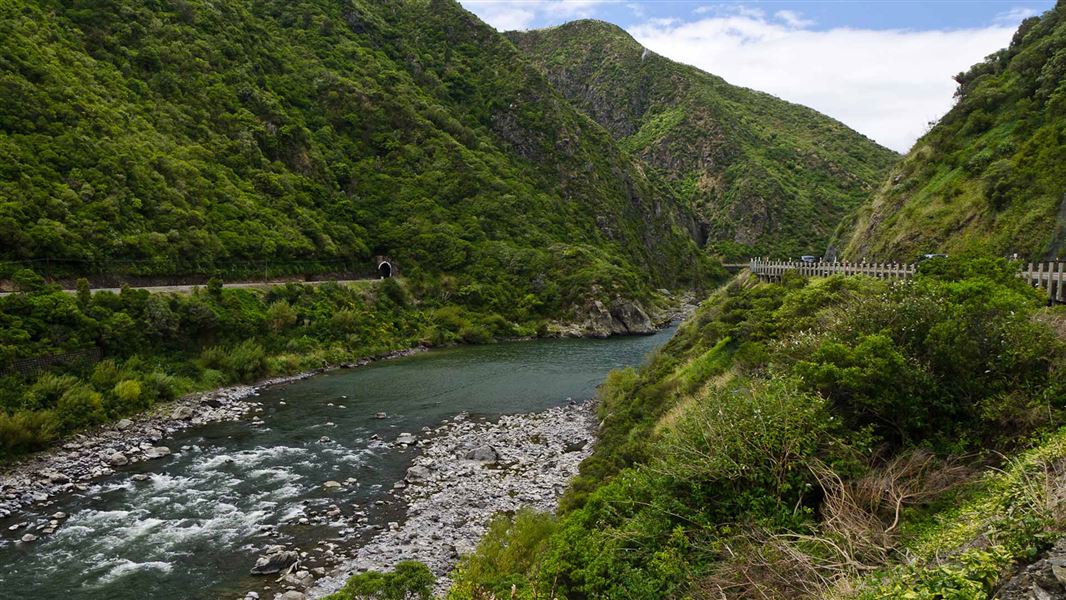
The Manawatu Gorge and Scenic Reserve form a link between the Manawatu province on the western side of the lower North Island and the northern Wairarapa province on the eastern side.
It is approximately 12 km from Palmerston North. Drive north-east on State Highway 3 to the carpark at the beginning of the Manawatu Gorge.
Be aware of steep drops
Landslide hazards exist on the tracks and there are sections with steep drop offs and bluffs. Supervise children closely. Always stay on the tracks in this area.
Other hazards in this area
There are wasp nests and ongaonga (stinging nettle) in this area. Both can cause strong skin irritation and allergic reactions. Do not touch ongaonga and stay away from areas of wasp activity. If you are concerned about allergies, consider taking antihistamines or other treatment with you.
Be prepared and know your limits
The weather can change quickly. Carry sufficient supplies, such as warm and waterproof clothing, sturdy footwear and plenty of food and water. Know your limits. Give yourself plenty of time and be prepared to turn around or stop for safety.
Pest control and toxin use in the area
Te Āpiti Manawatu Gorge is part of an ongoing pest control programme which includes the use of toxins. For up to date information on the current toxin use see the signage at track entrances or check the Pesticide summaries.
Dogs
No dogs allowed.
Today the Manawatu Gorge Scenic Reserve and surrounds is part of an inter-agency biodiversity project that will see DOC, Horizons Regional Council, Palmerston North City Council, Rangitaane, Tararua District Council, On Track, Transit and Ashhurst Action Group work together to protect the native flora and fauna of this special area.
The formation of the Tararua and Ruahine ranges began about 1.5 million years ago. The rising of the greywacke ranges combined with erosion by the river has formed the steep gorges which exist today.
In the past the gorge was a formidable barrier to west-east travel. Known as Te-Apiti, the gorge was travelled by Maori who would haul their canoes upstream through the rapids.
Beginning as a surveyor’s line, by 1872 a “road” existed but was a perilous trip for coaches. Travellers had to cross the river by punt or take an aerial trip using a cageway, pulley and wire system suspended high above the river.
The railway through the gorge was contracted for in 1886. Men worked in large gangs shovelling metal winched up from the river. The line was completed in 1891 and the first train over it carried 1500 passengers in eighteen double carriages.
DOC Customer Service Centre
| Phone: | 0800 275 362 |
| Email: | manawatu@doc.govt.nz |
| Address: | Te Papaioea / Palmerston North Office |