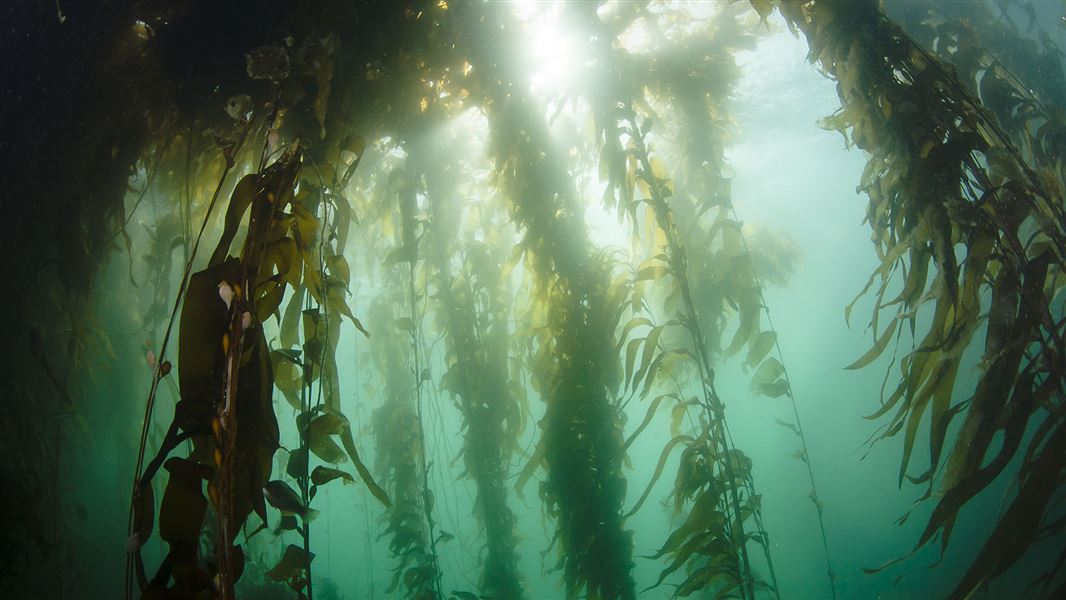
By grouping areas with similar marine life and habitats within a seafloor community classification, we can spot patterns and figure out which places are especially unique or ecologically important. To facilitate this, a standardised system for describing marine and coastal ecosystems is under development, enabling scientists and planners to consistently map and discuss habitats. These tools provide a clearer picture of the underwater environment and support effective marine protection strategies.
Seafloor community classification – a numerical approach to mapping biodiversity
The New Zealand seafloor classification work programme is a project that creates detailed maps showing where different types of marine life and habitats are found on the ocean floor around the country. This knowledge helps guide decisions about protecting and managing New Zealand’s unique underwater environments for the future.
Development of a New Zealand Seafloor Community Classification
Published 2021
This project introduces a 75-group spatial classification of Aotearoa New Zealand’s seafloor communities, known as the New Zealand ‘Seafloor Community Classification’ (SCC). These publications detail all the biological and environment datasets, the methodology used, and an overview of the SCC.
Development of a New Zealand Seafloor Community Classification (PDF, 2,955K)
Supplementary information on individual Seafloor Community Classification group descriptions
Published 2021
This document summarizes information on each of the 75 SCC groups, including their locations in New Zealand's marine environment, environmental characteristics, species assemblages, and model uncertainty.
Developing a maintenance framework for the NZSCC
Published 2023
This report outlines the creation of a maintenance framework designed to facilitate the use of the New Zealand Seafloor Community Classification (NZSCC) in marine spatial planning and marine protection processes. The framework specifies approaches for statistically evaluating the NZSCC using independent data, with attention to environmental variability and statistical uncertainty within the NZSCC.
Developing a maintenance framework for the NZSCC (PDF, 1,355K)
Independent statistical validation of the New Zealand Seafloor Community Classification
Published 2024
This paper presents an independent statistical validation of the New Zealand Seafloor Community Classification (NZSCC), assessing its ability to accurately represent and discriminate between seafloor communities using external datasets for demersal fish and benthic invertebrates, and confirming its suitability for marine spatial planning and conservation management.
An atlas of seabed biodiversity for Aotearoa New Zealand
Published 2023
This report outlines the development of an online atlas for seabed biodiversity, with species distribution models for 579 taxa in demersal fish, reef fish, subtidal invertebrates, and macroalgae. The database is the most extensive source on Aotearoa New Zealand's seafloor taxa, providing a valuable tool for research, management, and conservation.
An atlas of seabed biodiversity for Aotearoa New Zealand (PDF, 4,784K)
A seafloor bioregionalisation for New Zealand
Published 2023
Based on the New Zealand Seafloor Community Classification, several broader classification approaches were evaluated for their ability to represent seafloor bioregions. After assessing classification strength using analysis of similarities (ANOSIM) and reviewing geographic patterns at various classification levels, the 9-group classification was designated as the New Zealand Seafloor Bioregionalisation.
A seafloor bioregionalisation for New Zealand – ScienceDirect
Thematic habitat classifications
New Zealand currently lacks a comprehensive national marine habitat classification system, which poses challenges for comparing and managing marine reserves effectively. The only existing national framework – the Marine Protected Areas (MPA) classification – has significant limitations, particularly in its ability to represent biodiversity. This body of work aims to support the establishment of a habitat mapping standard that will improve consistency across regions and disciplines, enable data sharing and integration, inform policy, and facilitate scientific research and monitoring.
Review of New Zealand's coastal and marine habitat and ecosystem classification
Published 2018
This report reviews common habitat and ecosystem classifications applied in New Zealand and overseas. It also explores how we can classify New Zealand's coastal and marine communities and habitats in a way that can be used effectively for management and protection.
Review of New Zealand's coastal and marine habitat and ecosystem classification (PDF, 3,820K)
Developing a national habitat classification standard for Aotearoa New Zealand
Current project
This project aims to develop a systematic method for classifying marine habitats nationally. The utility of the Coastal and Marine Environment Classification Standard (CMECS) lends itself to adoption in NZ and is supported by regional councils, FNZ and MfE. The first year of this project will use the mesophotic reef habitat as an example of developing the standard for Aotearoa New Zealand, providing biotope descriptors and forming a catalogue of mesophotic habitat types. The project links strongly to the National Ecosystem Typology project run by MfE.