Date: 24 April 2026
For safety reasons the public is not allowed to hunt on DOC-managed land on Te Pātaka, but DOC is working with the hunters from the charity because of their expertise and their manaakitanga says DOC Mahaanui Operations Manager Andy Thompson.
"These guys are so useful for us in terms of deer management, but we also love how they are set up to give the venison to the community and to rūnunga to distribute.
"It's especially significant in Conservation Week, with many people around Aotearoa doing amazing mahi to help nature in their communities," Andy says.
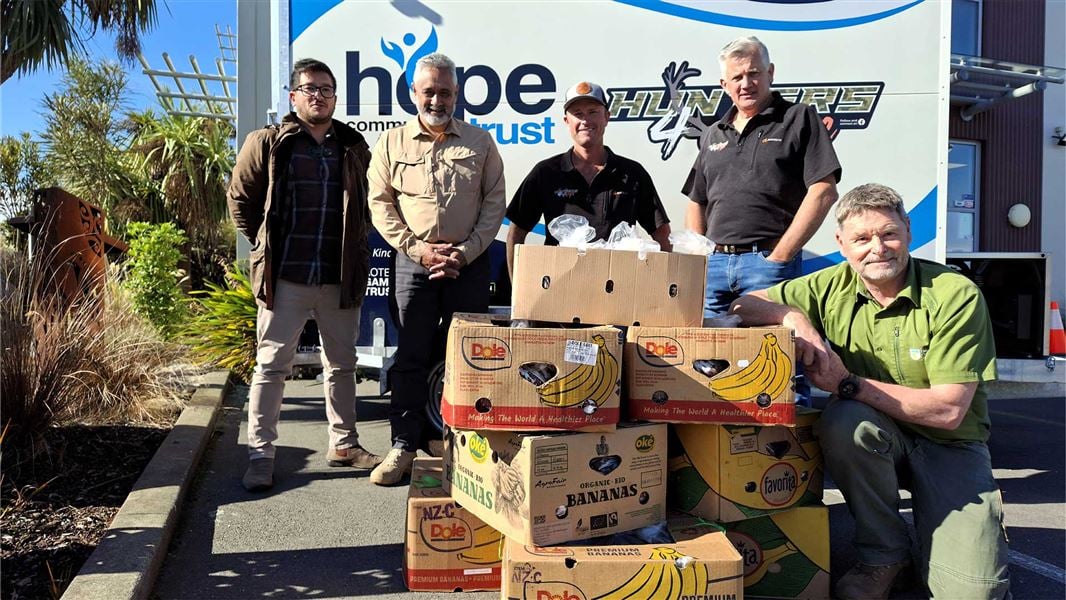
Today Te Rūnunga o Koukourarata were given 200 kilograms of venison from the Hunters4Hope. Chairman Arpo Deer says they feel very privileged and proud to receive the koha.
"Not only is it a sustainable food source, but we are also protecting the whenua, and that provides hope that the native species will return including the birds and lizards and the forests," he says
Andy Thompson says it's heartbreaking to see in the impact of wild deer in the DOC reserves.
"In just the last few years, I've watched native species that deer like to eat disappear completely from areas that are meant to be protected. These plants aren't just part of the scenery, they provide food and shelter for native wildlife, help forests recover after floods or storms, and play a critical role in stabilising slopes and preventing erosion. When they're lost, the whole ecosystem becomes more vulnerable," he says.
Andy Thompson says the Hunters4Hope recently took 12 deer from one DOC reserve and will be back to do more work in other reserves.
Deer management on the peninsula complements other ongoing work in the area, including keeping the peninsula free of wild goats and reducing browsing pressure on native vegetation.
"There are benefits beyond conservation land as well. Farmers whose lands are adjacent to our DOC reserves want to see fewer deer moving onto farmland and damaging pasture. Wild deer don’t respect property boundaries, so this is a win for nature and for neighbouring farms," Andy says.
Hunters4Hope co-founder Adam Kreisel says one of the reasons the charity was started was to turn surplus into sustenance and address food insecurity.
"What's been exciting is we are getting more hunters wanting to join the movement and donate their surplus venison to make a real difference to those in need. Our biggest problem now is securing long-term backing, to ensure we can keep growing and providing venison. With inquiries coming in from all around the South Island, it's clear there's a real need to reduce deer numbers and a real desire to help communities in the regions," he says.
Department of Conservation National Wild Animals Manager Mike Perry says the project reflects the value of well-designed partnerships.
"New Zealand needs a range of approaches to manage wild deer numbers, selected to suit the location, terrain, and ecological outcomes we're trying to achieve," he says.
"Where public hunting isn’t permitted, working with trusted, community led groups allows DOC to protect biodiversity while also supporting social outcomes. In places like these reserves, conditions can also allow animals to be recovered for food, which adds further value for communities."
DOC focuses intensive wild animal management on around 1.4 million hectares of high priority conservation land, often working alongside iwi, hunters and local communities.
Hunters who want to contribute to conservation outcomes can also get involved in initiatives such as the annual National Wild Goat Hunting Competition, which starts in August. While public hunting is not permitted on Te Pātaka-o-Rākaihautū/Banks Peninsula there are many areas with significant deer populations – nearby are the two recreational hunting areas at Mt Thomas and Lake Sumner.
Andy Thompson says the goal is to remove all deer from Te Pātaka and ultimately all browsing mammals and predators.
"We can't do this work alone and that's where our partners in the community are so incredibly valuable. Nature needs a team effort."
Download your free Conservation Week kete.
Explore ideas at www.doc.govt.nz/conservationweek
NATURE LOOKS DIFFERENT FROM HERE
Nature isn’t scenery. Nature is a society that we rely on for everything, every day. It’s behind our identity and our way of life.
Contact
For media enquiries contact:
Email: media@doc.govt.nz