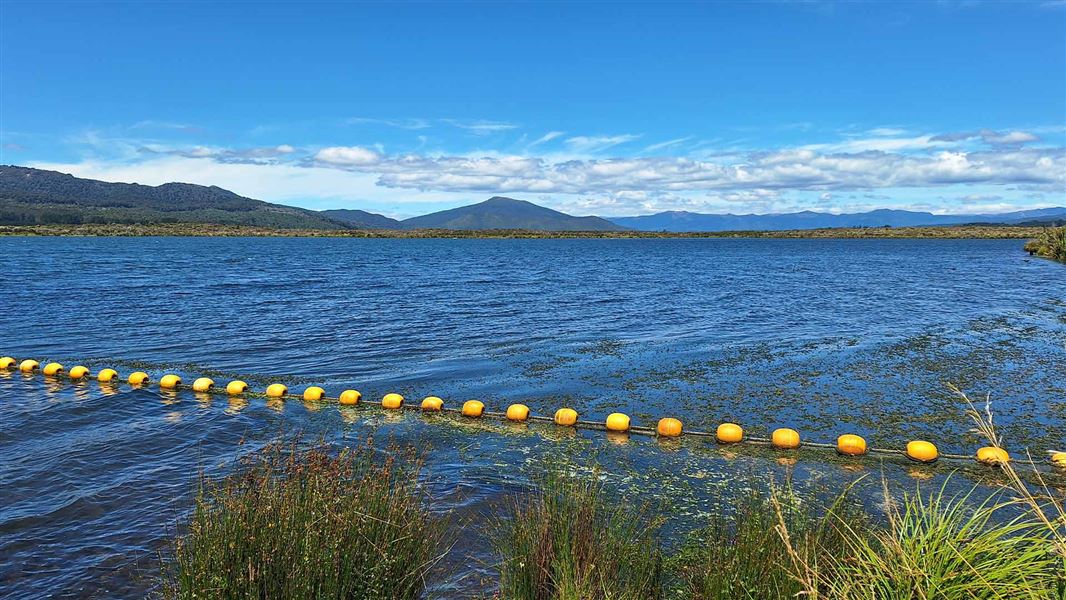
Angler surveys were conducted at Lake Otamangakau during spring and summer with the lake closing to fishing during February. Surveys resumed again in March and continued through until mid-April. A total of 99 interviews were completed with only 3 trout measured and weighed.
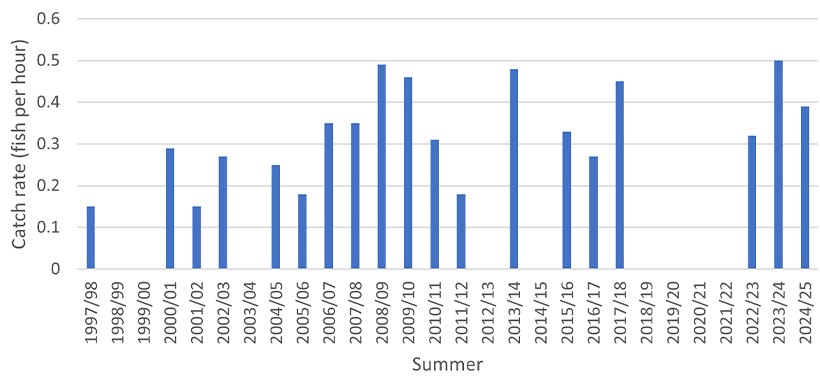
Figure 1. Estimated catch rates for Lake Otamangakau anglers since summer 1997/98 where sufficient data exists to calculate.
The overall catch rate for Lake Otamangakau anglers this summer was 0.39 fish per hour (1 fish >350 mm every 2 hours and 34 minutes) and is the sixth highest on record (Fig.1). Sufficient data was not obtained during recent years due to covid and lockdown restrictions. The high catch rates observed during the late 2000’s were largely a result of a bigger population of smaller fish, however, recent fish trap data has suggested a smaller population consisting of larger fish. Nevertheless, anglers did reasonably well this summer catching those fish that were present within the lake.
The overall percentages of fish kept, oversized returns and undersized returns this summer were very similar to those from last summer (Fig.2).
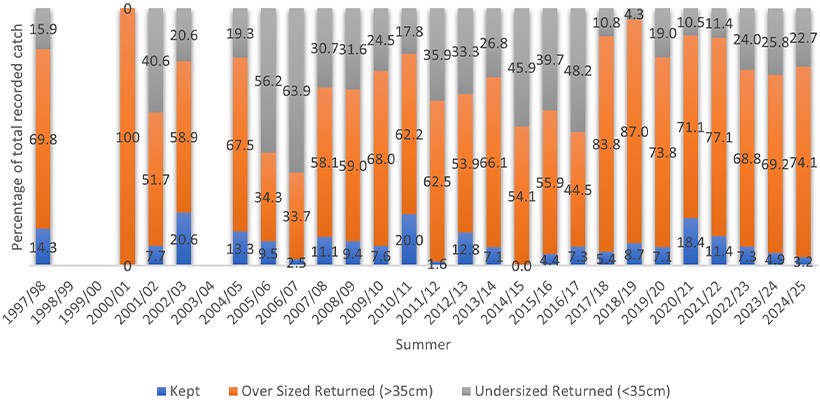
Figure 2. Percentages of trout kept, oversized returned and undersized returned since summer 1997/98, where data exists.
The overall percentage of catch and release this summer increased to 94.6% which is the highest it has been out of the last 10 summers. Catch and release as a percentage has ranged from 80% to 93% during the last decade and has remained close to 90% during recent summers (Fig.3).
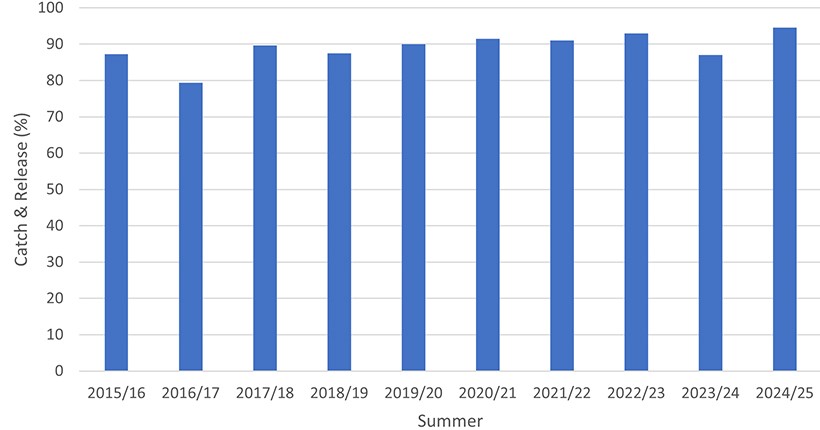
Figure 3. Percentage of catch and release by summer anglers at Lake Otamangakau since summer 2015/16.
This summer, local anglers from Turangi and Taupo and those from Auckland made up the largest percentage of NZ based anglers accounting for 23.6 and 23.6%, respectively. This was followed by Wellington (13.5%), Waikato (12.4%), Whanganui (12.4%) and Bay of Plenty (2.1%) (Fig.4).
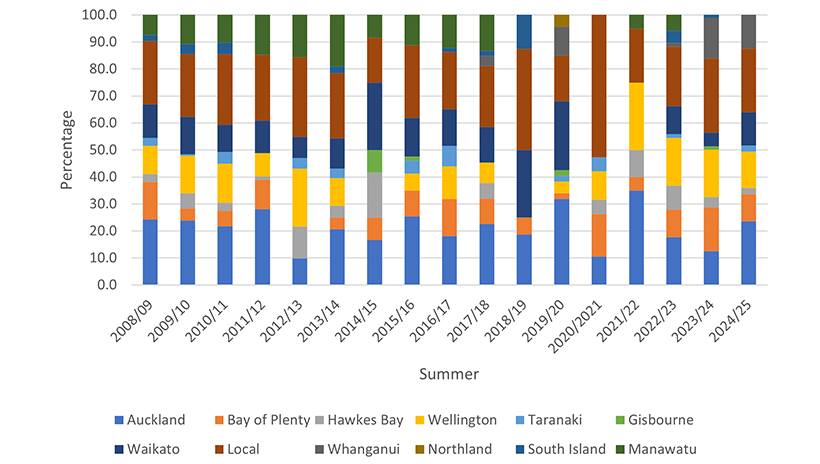
Figure 4. Home locations of NZ based anglers fishing Lake Otamangakau since summer 2008/09.
Australian anglers (50%) made up the highest percentage of overseas anglers interviewed this summer followed by UK (25%) and USA (25%) which is similar to the previous summer. Overseas anglers accounted for 8.3% of the anglers interviewed this summer (Fig.5).
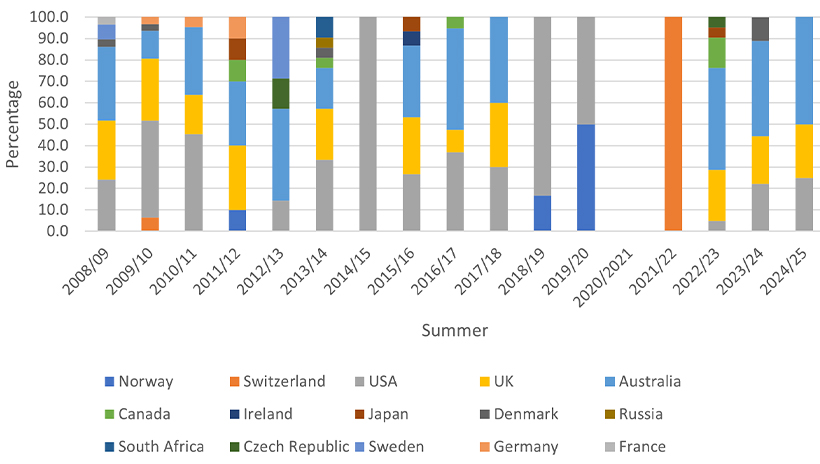
Figure 5. Home locations of overseas based anglers fishing Lake Otamangakau since summer 2008.
The 3 rainbows measured by staff averaged 473 mm and ranged from 430mm to 520 mm. These fish averaged 1.47 kg (3.2 lbs) ranging from 1.2 to 2 kg. Two out of the three rainbows had condition factors between 50 and 55.
Breakdown of recorded catch during the last three summers at Lake Otamangakau since the upper size limit of 550 mm was introduced.
*135 interviews completed but only 108 were split to specifically record a catch breakdown.
| Summer | Interviews | Total kept | Total returned (<350 mm) | Total returned (350-550 mm) | Total returned (>550) | Total returned (>350 mm) | Total fish caugh |
|---|---|---|---|---|---|---|---|
| 2022/23 | 108* | 8 (2.8%) | 76 (26.6%) | 109 (38.1%) | 93 (32.5%) | 202 | 286 |
| 2023/24 | 90 | 9 (4.9%) | 47 (25.8%) | 57 (31.3%) | 69 (37.9%) | 126 | 182 |
| 2024/25 | 90 | 8 (3.2%) | 56 (22.7%) | 93 (37.7%) | 90 (36.4%) | 183 | 247 |
In comparison to recent years, the breakdown of the total catch this summer is more aligned with that of summer 2022/23 (Table 1 and Fig.6). Anglers kept just over 3% of their total catch, released almost 23% that were less than 35 cm, released almost 38% that were between 35 and 55 cm and released a further 36% that were longer than 55 cm. This is only the third summer since the new regulations have been introduced and it will be interesting to see how the adult trap run shapes up this winter.
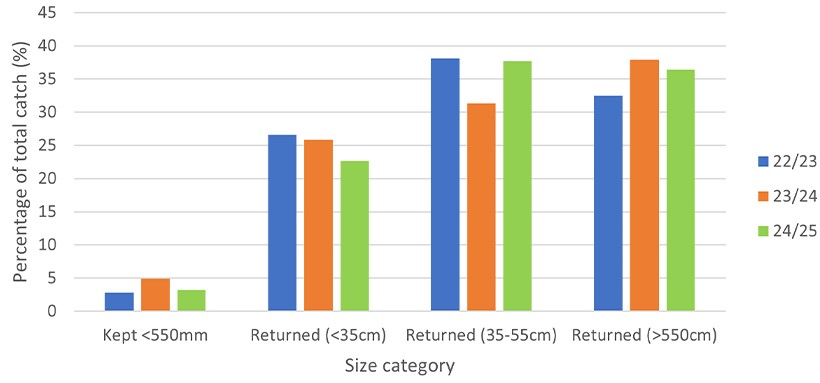
Figure 6. Breakdown of recorded catch during the last three summers at Lake Otamangakau.
Fly fishing with a floating line was the preferred method for Lake Otamangakau anglers with almost 79% followed by sinking lines (11.1%), spin fishing (8.1%) and shallow trolling (2%). Overall, anglers spent an average of 5 hours fishing the lake. Boat anglers accounted for almost 85% of all anglers interviewed with the remaining 15% fishing from the shoreline. Only 2% of anglers encountered were female.