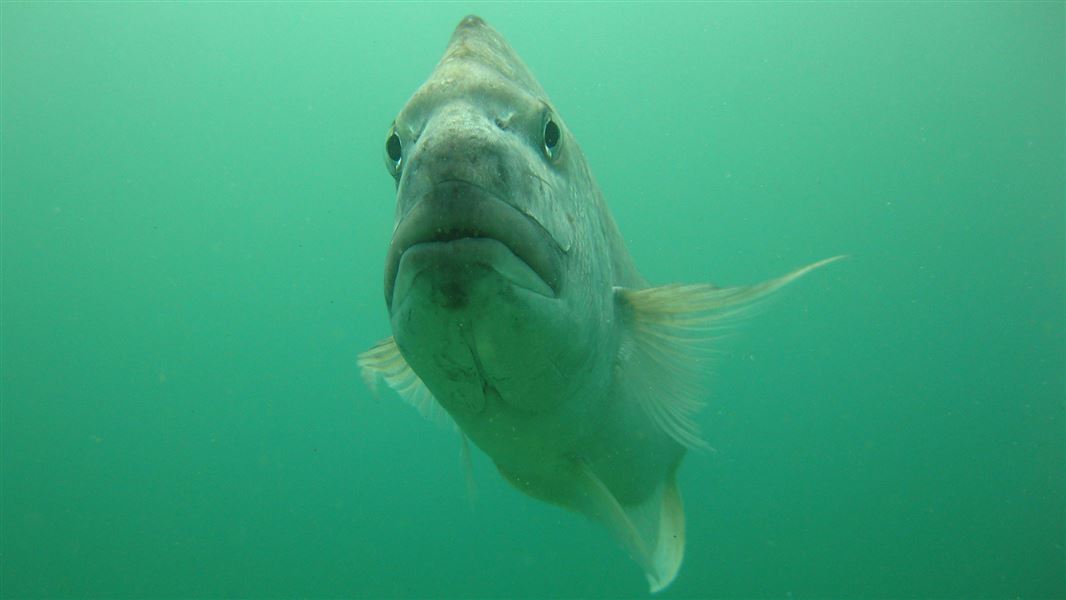
Tāmure/snapper
Tāmure/snapper live close to the coasts and eat a mix of foods like crabs, kina and small fish.
Heavy fishing has reduced the number of large adult tāmure in this area, upsetting the natural balance of the ocean. Smaller tāmure are unable to eat kina, so barren areas that have been overgrazed by kina have become more common here in recent years.
New protections aim to bring healthy, large tāmure back to the Gulf – and because big snapper produce more young, this will mean even more snapper in the future.
These protections will help create a healthier ocean and a greater abundance of marine life.
Karepō/seagrass
Seagrass only grows in shallow coastal areas. It keeps the water clean, provides a safe nursery for many fish species and helps fight climate change. Seagrass beds increase biodiversity, creating richer marine life for us to enjoy. They also help young fish to grow, which supports recreational fishing.
Seagrass is declining because of a range of factors including poor water quality, too much sediment and high nutrient levels. Subtidal seagrass meadows are now considered at risk of extinction.
New protections will aim to safeguard this rare habitat and make it easier to restore.
Kōura/crayfish
Kōura/crayfish play a key role in protecting the kelp forests and marine life in this area. Overfishing in the Gulf has reduced kōura numbers, increasing kina barrens – bare, lifeless reefs with no kelp. In recent years, these barrens have become more common, as smaller kōura are unable to eat kina.
New protections aim to bring healthy, large kōura back to the Gulf. This will provide better recreational diving and snorkelling opportunities and a healthier ecosystem in the future.
New marine protection
19 new marine protected areas are now in place in the Hauraki Gulf/Tīkapa Moana. These areas will contribute to a healthier Gulf for future generations.
Find boundaries and maps on this website and the marine mate app, ask your electronic chart provider or check signs at water entry points.