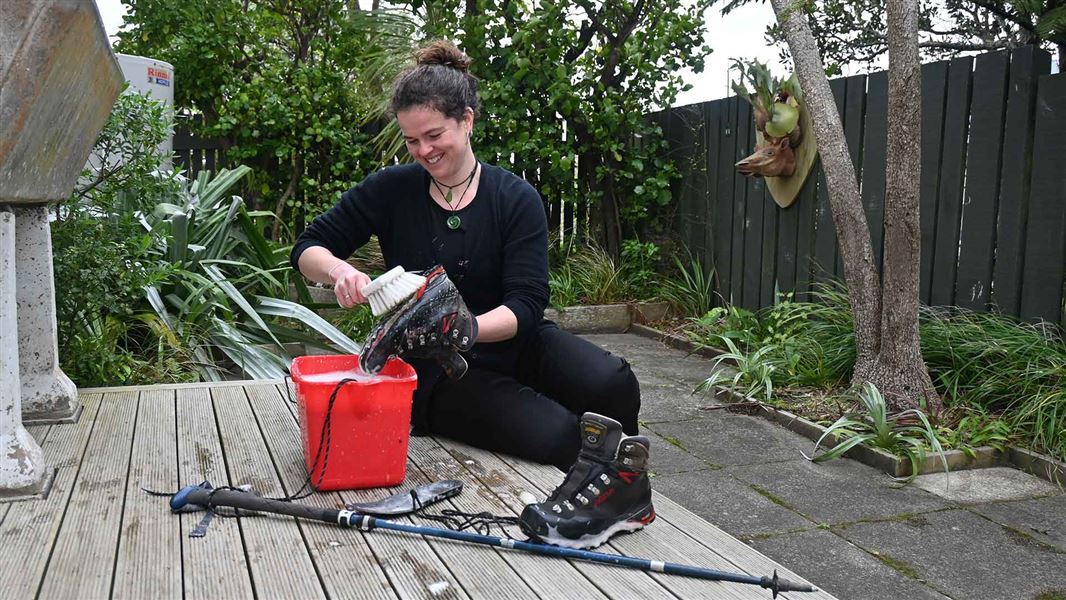
Following these simple steps will help keep our forests, rivers and streams clean and stop the spread of damaging, invasive pests and diseases.
Take a few minutes to do them every time before leaving home or each time you get to a town if you’re through-hiking.
Plan ahead so you have the right equipment and time to work through all the steps.
Clean your gear to protect nature
Scrub off soil and soak gear in strong detergent
Plant diseases, fungal spores, invasive clam larvae and other microscopic pests can survive in soil on footwear and walking poles, wet or damp clothing and in drink bottles. Just one drop of water from an infected lake, river or stream, or particle of contaminated soil can introduce destructive organisms to new areas.
Follow these steps to kill organisms you can’t see:
- Tip drink bottles out in a household, hut or campsite sink, or away from a waterway.
- Take laces and insoles out of boots and shoes and tip out or brush off any soil or seeds.
- Make up a 10% detergent solution: 100 mL of detergent for 1 L of water. You can use normal dishwashing liquid for this.
- Scrub poles and boots with the detergent solution to remove any caked-on mud. Scrub mud off dirty packs and any other gear.
- Fully immerse socks, gaiters, boots, shoes, laces, insoles, drink bottles and anything else that’s wet from river or stream water, like swimming gear, in the detergent solution.
- Leave everything soaking for 10 minutes. You can do this in batches if detergent is limited.
- Rinse off if you’d like to, and dispose of the detergent in a household, hut or campsite sink, or well away from freshwater.
Let gear dry completely
This step is a backstop in case any invisible freshwater microorganisms survived the detergent treatment.
Follow these steps:
- Spread out all your wet gear so it can drain and then dry thoroughly.
- Once items feel totally dry, leave them for at least another 48 hours.
Always use hygiene stations when you see them
Hygiene (cleaning) stations have been set up at the start of tracks to stop particular diseases and invisible pests being spread into these areas.
You’ll find these stations in Northland kauri forests, the Milford Track in Fiordland and in Nelson Lakes National Park. Always follow the instructions and use them correctly when you see them.
Remove pests and seeds you can see
Weed seeds and insects like ants can hide in your jacket and pack, especially the corners of pockets, and inside tents. Seeds can also attach themselves to socks. Velcro on gaiters or jackets is another favourite hiding place.
Follow these steps:
- Shake out your pack and turn your tent completely inside out.
- Vacuum the corners of pockets and hard-to-reach places.
- Pick seeds out of Velcro and socks and put seeds in the rubbish.
The problem of introduced pests
When humans settled in Aotearoa they brought familiar plants and animals with them to provide food, comfort, shelter and for other uses. Some introduced species thrived because of the climate or the lack of natural predators. Other species were accidentally introduced in soil or hiding in luggage, fishing gear, boats and ships. This is still happening despite strict border controls and biosecurity.
These introduced pests and diseases don’t belong here. They can reproduce rapidly and devastate native species and damage whole ecosystems.
Humans are exceptionally good at spreading pests because we move ourselves, our gear and invasive species around far better than nature ever could. We are super-spreaders. Air travel and helicopter access to remote places are making this easier than ever.
Start each trip with clean, dry gear
People have the power to protect nature. Cleaning our gear between trips and waterways is an important way we can stop invasive pests and diseases coming along with us and spreading into new areas.
Starting with clean, dry gear and using hygiene stations is proven to stop the spread of pests and diseases, including:
- Invasive clams were first discovered in the Waikato River in 2023. They reproduce very rapidly and have caused major damage to freshwater ecosystems and water infrastructure overseas. Microscopic larvae can be carried in wet footwear.
- Kauri are threatened by a soil-borne pathogen called Phytophthora agathidicida that infects and kills kauri trees that can be hundreds of years old. It can spread in tiny amounts of soil carried on boots, bikes, vehicles and equipment.
- Seeds from weeds like heather, gorse and broom can hide in packs and clothing and take over native vegetation. They can quickly get out of control once established.
Don’t bring pests and diseases into New Zealand
Cleaning and declaring your footwear before arriving in New Zealand helps prevent unwanted pests from entering the country and protects the forests, wetlands, mountains and wildlife that make Aotearoa special.
This simple step supports conservation by DOC, other agencies and many volunteers, and helps safeguard our natural heritage for future generations.