This funding will be targeted towards helping businesses maintain their workforce and do conservation work as they move towards economic recovery.
Partnerships are at the heart of Jobs for Nature. We will be working with our Treaty partners, communities, businesses, local government and government agencies to support people through nature-based employment.
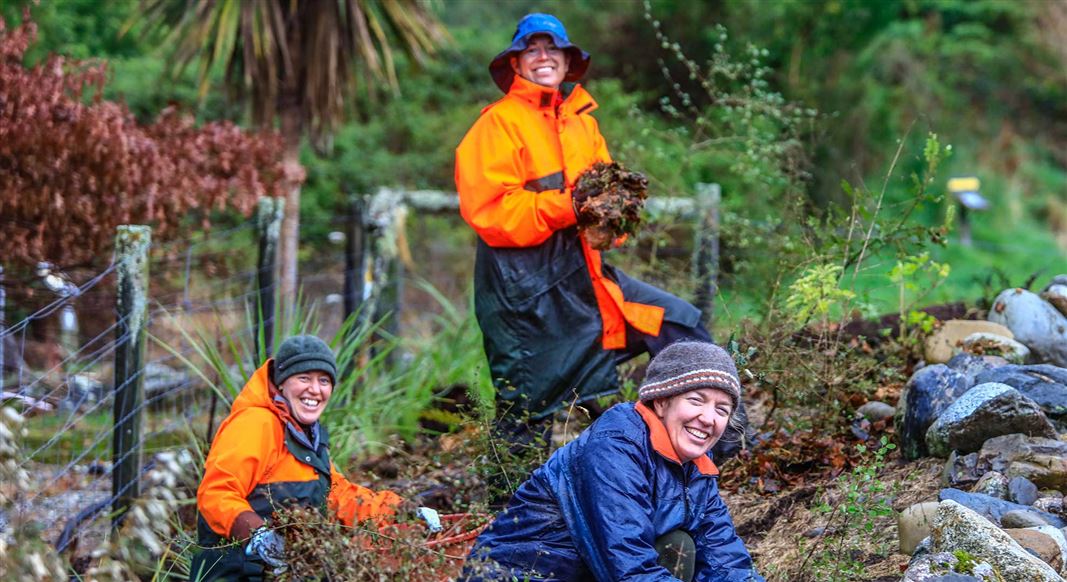
Kaimahi for Nature is the $200 million fund focused on working with businesses who are looking to make staff redundant. We aim to reach workers before they become unemployed – giving businesses battling COVID-19 an opportunity to temporarily redeploy their staff into environmental projects in their own region.
Benefits of the fund
The key benefits of Kaimahi for Nature include:
- faster recovery for individual businesses and regions
- avoid people becoming unemployed
- people retain a strong sense of purpose and pride from restoring and keeping connected to their region
- national gains for the environment.
Key principles
- Decisions made by people in their place.
- Treaty partners and partnerships at the heart.
- Funds out fast, equitably, and flexibly.
Regional partnership groups may choose to operate in different ways, however, the key principles will apply. They will prioritise environmental projects across their region, match workers from battling businesses to projects, and fund the temporary employment of these workers onto environmental projects.
For more information or specific enquiries email jobsfornature@doc.govt.nz.
Kaimahi for Nature scenario
Tama, Lucy, and Mary work in a retail store in a small town on a tourist trail. The reduction in tourism means the shop can no longer stay open, and they will lose their jobs.
Thanks to Jobs for Nature their employer is able to redeploy them to an environmental project where they learn skills in fencing, trapping and horticulture. This means Tama, Lucy and Mary get to stay within their regional community, and the retail store has a window to get back up on its feet.
Kotahitanga mo te Taiao
There are some examples of existing regional partnership groups doing great mahi.
The Kotahitanga mo te Taiao, for example, is a group consisting of the councils and most of the iwi in the top of the South Island, and DOC. It is focused on employing local people on landscape-scale environmental projects with social, economic and cultural benefits.