.jpg">USFWS - Pacific Region</a>, Public domain, via Wikimedia Commons)
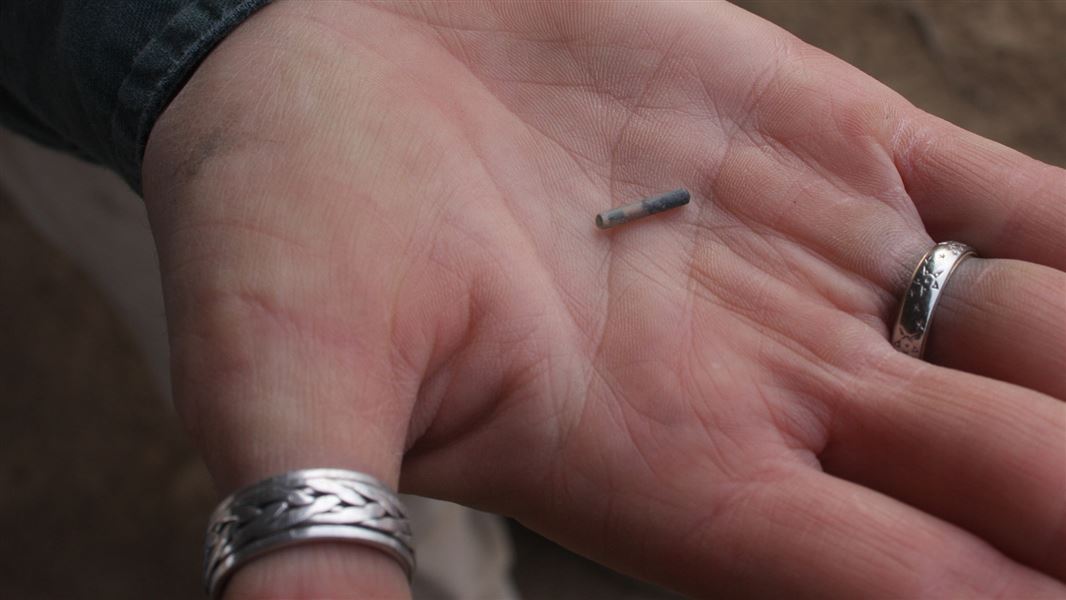
Transponders (microchips, PIT tags, RFID) are being applied to species such as bats, pinnipeds, and some birds, with an increasing number of projects adopting this technology.
How transponders are applied
There are two main methods:
- Under the skin via a simple injection
- On a band fitted to a modified bird band
Each transponder has a unique barcode that appears when scanned.
While handheld readers (similar to those used for pet microchips) are common, many projects use automated readers at nest entrances, burrows, or feeding stations for remote monitoring.
Like other primary marks, transponder numbers must be recorded by the operator into New Zealand’s animal marking database FALCON.
Transponder pros and cons
Pros
- Only one transponder is needed per animal.
- They can be scanned by readers placed at fixed locations for remote monitoring.
Cons
- They can only be read or seen by using a dedicated reader and the correct scanning technique.
- Readers may only pick up certain brands of transponder, leading to missed sightings or a bird being injected with multiple transponders.
- Causes and adverse effects of transponder migration to other parts of the body are poorly documented.
How to purchase transponders
Transponders are available through the Wildlife Marking Team shop in various sizes and in the form of:
- Individual chips for band fitting
- Preloaded syringes for under the skin application
Certification Requirements
Transponder marking requires:
- Being registered as a wildlife marking operator: Register here
- Holding a valid Relevant Wildlife Act Authority.
Specific requirements
- Band application – banding certification for those wishing to carry out transponder embedded banding.
- Under-skin application – Transponder Certification (veterinary qualification not required).
Operators applying transponders via injection must follow their species-specific best practice and have the relevant animal ethics approval. These may change over time if new evidence shows a better technique can used.
For more details visit: Requirements for Marking Native Wildlife in New Zealand.