Date: 06 March 2026
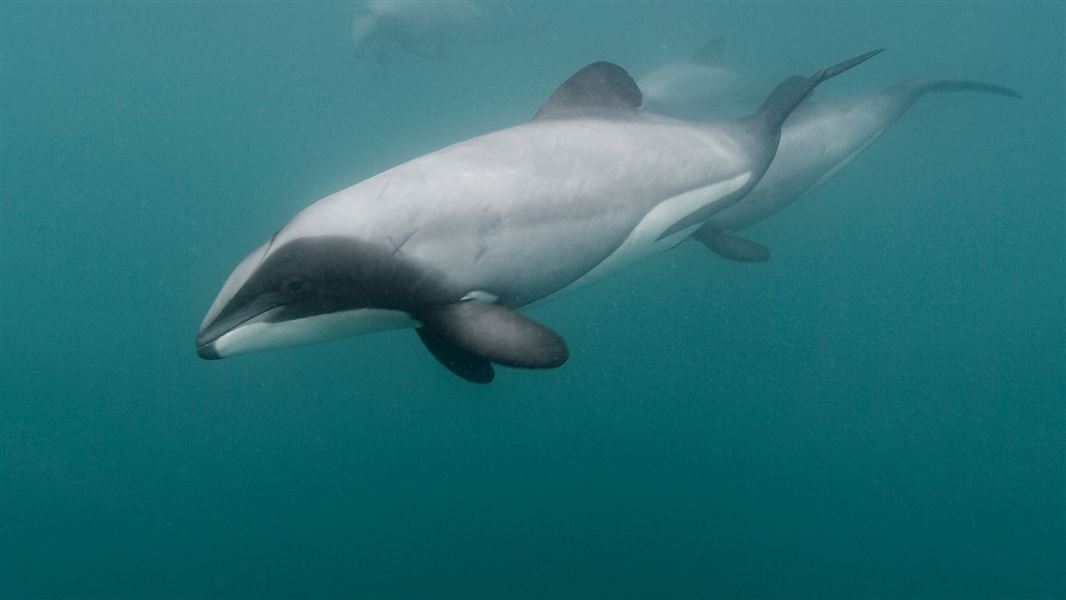
Hector’s dolphins, also known as tutumairekurai, pahu, or upokohue, are endemic to Aotearoa New Zealand and considered a taonga species. They are one of the smallest dolphins in the world and known for their rounded ‘Mickey Mouse ear’ shaped dorsal fin.
With an estimated population of around 15,700, they are managed under the Hector’s and Māui Dolphin Threat Management Plan, which recognises four distinct Hector’s dolphin sub-populations around Te Waipounamu/South Island. The East Coast population is considered to be made up of a number of smaller local populations.
DOC Senior Science Advisor Anton van Helden says little is known about how the small Otago group connects to other populations.
“Until now, conservation management for the small Hector’s dolphin population in Otago has been based on their assumed connection to adjacent populations along the East Coast,” he says.
“Recent genetic work has suggested that they may be more closely aligned with the South Coast sub-population.
“By collecting high quality genetic samples, we can determine how closely related – or not – the dolphins in this area are to neighbouring groups and ensure they are managed appropriately.”
The survey expands on work DOC started last year and builds on recent environmental DNA (eDNA) research by the University of Otago.
“This raises important questions about population connectivity, and exposure to and our management response to regional threats such as fishing bycatch impacts and diseases like toxoplasmosis,” Anton says.
The survey will use a well-established biopsy sampling technique, where a small, lightweight dart collects tiny skin and blubber samples from free-swimming dolphins. This method has been safely used on Māui dolphins for more than 15 years and provides high quality DNA with minimal disturbance.
“The tiny samples we collect are archived in the New Zealand Cetacean Tissue Archive (NZCeTA) and will give us opportunities to understand genetic relationships, age structure, aspects of their diet, and even reproductive status,” says Anton.
The survey will run from Monday 9 March to Sunday 22 March, covering the coastline from just south of Oamaru to the Taieri Head. Surveys are planned for the Catlins in 2027.
Sample analysis will be carried out in collaboration with the University of Auckland – Waipapa Taumata Rau, University of Otago Ōtākou Whakaihu Waka and mana whenua.
Data collected through this work will support the long-term protection of Hector’s dolphins and help ensure the species endures for future generations.
People out naturing on the water can help by reporting Hector’s dolphin sightings using the SeaSpotter app or via our online Marine mammal sighting form.
Background information
For more information on Hector’s dolphins, and DOC’s work to protect them: Hector's dolphin: marine mammals
NATURE LOOKS DIFFERENT FROM HERE
Nature isn’t scenery. Nature is a society that we rely on for everything, every day. It’s behind our identity and our way of life.
Contact
For media enquiries contact:
Email: media@doc.govt.nz