Date: 06 March 2026
West Coast Marine Ranger Don Neale was given the photos which show coastal areas from the 1960’s and the 1970’s, revealing significant changes that would otherwise have gone either un-noticed, or be hard to verify from personal memories.
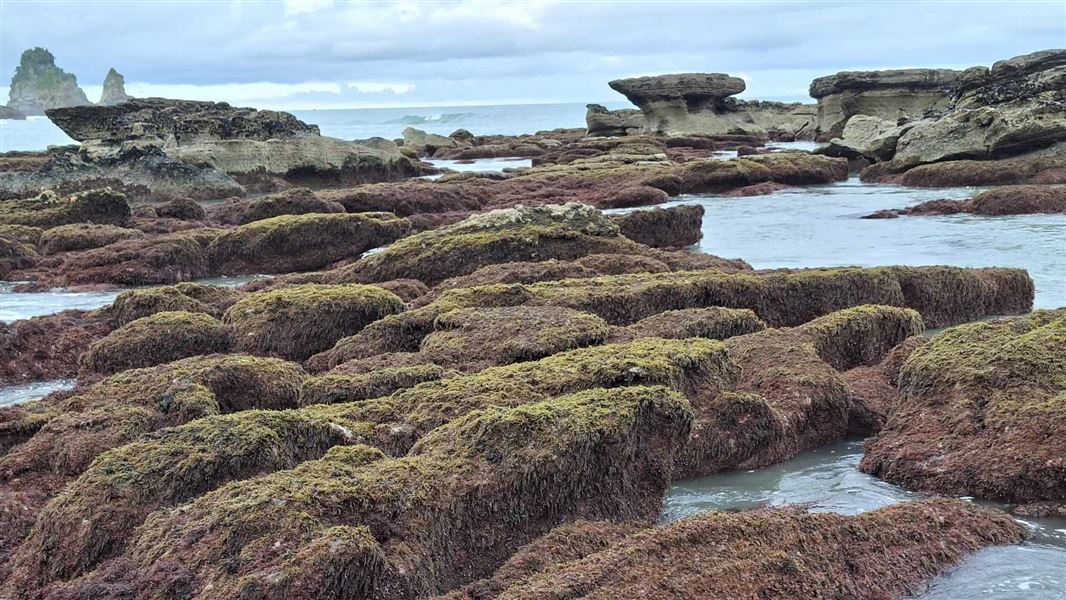
“The photos show changes in life in the intertidal area – which is the area between the sea and shore where water comes and goes,” Don says.
The pictures are adding to the photographic monitoring of kelp beds already underway on the West Coast since 2004.
“Some of the changes in sea life we’ve seen on the rocky coasts include loss of bull kelp, mussels, seaweeds and barnacles. In some places, the seaweeds inhabiting some areas have changed entirely,” says Don.
“These changes are important to monitor, as the species that live in the marine environment are important to the health of the wider marine ecosystem.”
The work is part of DOC’s marine monitoring work which focuses on the region’s five marine reserves. These are fully protected places where scientists and locals can learn more about the effects of marine protection, as being no-take areas, they provide “control” sites for wider marine study.
Don says, “Having marine reserves improves our understanding of the changes happening in the marine environment, and the effects that people are having on our coasts and oceans.
“DOC would like to hear from anyone who has other examples of coastal photography that might help to add to the stories that these photos tell.
“It can become a great way for anyone to do some naturing through ‘citizen science’, to track changes in your own bit of coastline over time.”
People can contact Hokitika@doc.govt.nz and reference this article if they have photos to share or are interested in contributing.
It's great timing to get involved now as its currently Seaweek. The community led initiative which celebrates the wonders of the ocean is running until 8 March.
NATURE LOOKS DIFFERENT FROM HERE
Nature isn’t scenery. Nature is a society that we rely on for everything, every day. It’s behind our identity and our way of life.
Contact
For media enquiries contact:
Email: media@doc.govt.nz