Date: 20 March 2026
It's part of a wider goal to have a pest free Kaitorete Spit which is internationally recognised for its ecological value and contains many globally unique plants.
DOC Mahaanui Operations Manager Andy Thompson says the plan is to restore more than 300 hectares and bring back rare plant species which have been decimated by rabbits and hares.
"We've seen a huge increase in rabbit numbers, and they're destroying incredibly special plants like native broom which has beautiful lilac flowers. Kaitorete is the only place in the world this plant exists. This could be our last chance to save it," Andy Thompson says.
DOC is working with partners Pest Free Banks Peninsula and Tāwhaki. Tāwhaki was established in 2021 as a partnership between Te Taumutu Rūnanga, Wairewa Rūnanga, and the New Zealand Government, with a dual kaupapa (purpose) to advance Aotearoa’s aerospace sector and rejuvenate the unique whenua at Kaitorete.
Tāwhaki Head of Whenua Planning and Rejuvenation Julian Phillips says Kaitorete is a significant cultural landscape renowned for its mahinga kai, taonga species, and history.
"Kaitorete is home to rare and threatened flora and fauna species, including tororaro and pīngao which plays an important role in dune health and is coveted by weavers due to its brilliant yellow colour," he says.
"This whenua is part of an ancestral travel route for tīpuna travelling north and south along the east coast of Te Waipounamu. It's home to some of Aotearoa New Zealand's largest concentrations of middens and pre-historic archaeological sites.
"Whānau from Wairewa and Taumutu, through Tāwhaki, have been completing observational monitoring across Kaitorete for four years to track the health of this whenua – including the land, water, taonga species as well as our connection to the taiao.
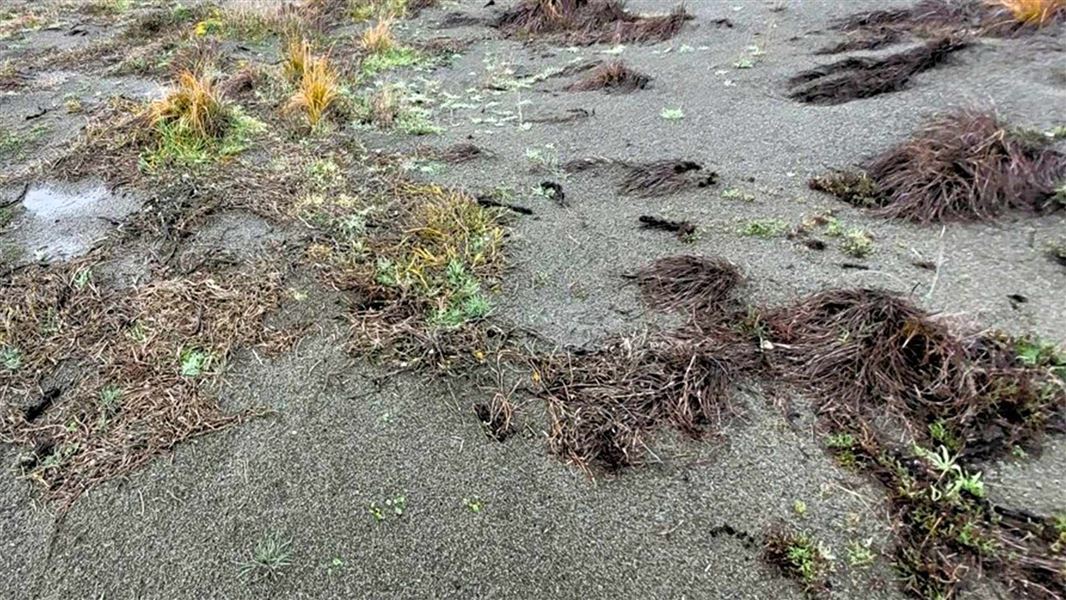
"What we’ve seen is increasing evidence of damage caused by rabbits and hares, despite the incredible work of DOC and Pest Free Banks Peninsula.
"Left unchecked, rabbit populations strip vegetation, de-stabilise dunes and put pressure on already vulnerable species," says Julian Phillips.
Pest Free Banks Peninsula Team Leader Tim Sjoberg says DOC's rabbit control work supports the multi pest elimination programme on Kaitorete.
"By working together, we have a much greater chance of creating a truly pest-free environment, which will allow the precious and rare plants and animals to thrive here," he says.
Today, a helicopter with under slung cereal bait sowing equipment, and GPS tracking navigation will be used. The loading zone is at the Tāwhaki National Aerospace Centre with the helicopter transporting the bait to trickle feed across the DOC scientific reserve. The cereal bait contains the pesticide pindone.
Andy Thompson says due to the rabbit numbers and the size of the terrain and vegetation, the aerial operation was the best way to eliminate the rabbits with ground-based bait laying and night shooting as a follow up if necessary. A rabbit proof fence has also been constructed to keep the pests out long term.
"We"ve got this one chance to save this precious landscape which has enormous cultural and biodiversity values. We are so lucky to have a community so committed to naturing and helping us restore this area."
NATURE LOOKS DIFFERENT FROM HERE
Nature isn’t scenery. Nature is a society that we rely on for everything, every day. It’s behind our identity and our way of life.
Contact
For media enquiries contact:
Email: media@doc.govt.nz