Date: 04 November 2026
Toroa chicks from last breeding season have only just finished fledging with a record-equal 38 chicks leaving Pukekura.
Now, just two weeks later, the first egg has been laid in front of a global audience.
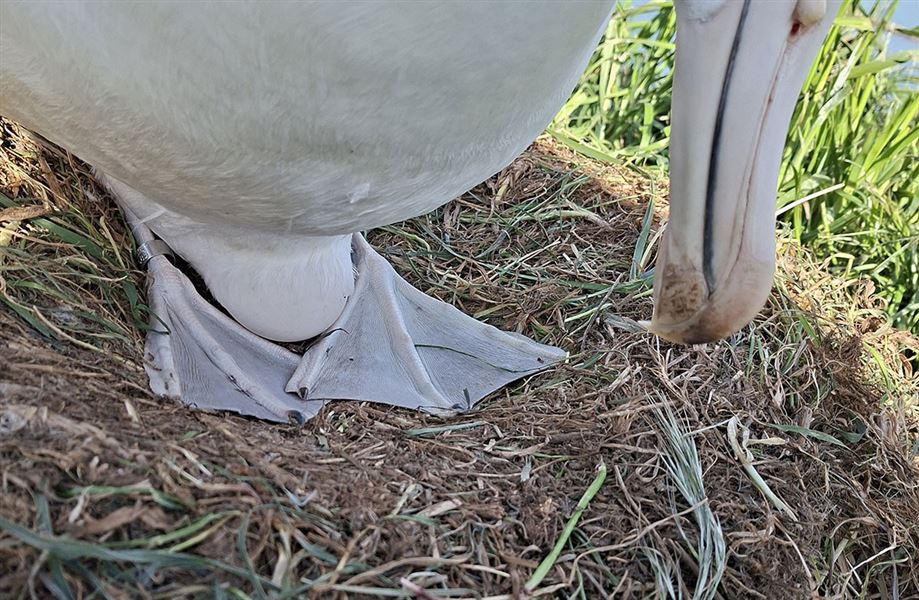
The adult female known as L returned to the colony on 13 October, and instead of making her own nest, decided to take over the Royal Cam nest from last season, broadcasting live to the world.
Department of Conservation Ranger Sharyn Broni says it’s the first time viewers have been treated to such an event.
“I woke up and there were hundreds of comments on the live feed, so I watched it and couldn’t believe it. I have seen other toroa laying eggs, but none were as noisy as she was,” she laughs.
“Both L and her mate are already taking turns sitting on the egg, doing shifts. The incubation is long at roughly 79 days or two and a half months. We will go and check the egg in 10 to 12 days to see if it’s fertile.” Sharyn says.
DOC co-manages the albatross colony as part of Te Poari a Pukekura (the Pukekura Co-management Trust), alongside Te Rūnanga o Ōtākou, Korako Karetai Trust and Dunedin City Council, with the support of the Otago Peninsula Trust.
Te Poari a Pukekura Chairman Bill Karaitiana says sharing knowledge is an important factor contributing to the protection of toroa.
“The Royal Cam is increasing people’s understanding of the life cycle and 11-month breeding season of toroa,” he says.
The colony at Pukekura/Taiaroa Head is the only mainland site in the world where toroa/northern royal albatross breed.
The Royal Cam livestream is run in partnership with Cornell University’s Lab of Ornithology in New York, helping the lives of these albatrosses reach an international audience. It receives millions of views from people all around the globe annually.
Sharyn Broni says they are incredibly grateful for the support from Cornell’s team.
“It’s so rare to be able to see this kind of thing. It connects people with this taonga species and makes people feel part of their journey. These are such unique manu and when you see them so up close and personal, you want to help protect them,” Sharyn says.
The first eggs of the season mark the beginning of a very busy time for the rangers. There have been four more eggs laid since Sunday.
Sharyn says it’s hoped toroa numbers will grow to a point where management of the species can be less intensive, but for now it’s a very hands-on operation.
“When I first started doing this 30 years ago, we only had about 10 fledglings a year, never in my wildest dreams did I think we would reach nearly 40.”
Further information
Toroa are a taonga species and have a conservation status of ‘Threatened – Nationally Vulnerable’, with an estimated population of about 17,000 mature individuals.
Royal Cam: Royal albatross/toroa
NATURE LOOKS DIFFERENT FROM HERE
Nature isn’t scenery. Nature is a society that we rely on for everything, every day. It’s behind our identity and our way of life.
Contact
For media enquiries contact:
Email: media@doc.govt.nz