Date: 16 July 2026
DOC is working with the Ministry for Primary Industries (MPI), the Ministry of Health and Health New Zealand | Te Whatu Ora as part of a One Health approach to prepare for the arrival and spread of the H5 strain in New Zealand.
DOC has been preparing for the arrival of bird flu for several years and has plans to mitigate risks to threatened species and public conservation land.
DOC Deputy Director-General Cat Wilson says the detection in the migratory seabird was significant but currently there is no evidence H5 bird flu is spreading in New Zealand wildlife.
“For now, we remain focussed on monitoring the situation closely and finalising our readiness plans and updating our guidance, working with iwi and conservation partners.
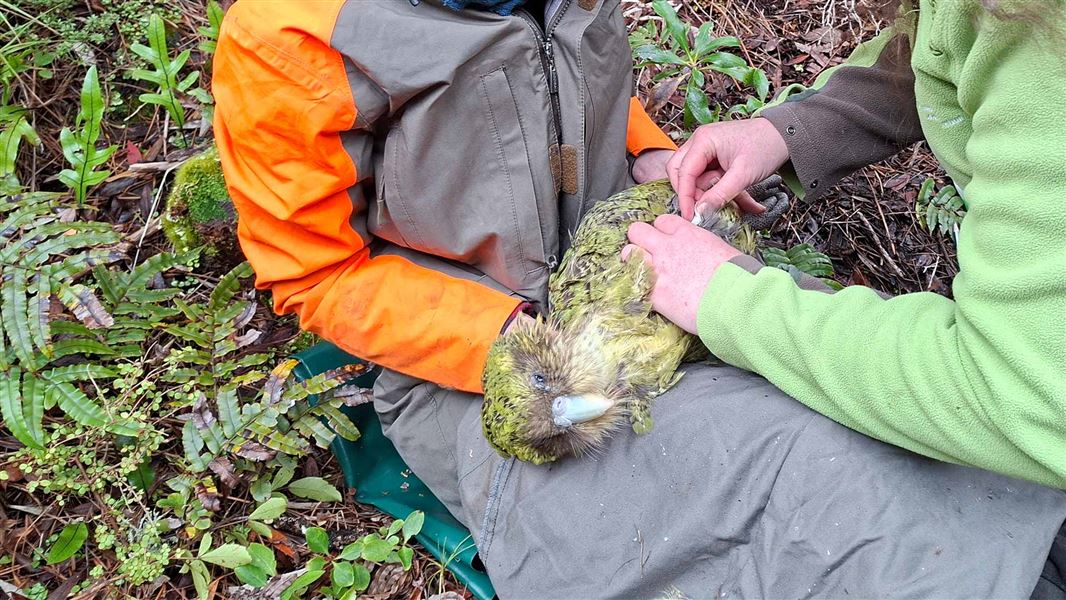
“Last week we began vaccinating core breeding populations of five of our most threatened birds – kākāpō, takahē, tchūriwat’/tūturuatu/shore plover, kakī/black stilt and kākāriki karaka/orange-fronted parakeet.
“By the end of today, 67 out of about 300 birds will have had their first vaccine, which will be followed up by a booster shot a month later. This should be complete by spring.
“We know from our research trial completed last year that the vaccination is safe and effective in these birds and will help protect them from bird flu.
“If H5 spreads here we may consider vaccinating other threatened species. It won’t be possible to vaccinate all endangered birds, but we can focus on those species where the full two doses of the vaccine can be safely given to achieve protection,” says Cat Wilson.
If H5 bird flu spreads in the wild bird population, management options will be limited. DOC’s focus will be on minimising spread on public conservation land through strong biosecurity practices and not disturbing wildlife and supporting the health and resilience of threatened bird populations through conservation work such as breeding and predator control programmes.
People who spend time outdoors – including tramping, duck hunting and bird watching – can form good habits now that will help protect wildlife if bird flu arrives here. Keep your distance from sick or dead wildlife, keep your gear clean, and know when to report.
Please report groups of three or more sick or dead birds, marine mammals or other wildlife to the MPI exotic pest and disease hotline: 0800 80 99 66.
Do not touch, handle or collect dead or dying birds to avoid spread of the virus and protect yourself.
Background information
Ministry for Primary Industries | NZ Government
NATURE LOOKS DIFFERENT FROM HERE
Nature isn’t scenery. Nature is a society that we rely on for everything, every day. It’s behind our identity and our way of life.
Contact
For media enquiries contact:
Email: media@doc.govt.nz