Date: 02 April 2026
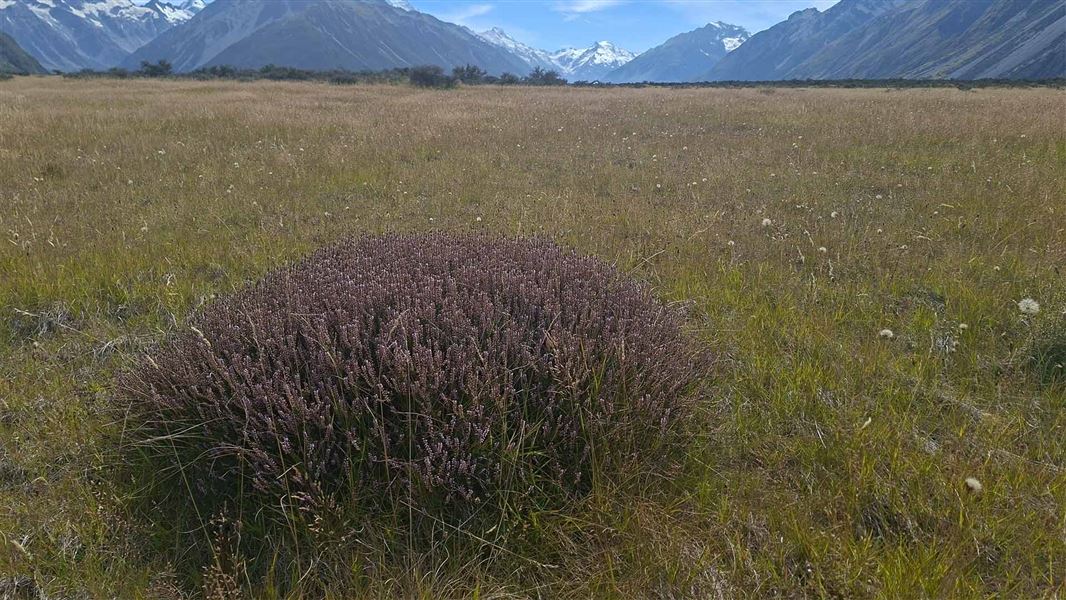
DOC Biosecurity Technical Advisor Connor Hines says invasive weeds like common heather, gorse, or broom have recently been found on some popular hikes such as the Routeburn and Kepler tracks, as well as in some remote places in Fiordland, Southland, and Rakiura/Stewart Island.
"These weeds are very harmful for our native ecosystems and can quickly get out of control once they get established. They can outcompete native plants and will completely change the look of the landscape and function of the ecosystem if left unchecked," Connor says.
"They're often spread accidentally by people, but people can prevent this by making sure seeds don’t hitch a ride along with the rest of your equipment.
"Before you head out, please give your gear – especially your boots, pockets, and tent - a good check and thorough clean for seeds and other biosecurity risks, to prevent accidentally spreading something. Just a few tiny seeds could start an infestation.
Connor says trampers, alpinists, packrafters, climbers and anyone else out naturing over Easter can also help by reporting sightings.
"Getting early reports is extremely helpful, enabling rangers to get in and control the weeds before they really take hold and become a major problem.
"We're after reports of things that look out of place – sites where it looks like the invasive weed is just getting established and DOC might not know about it already.
"If you find an invasive weed somewhere unexpected, sightings can be recorded through the iNaturalist app, or by emailing info@doc.govt.nz with a photo and waypoint or detailed location.
"iNaturalist is great because it’s easy - you take the photo in the app, it uploads with exact coordinates, and we get an alert directly. But we realise not everyone has the app so, if you prefer to email, pictures and detailed location information are crucial. It’s a big wilderness out there.
Background information
Heather is a green shrub that grows to about 90 cm tall and can be identified by its woody, wiry stems, small green to brown leaves that are longer than they are wide, and pink to purple bell-shaped flowers between December and March. It's well established in many parts of the North Island and is a particular issue in Tongariro National Park. Heather is cold tolerant and can quickly take over subalpine areas. Heather has tiny seeds smaller than a sesame seed which can be easily overlooked and accidentally spread if equipment isn’t thoroughly checked and cleaned.
Gorse is a spiny shrub up to 3 m tall which has yellow flowers (typically in May to November). It grows quickly and produces large amounts of hardy seeds that can live a long time in the soil. Gorse can survive in a wide variety of habitats and soil types.
From September to April, broom looks similar to gorse from a distance thanks to its golden yellow flowers. The woody green shrub, which grows to about 2.5 m, is a prolific seeder which tolerates a wide range of temperatures and changes nitrogen levels in the soil, which changes the types of plants which can grow in the areas it is found.
NATURE LOOKS DIFFERENT FROM HERE
Nature isn’t scenery. Nature is a society that we rely on for everything, every day. It’s behind our identity and our way of life.
Contact
For media enquiries contact:
Email: media@doc.govt.nz