Date: 13 August 2026
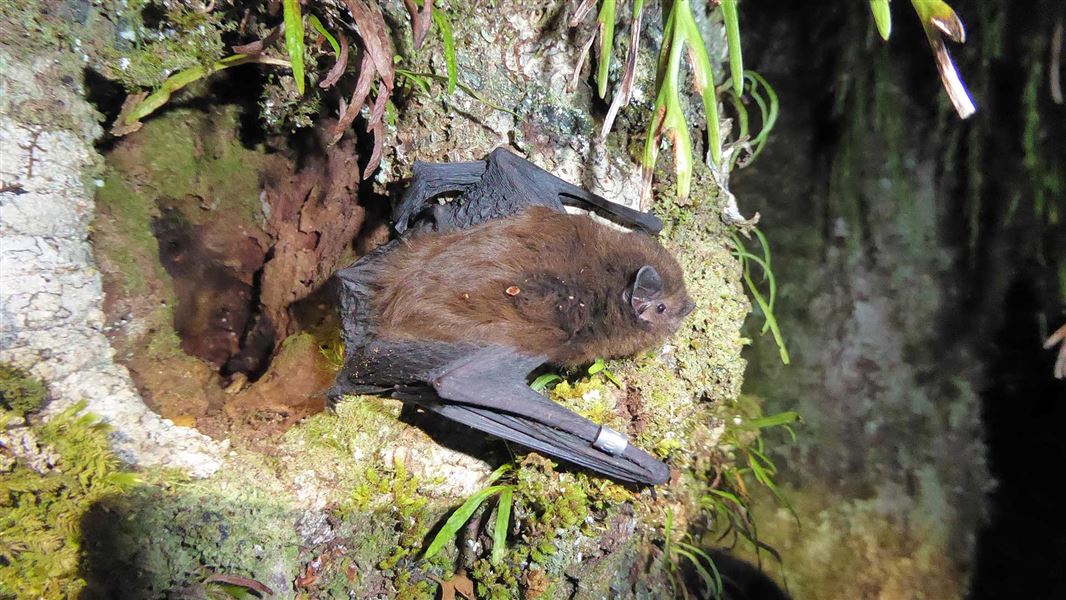
Digital recorders that listen for bats flying past were put at 25 locations along the Heaphy and Gunner rivers over 12 fine nights in February 2026. This year, the average bat pass rate was 6.75, which is a massive increase from an average of 1.79 passes when the monitoring started in 2018.
At some sites, the activity is even more striking. At one recorder, located near the Heaphy River north of fork with the Gunner River, more than 500 passes were made on three separate nights.
Department of Conservation Technical Advisor Moira Pryde says, “Bat activity is moving from the known breeding population site in the upper reaches of the Gunner River to the Heaphy River, a great sign the aerial predator control and local trapping is working in the Heaphy valley.”
Bats roost in holes and cavities in mature trees, which rats, stoats and feral cats can access and kill them.
“When we started monitoring the bats, it was very difficult to find them at low altitudes in the Heaphy valley, where the rats are in much higher numbers. We originally found the bats roosting up the Gunner River, where there were fewer rats.
“These encouraging results show us that aerial predator control creates ‘safe periods’ allowing bats to breed and increase their numbers.”
Female bats congregate in maternity roosts to give birth and raise their young. They move roosts regularly and take their pups with them. This means that a colony is very vulnerable to predators and could easily be wiped out. Every loss of an adult female bat is a big loss for the species, as they live for more than 20 years and can have a pup each year.
For Moira, who has been working with bats for around 25 years, the results are heartening. She says people now have a better chance at seeing bats while walking the Heaphy Track.
“Bats aren’t often seen by the public, as they have disappeared from most areas due to habitat destruction and predation, but people naturing on the Heaphy Track should watch out at sundown for these fast-moving tiny creatures who will be out foraging in increasing numbers.”
The work to enhance native wildlife in the Heaphy valley is partially funded from Bathurst Resources 2013 compensation for the loss of biodiversity values from the Escarpment Mine operation on the Denniston Plateau.
DOC encourages walkers to take a few minutes at home to stop unwanted weeds, diseases and other nasties hitching a ride on their walk with them. Check, Clean, Dry boots and poles, turn out packs and pockets, and pick seeds out of Velcro in gaiters and coats.
Background information
Predator control using aerial 1080 is carried out around the Heaphy Track to protect kiwi and other birds, snails, bats, and vulnerable plant species. Depending on predator numbers, control is carried out on a one or two-yearly basis.
The next predator control operation is due in the coming summer or autumn, in response to the recent mass beech seeding event, which, without intervention, will fuel an explosion of rat and stoat numbers.
NATURE LOOKS DIFFERENT FROM HERE
Nature isn’t scenery. Nature is a society that we rely on for everything, every day. It’s behind our identity and our way of life.
Contact
For media enquiries contact:
Email: media@doc.govt.nz