Image: Rod Morris | DOC
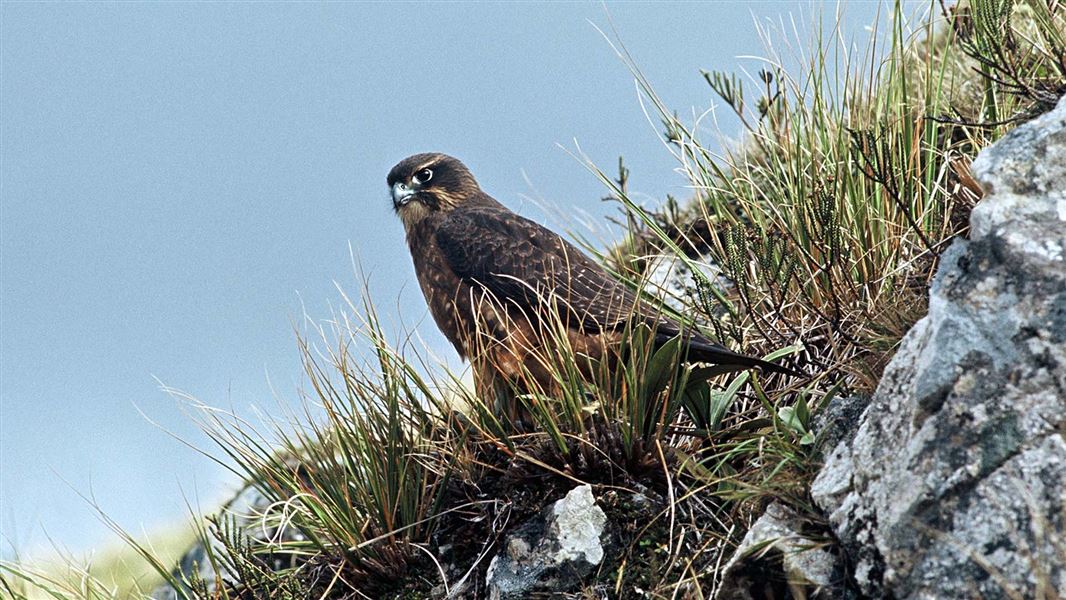
A bird of prey perched on a hillside looking alert.
Friday | Rāmere Conservation Week quiz
Friday's quiz – birds
Q1: Which of these manu (birds) might be described as ‘mōmona’?

Close up of long billed bird.
Fiordland tokoeka
Image: Rod Morris | DOC

No. 

Mōmona is used to describe something that is fat or plump, which is a great description of kererū.

Indeed.

Mōmona is used to describe something that is fat or plump, which is a great description of kererū.

Q2: What’s the name for a group of albatrosses?

A white fluffy bird sits in the grass.
Northern royal albatross chick
Image: Aaron Heimann | DOC

No, the answer is a gam.

Correct.

It's a gam.

Q3: What type of performer might strive to be compared to a korimako/bellbird?

A small grey-green bird perched on a branch.
Korimako/bellbird
Image: Dick Veitch | DOC

The correct answer is a singer.

The korimako is known for its beautiful song, so this comparison would be high praise indeed.

Correct!

The korimako is known for its beautiful song, so this comparison would be high praise indeed.

Q4: On average, how many metres does a takahē poo each day?

A large beaked bird.
Takahē
Image: Rod Morris | DOC

Nope. The answer is 9 metres!

Umm, yes. 9 metres is correct.

Q5: Pīwakawaka/fantails can be described as ‘haututū’. What does this mean?


A small bird perched on a wire.
Fantail/pīwakawaka
Image: © Shellie Evans

No, the answer is mischievous.

Correct. 

Q6: What special structure was built to support the recovery of tara iti/New Zealand fairy terns?

A small bird chick stands on a white mat on a table.
Tara iti/New Zealand fairy tern
Image: Shelley Ogle | DOC

No, it's a kindergarten.

The Department of Conservation and Auckland Zoo have built a kindergarten so that young chicks can safely acclimatise to living in the wild. You can donate directly to this mahi (work) here.

Tara iti/ New Zealand Fairy Tern | NZ Nature Fund

Correct.

The Department of Conservation and Auckland Zoo have built a kindergarten so that young chicks can safely acclimatise to living in the wild. You can donate directly to this mahi (work) here.

Tara iti/ New Zealand Fairy Tern | NZ Nature Fund

Q7: Where does the kea get its name from?

A green parrot sits proudly on rock enjoying the alpine vista.
Kea
Image: Dick Veitch | DOC

Incorrect. The kea gets its name from its call.

Correct! The kea does indeed gets its name from its call.

Q8: Approximately how many native birds are killed each year by predators?

A possum in a tree.
Possum
Image: Rod Morris | DOC

The correct answer is twenty-five million...

Yep.

Q9: How can you help reduce that number?

A person bends over to reset a predator trap.
A volunteer resets a trap
Image: Vanessa Mander | DOC

Not quite.

Understanding a problem is important to fix it, but getting lost in shame doesn’t make change. There are lots of ways you can act for nature, so why not start the kōrero (discussion) with your friends and whānau. 

Yes! There are lots of ways you can act for nature, so why not start the kōrero (discussion) with your friends and whānau.

Q10: Is this problem too big to solve?

Man leans against a fence while holding a potted plant width=
Conservation Week at Whareroa Farm
Image: DOC

When we act, nature responds.

We know better than anyone that this problem can feel daunting, but it’s up to all of us to protect and restore nature.

Whether it’s picking up rubbish on your beach walk, educating your colleagues, volunteering with your local predator-free initiative or donating to critical conservation projects, there’s something everyone can do to help.  
When we act, nature responds.

We know better than anyone that this problem can feel daunting, but it’s up to all of us to protect and restore nature.

Whether it’s picking up rubbish on your beach walk, educating your colleagues, volunteering with your local predator-free initiative or donating to critical conservation projects, there’s something everyone can do to help.  

All done! We hope you enjoyed this year's Conservation Week quizzes.

See you next year?