Image: Sean Cooper | DOC
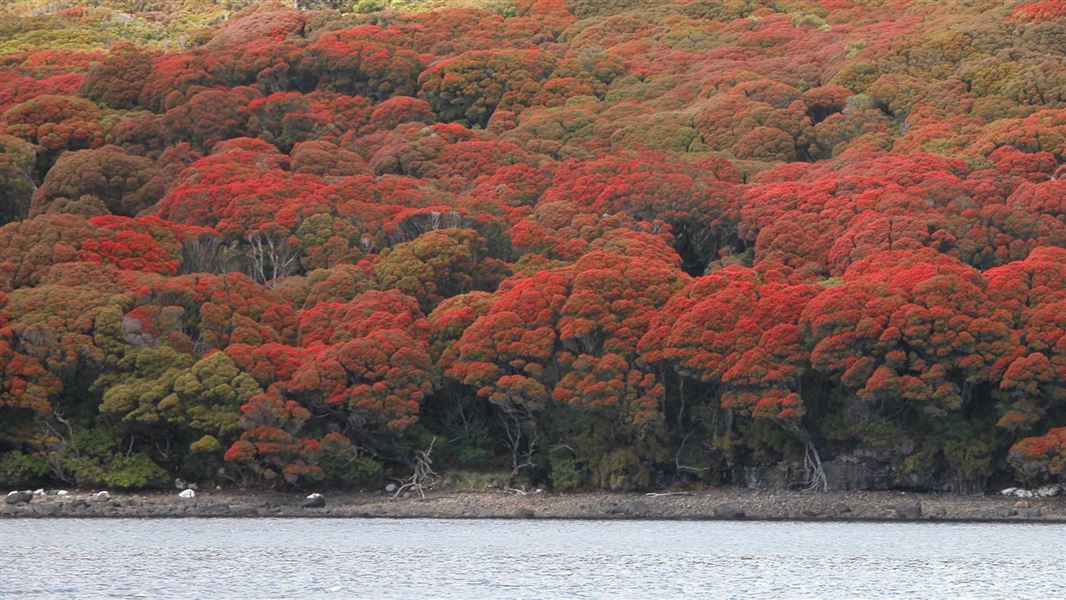
A thickly forested hill, with trees in red bloom, reaches down to a shoreline.
Tuesday | Rātū Conservation Week quiz
Tuesday's quiz – flora theme
Q1: Approximately how many species of ferns are there in Aotearoa New Zealand?

q1-ferns-820.jpg
Ferns
Image: C Rudge | DOC

Incorrect!

There are 200, and about 40% of these are found nowhere else in the world.

That's right.

There are 200, and about 40% of these are found nowhere else in the world.

Q2: What is Neptune’s necklace?

Two people walking across a rocky shore with a large rock pool in the foreground.
Rock pools
Image: © Benhi Dixon | Creative Commons

Incorrect.

It's a type of seaweed.

Correct.

Q3: In te ao Māori (the Māori worldview), what can harakeke/flax represent?

A large thicket of flax with trees in the distance.
Flax in the swamp
Image: DOC

The answer is whānau.

In te ao Māori, the rito (new shoots) in the centre of harakeke are the tamariki (children), the awhi rito (surrounding leaves) are the mātua (parents) protecting the rito, and the outer leaves are the tupuna (ancestors and grandparents). Only the outer leaves should be harvested. 

Correct.

In te ao Māori, the rito (new shoots) in the centre of harakeke are the tamariki (children), the awhi rito (surrounding leaves) are the mātua (parents) protecting the rito, and the outer leaves are the tupuna (ancestors and grandparents). Only the outer leaves should be harvested. 

Q4: True or false, there are no truly parasitic plants in Aotearoa New Zealand.

Five flowers laying on a table.
Dactylanthus taylori - known as wood rose
Image: Rebecca Stanley | DOC

Incorrect!

Dactylanthus is the only flowering plant in Aotearoa that relies entirely on its host plant for survival.

You're right.

Dactylanthus is the only flowering plant in Aotearoa that relies entirely on its host plant for survival.

Q5: Which of these plants is associated with healing?


The lush forest forms a living tunnel as the road gets narrower and we climb along the base of the mountains that form the Fox Glacier valley.
Lush forest near Fox Glacier
Image: © Shellie Evans

No.

Kawakawa has a long list of uses! It can be chewed to ease toothaches, providing an anaesthetic effect. It is also a friend to your vege garden, containing a potent insecticide. Today, you will commonly find kawakawa in a range of products, including teas, bottled drinks and even ice cream.

Yes!

Kawakawa has a long list of uses! It can be chewed to ease toothaches, providing an anaesthetic effect. It is also a friend to your vege garden, containing a potent insecticide. Today, you will commonly find kawakawa in a range of products, including teas, bottled drinks and even ice cream.

Q6: Why should you download iNaturalist?

Thicket of woody looking ferns growing upward with some in flower.
Hebe elliptica in flower
Image: © Rod Morris

Nope.

But you can upload your observations to iNaturalist and get answers to your questions from a community of experts, including Department of Conservation kaimahi (staff).

Yes. iNaturalist can do all these things except tell you about the best naturist camps.

Upload your observations to iNaturalist and get answers to your questions from a community of experts, including Department of Conservation kaimahi (staff).


Q7: What’s the name of the unique coastal formations at Paparoa National Park?

View of unusual looking groved rocks nestled in hills.
'Coastal formations' at Punakaiki
Image: © Benhi Dixon | Creative Commons

Incorrect.

It's Pancake rocks. This rock formation is only found in Paparoa National Park. You won’t see it anywhere else in the world! 

Yes. This rock formation is only found in Paparoa National Park – you won’t see it anywhere else in the world!

Q8. Which of the following is an invasive weed?

Large
Wild ginger
Image: T. McCluggage. | DOC

Not quite. They're all invasive weeds.

You got it!

Q9: How do invasive plants and weeds threaten biodiversity?

A digger works to remove pine trees.
Pine tree removal
Image: Peter Willemse | DOC

That's right.

In fact, these are all reasons invasive plants and weeds threaten biodiversity.

Q10: Why do we need native plants to thrive?

A black bird with white breast tuff feeds from a green branch.
Tui on flax bush
Image: Bon Wilton Scott | DOC

Not quite...

Our native plants are a critical part of te taiao in Aotearoa. Our native plants feed our native birds and maintain nature's careful balance. We need them to thrive – not just because DOC says so, but because they support the wider eco-system.

Te taiao doesn’t exist in isolation. If we lose one native plant, we’re losing part of the world that native species rely on. Te taiao is a Māori term that encompasses the entire natural world. It reminds us that we are part of the natural world, and we must care for it. Ko au te taiao, ko te taiao ko au (I am nature, nature is me).
Yes!

Our native plants are a critical part of te taiao in Aotearoa. Our native plants feed our native birds and maintain nature's careful balance. We need them to thrive – not just because DOC says so, but because they support the wider eco-system.

Te taiao doesn’t exist in isolation. If we lose one native plant, we’re losing part of the world that native species rely on. Te taiao is a Māori term that encompasses the entire natural world. It reminds us that we are part of the natural world, and we must care for it. Ko au te taiao, ko te taiao ko au (I am nature, nature is me).

Well done - you completed Tuesday's Conservation Week quiz. Be sure to come back tomorrow for the next instalment – nocturnal friends and creepy crawlies!