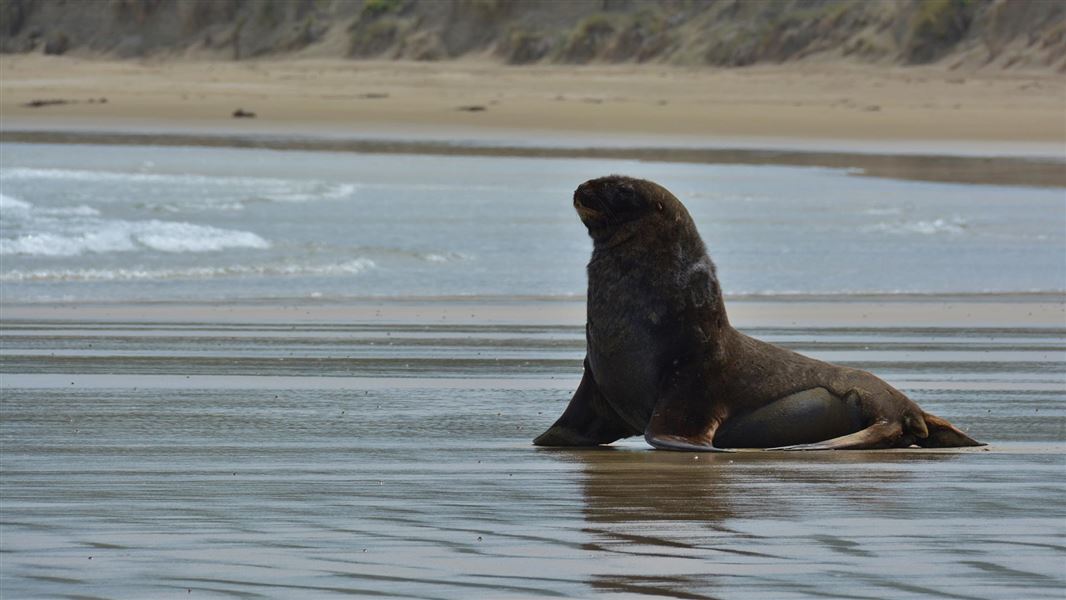
If you see a sea lion
If you spot a New Zealand sea lion, you're seeing one of the rarest sea lion species in the world. New Zealand sea lions are Endangered and protected by law.
Under the Marine Mammals Protection Act 1978, it is illegal to disturb, harass, harm, injure, or kill a New Zealand sea lion. Dog owners may be prosecuted if their dog attacks a sea lion.
How to behave
- Minimise disturbance. Stay at least 20 m away and keep your dog on a lead.
- Sea lions are confident and often curious around people. Don't run away from them and don’t engage their curiosity, as they can behave like untrained dogs.
-
If you're too close, back away slowly and avoid direct eye contact. They will eventually lose interest if you are calm.
- Unlike fur seals, you can walk between a sea lion and the water, unless it is heading to the sea.
- Keep an eye out, as the fur colour of females and young males is similar to sand. Take care walking through the dunes, as people can disturb animals at rest.
-
If a sea lion approaches you in the water, move away slowly and avoid direct eye contact.
- If you are heading out for a surf, watch this video:
How to identify a New Zealand sea lion
New Zealand sea lions visit the south and east coasts of the South Island. They overlap in range with the more common New Zealand fur seal/kekeno in many areas.
New Zealand fur seals can be distinguished from sea lions by their pointy nose and smaller size. In New Zealand, fur seals also tend to be found on rocky shorelines, whereas sea lions prefer sandy beaches.
| New Zealand sea lion | New Zealand fur seal | |||
|---|---|---|---|---|
| Male | Female | Male | Female | |
| Nose | Blunt nose and short whiskers | Long nose and long pale lashes | ||
| Fur | One layer of velvet-like fur | Covered with two layers of fur | ||
| Colour | Brown to black with well-developed manes reaching to shoulders | Lighter colour, mostly creamy grey with darker colour around flippers | Dark grey-brown on back, and lighter below | |
| Length | Length 2.4–3.5 m | Length 1.6–2.0 m | Max length 2.5 m | Max length 1.5 m |
| Weight | Weight 250–400 kg | Weight 100–160 kg | Weight 90–150 kg | Weight 30–50 kg |
Identification images
Note the physical differences between New Zealand sea lions and fur seals.
New Zealand sea lion
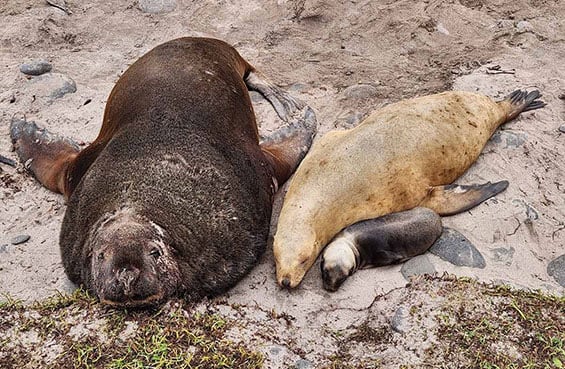 New Zealand sea lion adult male, adult female, and pup
Image: DOC
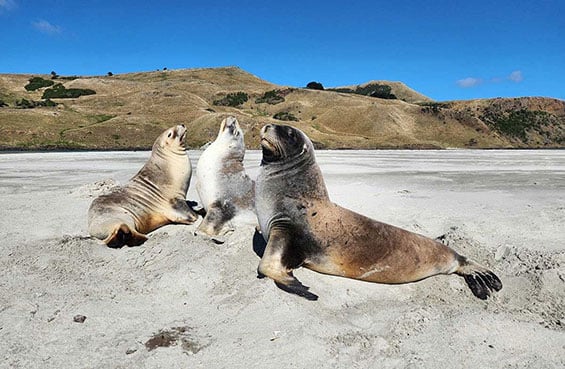 Young male New Zealand sea lions can easily be confused with adult females.
Left to right: subadult male, adult female and subadult male
Image: DOC
New Zealand fur seal/kekeno
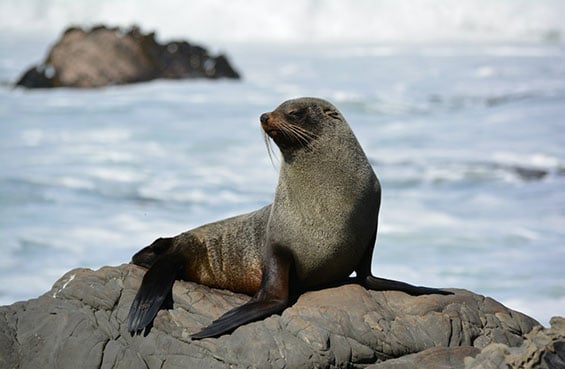 New Zealand fur seal/kekeno
Image: Katherine Clements ©
Report sightings of sea lions
If you see a sea lion in distress, call our conservation hotline 0800 DOC HOT (0800 362 468). If the animal is not in distress, report a sighting online.
Reports of sightings are always valuable and help increase our knowledge of sea lion distribution and movements around New Zealand.
Include as much information as possible with your sighting:
- take photographs or video to help DOC confirm the species
- if you see a flipper tag on an animal, try to take one photo of the whole animal and another photo of the flipper tag with a zoom lens, always from at least 20 m distance
- the date, time and location (GPS coordinates if possible).
Call the our conservation hotline 0800 DOC HOT (0800 362 468) if you see a sea lion that is:
- severely injured
- entangled in marine debris
- being harassed by people or dogs.