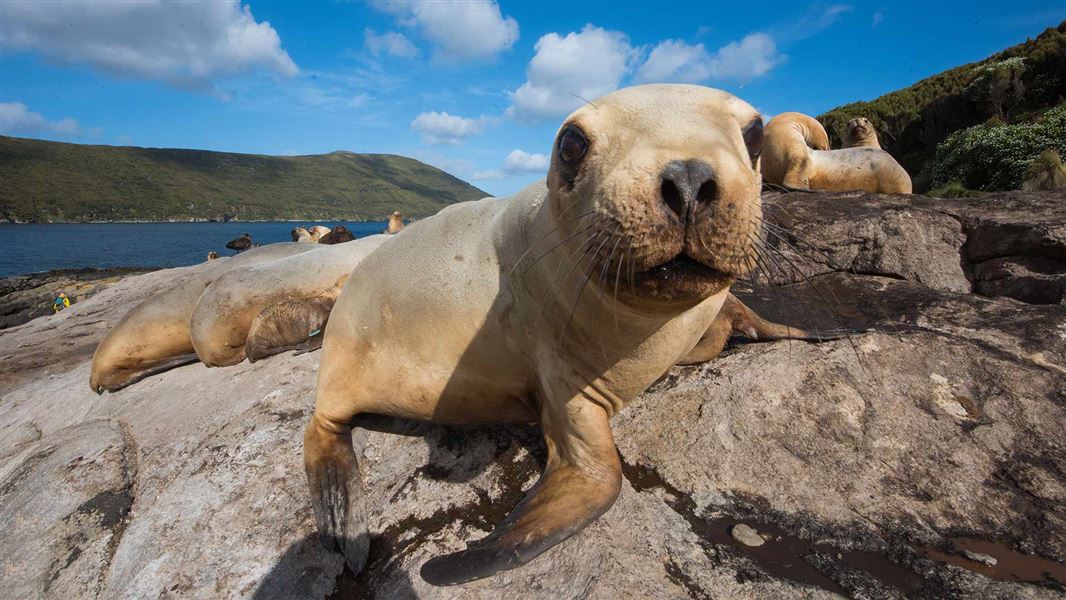
DOC works in partnership with Te Rūnanga o Ngāi Tahu and Fisheries New Zealand to manage threats to New Zealand sea lions and recover the species. The New Zealand Sea Lion Trust also supports research and initiatives to recover the species.
Mātauranga Māori
DOC and Te Rūnanga o Ngāi Tahu commissioned the 'Mātauranga Māori Project on the New Zealand sea lion in 2019' to further a shared understanding of the species and enable whānau, hapū, and iwi to fulfil their kaitiakitanga responsibilities towards sea lions.
Mātauranga Māori project on NZ sea lion 2024 (PDF, 3,043K)
Threats
New Zealand sea lions are classified as Nationally Endangered in the New Zealand Threat Classification System and have been listed as Endangered on the IUCN Red List of Threatened Species since 2015.
The species is actively in decline at its main colonies in the subantarctic, where approximately 93% of the population breeds.
Small numbers of sea lions have spread north to Rakiura and the South Island, around 7% overall. The populations on Rakiura and the South Island are increasing.
Across the range, New Zealand sea lions are under pressure from human activities including commercial and recreational fisheries, human disturbance and deliberate killings, harassment by dogs, vehicle collisions, boat propeller strike, aquaculture, oil spills, and oil and gas exploration.
The main non-human pressures on the species are disease and shark predation.
Climate change is also limiting the recovery of the species, particularly from extreme weather events and changes in food availability.
DOC’s work to recover the species
Threat management plan
The New Zealand sea lion Threat Management Plan 2017-2022 (TMP) was initiated by the New Zealand Government in response to the third-lowest annual pup count on Maukahuka/Auckland Islands since monitoring began in 1995 (1,575 pups in 2014).
The TMP guided a programme of work to mitigate threats to sea lions across their geographic range. The plan expired in 2022 and its objective to ‘halt the decline of the New Zealand sea lion population within five years’ was not met.
However, there has been progress in some areas, such as:
- a continued increase in the number of pups born on Rakiura and the South Island
- the regulation of Sea Lion Exclusion Devices (SLEDs) in the southern squid fishery in 2022, and
- increased monitoring on Motu Ihupuku/Campbell Island.
DOC has reviewed the TMP in partnership with Te Rūnanga o Ngāi Tahu and Fisheries New Zealand and a new plan will be released in 2026.
Surveys and active management
DOC carries out annual surveys across the species range to determine the number of breeding females in each location. A subset of sea lion pups are marked with flipper tags and microchips for long-term monitoring of survivorship and breeding status. The tag and resight information are stored in a publicly accessible database. This survey work is supported by the Conservation Services Programme.
DOC also has a programme of active management, including threat mitigation where tools have been developed, and ongoing research and development of new tools.
Follow the links below to read annual reports about DOC’s sea lion survey work and active management programmes on our Cerberus site:
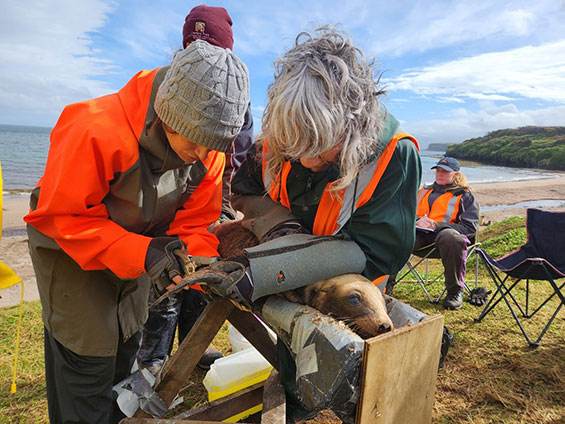 Tagging New Zealand sea lions at Enderby Island, Auckland Islands
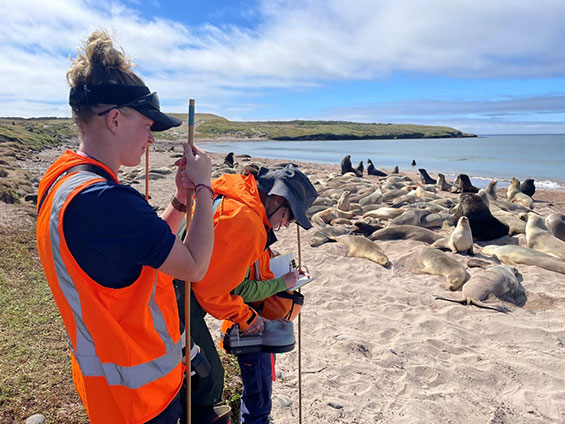 Monitoring the sea lion colony at Enderby Island, Auckland Islands
Legislation to protect the New Zealand sea lion
The New Zealand sea lion has been protected in one form or another since 1893, when sealing was prohibited by New Zealand law.
The Marine Mammals Protection Act 1978 makes provision for the protection, conservation, and management of marine mammals within New Zealand and within New Zealand fisheries waters.
Marine Mammals Protection Act 1978
4 Restrictions on holding or taking marine mammals
(1) Notwithstanding anything in any other enactment, but subject to this Act, no person shall-
(a) hold a marine mammal in captivity; or
(b) take any marine mammal, whether alive or dead, in or from its natural habitat or in or from any other place-
9 Offence to take marine mammal without permit
(1) Every person commits an offence and is liable to imprisonment for a term not exceeding 2 years or to a fine not exceeding $250,000 who takes, has in possession, exports, imports, has on board any vessel, vehicle, aircraft, or hovercraft, or has control of any marine mammal, otherwise than under this Act or a permit.
take includes-
(a) to take, catch, kill, injure, attract, poison, tranquillise, herd, harass, disturb, or possess:
(b) to brand, tag, mark, or do any similar thing:
(c) to flense, render down, or separate any part from a carcass:
(d) to attempt to do any act specified in paragraph (a) or paragraph (b) or paragraph (c)