New Zealand status: Endemic
Conservation status: Threatened – Nationally Vulnerable
Found in: Many headwater tributaries within the Clutha/Mata Au, and waterways of the Catlins region.
Threats: Introduced fish, habitat loss, impoundments, land use intensification and water abstraction processes.
Image gallery
Habitat
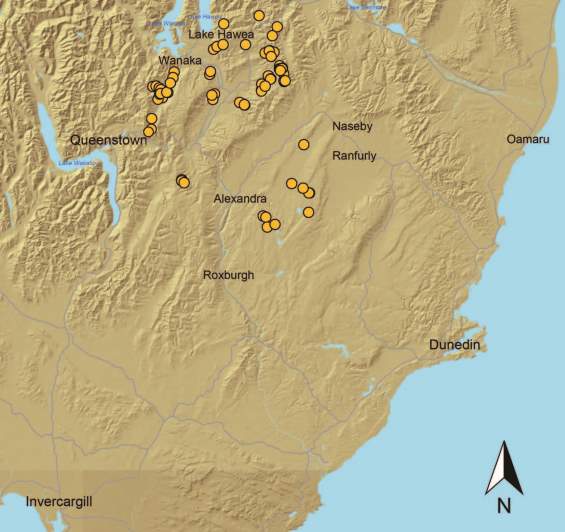
Clutha flathead galaxias (Galaxias 'species D') are found in the upper tributaries of the Clutha River upstream of Roxburgh, and two tributaries of the Pool Burn.
They thrive in headwater streams and seepages that are small enough to step across and are surrounded by grasses and tussock.
Their total remaining habitat is 57 ha.
Features
Features of Clutha flathead galaxias include:
- a broad, flattened head and thick luscious lips
- golden brown with darker flecks and splotches across their bodies
- some display beautiful gold and orange dustings
- typically grow up to 100 mm in length but can get to 150 mm
- individual fish may look very different to each other reflecting the variety of habitats they may occur within
- feed on small stream invertebrates such as mayflies and stoneflies
- difficult to spot as they hide in vegetation
- spawn in spring (October to November) laying tiny 2 mm eggs in stream vegetation or amongst stones
- can live up to 10 years.
This taxa is currently indeterminate and has not been formally described to date. Work is currently being undertaken to look into formal description.
Threats
Over the last decade, we have lost 35% of known Clutha flathead populations. This can be directly linked to the spread of sports fish (trout and brook char), which eat galaxiids.
Changes in land use is also a threat, such as stock access to streams, reduction of native vegetation, land development and forest harvesting.
These land use changes impact on the streams in which galaxiids live, increasing sedimentation, changing natural flows through water abstraction, and reducing the amount of habitat available for spawning.
Find out how you can help non-migratory galaxiids.
Distribution
This map shows the known locations of Clutha flathead galaxias, as at 2013.
Source: New Zealand freshwater fish database