It is only suitable for hikers with expert route-finding skills, good fitness and experience in technical alpine terrain.
Image gallery
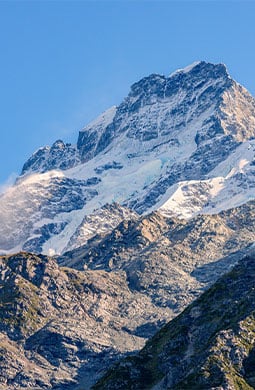
Sefton Bivouac and Mt Sefton.
Image: © Jake Osborne| Creative Commons
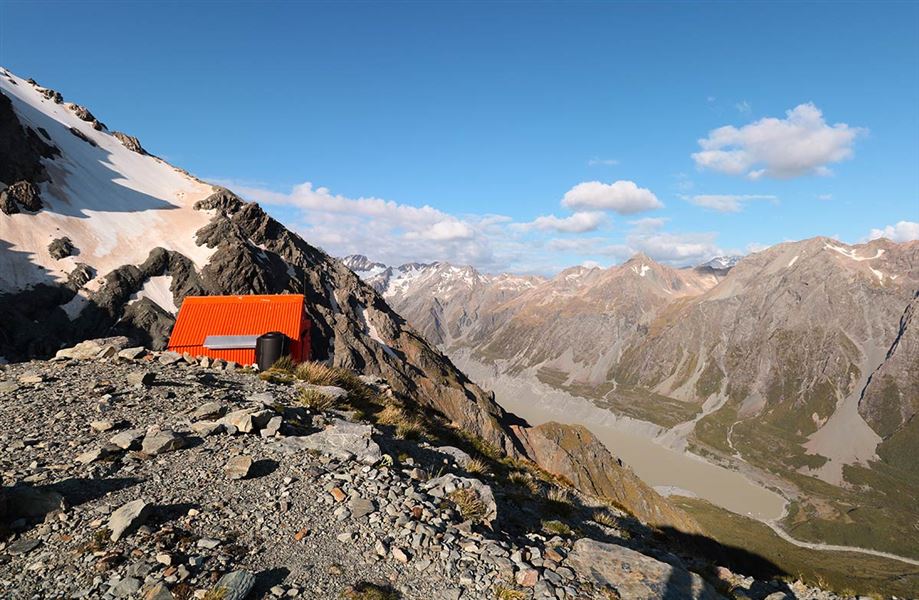
Sefton Bivouac is situated at 1650 m, below the Footstool. It has spectacular views of the surrounding mountains and Te Waewae Glacier.
It is the oldest hut in Aoraki/Mount Cook National Park that is still on its original site. It is also the oldest building in the wider park area. It has been used by generations of climbers.
There is a daily radio check-in and weather update to all the alpine huts in Aoraki/Mt Cook National Park. There are instructions in the hut that explain how the radio update is done.
History
Aoraki/Mount Cook chief guide Peter Graham decided to build a small hut above the Te Waewae Glacier, to make climbing Sefton and Footstool easier.
Materials were carried to the site on men's backs and the hut erected on site. The year after it was built it was damaged by snow. It was repaired, and has remained in much the same condition since.
This is a very simple structure but it has survived remarkably well and continues to be used regularly.
Fees
Free
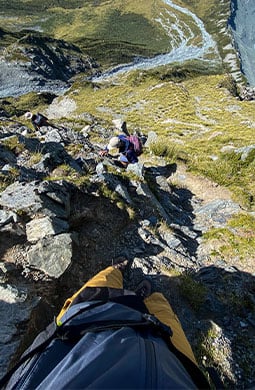
The terrain on the way to Sefton Bivouac has high drop-offs.
Image: © Hunter Smith
The trip to Sefton Bivouac is through challenging and technical alpine terrain.
What to expect
- No marked route, apart from two DOC markers at critical decision points, and no formed track
- Extremely steep terrain, near vertical in places, with steep drop-offs. A fall could result in serious injury or death.
- Loose and unstable ground
- Scrambling and climbing using your hands
- No shelter on the route
- Fast-changing alpine weather and high winds on the route
- Snow, ice and avalanches from May to November
Skills and experience needed
- Good fitness
- Excellent navigation and route-finding skills
- Confidence and experience hiking in technical alpine terrain with steep drop-offs
- Outdoor skills, including the ability to assess alpine weather
- Mountaineering experience during winter conditions (May to November)
Check the current conditions
Check the weather forecast and reschedule your trip if needed. Bad weather will make an already challenging trip more hazardous.
Contact the Aoraki/Mount Cook Visitor Centre for advice on the current conditions.
Getting there in winter (May to November)
Reaching Sefton Bivvy in winter conditions (early May to November) requires good level of mountaineering experience, including walking on ice and snow with ice axe and crampons, route finding and using an avalanche transceiver, probe and shovel.
Easier alternatives
- Mueller Hut is also an alpine hut with panoramic views, but has a marked route.
- Sealy Tarns Track is half day hike with great views and less technical terrain.
Location
NZTopo50 map sheet: BX15
Grid/NZTM2000 coordinates: E1364422, N5158673
What to take
- The hut only has 3 bunks and can be very busy in summer. Bring a tent as backup
- Bring a bedroll as there are no mattresses.
- The hut has no heating or cooking facilities.
- The water tank is small, we recommend bringing your own drinking water.
- Always carry a distress beacon, even for day trips. You can hire these at the Aoraki/Mount Cook Visitor Centre.
- DOC gear lists: Walking and tramping gear lists
Weather
High winds, snow, ice, whiteouts/low visibility and freezing temperatures can happen at any time of year in Aoraki/Mount Cook National Park.
The weather can change suddenly – be prepared for all conditions. Bring warm, waterproof clothes and sun protection.
Te Waewae Glacier
There are significant ice fall and rockfall hazards at Te Waewae glacier. Glacier hiking experience and equipment is needed if proceeding beyond Sefton Bivouac to the glacier.
Kea
Kea live in this area and may damage tents, packs and other gear. Keep your gear secure. Never feed kea.
Toilet
There is an open air, self-contained toilet known as a Denali 400 near the biv – this is basically a toilet seat on top of a big tank. Visitors are recommended to bring a compostable bag and poo pot or poo tube to transport your poo during snowy conditions.
See toileting in the outdoors.
Avalanche
There is an active avalanche path on the route to Sefton Bivouac. Avalanches are most common from May to November. However, avalanches can occur at any time of the year as snow falls year-round in the park.
Make sure:
- You check the New Zealand Avalanche Advisory (NZAA) before you go.
- You have the skills to assess avalanche conditions and recognise avalanche prone areas.
- You know how to safely travel in avalanche terrain.
- Each person has an avalanche transceiver, a snow shovel and a probe, and knows how to use them.
Read more about Avalanche terrain in Aoraki/Mount Cook National Park
Aoraki/Mount Cook National Park Visitor Centre
| Phone: | +64 3 435 1186 |
| Email: | mtcookvc@doc.govt.nz |
| Address: | 1 Larch Grove Aoraki/Mount Cook 7999 |
| Hours: | Visitor centre hours and services |