
Background
This measure relates to indicator 1.4.2 – Security of threatened and at risk taxa.
The kākāpō is one of Aotearoa New Zealand’s unique national treasures. However, this Nationally Critical bird is found on only four of New Zealand’s offshore islands, with a population size of almost 250 individuals and major threats of infertility, disease and low genetic diversity. DOC has been closely monitoring kākāpō populations since 1990, with a dedicated recovery programme formed in 1995. Intensive conservation management has more than quadrupled the size of the population since then, and from 2016-2023 the population increased by 100% as a result of large rimu masts in 2016, 2019 and 2022.
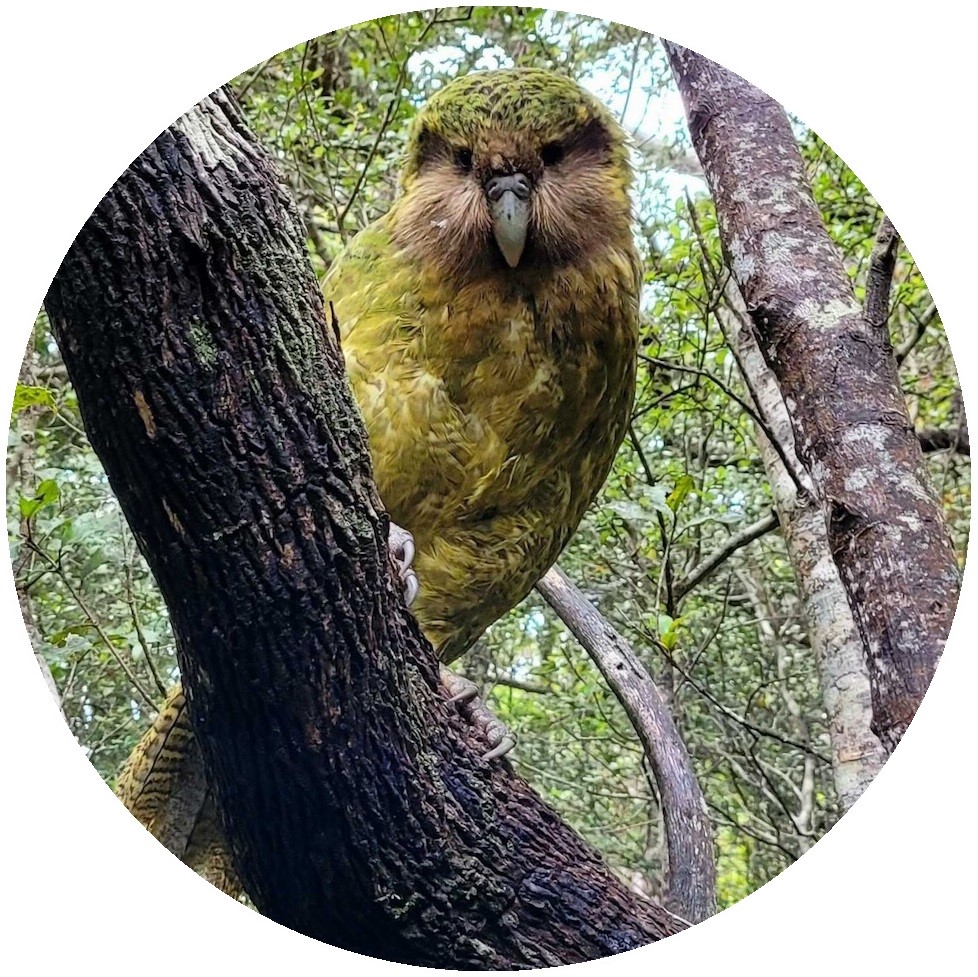 A male kākāpō on Anchor Island in Dec 2022. Credit: Petrus Hedman.
What did we measure?
The entire kākāpō population has carried radio transmitters and been closely monitored since 1990 to allow accurate determination of the population demographics.
What did we find?
- There was no kākāpō breeding in 2023. This was expected following a large kākāpō breeding season on the southern islands in 2022.
- The kākāpō population consists of 248 individuals (Figure 1).
- The population sex ratio and age structure remains well balanced with good numbers of males and females and a range of ages (Figure 2).
- There were five adult deaths in 2022. So far in 2023 (up to 27/6/2023) there have been two deaths - one adult and one juvenile (Figure 3).
- Research projects are investigating many areas relating to kākāpō management, including genetics, the diseases cloacitis and aspergillosis, diet, and microbiology.
Figures
Figure 1: Changes in the kākāpō population (adults and juveniles combined) since 1990. Population totals apply to 1 January each year.
Figure 2: Age structure and sex ratio of the kākāpō population. For age class definitions, see below.
| Class | Age range |
|---|---|
| Adult | > 5 years |
| Juvenile | 150 days - 5 years |
| Chick | < 150 days |
Figure 3: Annual number of kākāpō deaths since 1991 (calendar years).
Data quality
This measure is classified as a partial measure of high accuracy. It complies with the data quality guidelines used in New Zealand’s Environmental Reporting Series.
Intensive management and low numbers of individuals allow regular and complete censuses of the entire population to be made. Therefore, the key demographic parameters reported on are extremely accurate.
Glossary of terms
Aspergillosis is a fungal infection that commonly causes respiratory disease in birds, particularly those that breed in cavities. It can cause both upper (nasal, sinus, eye and trachea) and lower (lungs and air sacs) respiratory problems or more broadly distributed systemic infections that can be fatal.
Cloacitis is an emerging disease among kākāpō that results in inflammation of affected birds’ lower digestive and reproductive tracts.
Nationally Critical is a species conservation status within the New Zealand Threat Classification System, defined as “most severely threatened, facing an immediate high risk of extinction”.
Additional resources
Lee, W.; McGlone, M.; Wright, E. 2005: Biodiversity inventory and monitoring: a review of national and international systems and a proposed framework for future biodiversity monitoring by the Department of Conservation. Landcare Research Contract Report LC0405/122 for the Department of Conservation, Wellington (unpublished). 213 p.
McGlone, M.; Dalley, J. 2015: A framework for Department of Conservation inventory and monitoring: intermediate outcomes 1–5. Landcare Research Contract Report LC2427 for the Department of Conservation, Wellington (unpublished). 75 p.