Publications
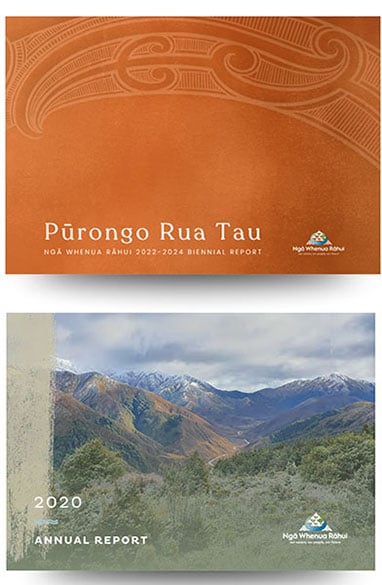
Our biennial reports share stories about kaipupuri whenua and the mahi taking place across the motu. They show how whānau are restoring habitats, protecting taonga species, and carrying mātauranga forward through each kawenata.
Latest report
Ngā Whenua Rāhui biennial report 2022–2024 (PDF, 11,319K)
Some highlights of the report are:
- Motutāiko Island: Protecting rare species.
- Cyclone Gabrielle: Unyielding conservation efforts.
- Traditional Fishing Practices: Reviving cultural heritage.
- Hēteri-Ā-Nuku Programme: Training future conservation leaders.
Previous reports
- Nga Whenua Rāhui biennial report 2020–2022 (PDF, 11,600K)
- Annual report 2019–2020 (PDF, 8,274K)
- Annual report 2018–2019 (PDF, 6,571K)
Media coverage
Story of Ngā Whenua Rāhui
Waka Huia profiled the early story of Ngā Whenua Rāhui, tracing the kaupapa back to the 1980s when whānau in Waikare faced losing whenua through unpaid rates. That challenge led to the establishment of the Ngā Whenua Rāhui Fund in 1991 to support Māori landowners to protect their ngahere, control pests, and uphold the mauri and mātauranga held in those places.
The episode features kōrero from Kevin Prime, Mike Mohi, Mavis Mullins and Whakarae Henare, each reflecting on the purpose and responsibilities of the kaupapa. Here’s a look back at that story from Waka Huia.
Ringatohu: Aroha Treacher.
Mavis Mullins speaks at NETS2025
National Māori biodiversity forum NZBI hosted Ngā Whenua Rāhui Chair Mavis Mullins to speak about the importance of indigenous biodiversity and the role of kawenata on Māori-owned whenua. Her kōrero acknowledged the long-standing pressures on whenua, the responsibilities carried by whānau, and the value of working together to protect taiao.
Ngā Whenua Rāhui celebrates 25 years of conservation achievements
National Māori news service Te Karere joined Ngā Whenua Rāhui in celebrating 25 years of the kaupapa, sharing how more than 170 hectares of Māori-owned whenua had been protected through kawenata at that time. The story reflected the commitment of whānau and hapū to long-term care of their whenua.
Today, more than 187,000 hectares are held in kawenata across the motu. Here’s a look back at that coverage.
More information: Follow our facebook page