GET TRAPPING
Anyone can trap introduced predators and give native species a fighting chance.
About 68,000 native birds are killed every night by predators like rats, stoats and possums.
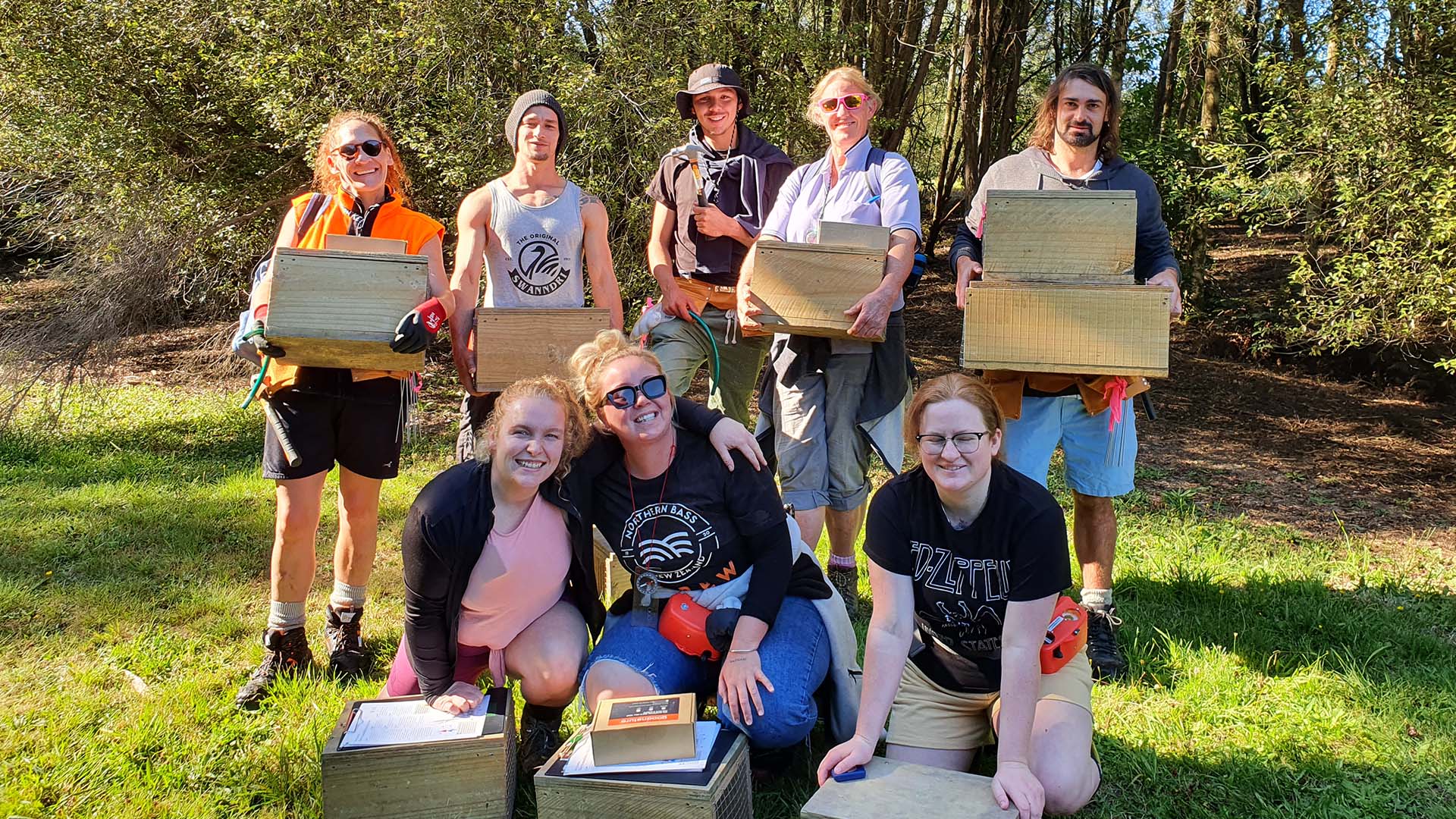 Image: Michelle Bridge | DOC
WHAT YOU
CAN DO
-
If you’re ready to set up a trap in your own garden, the Predator Free New Zealand Trust has a guide to help you start backyard trapping. Self-resetting traps are a great option if you’re short on time.
-
No backyard, or don’t like the idea of dealing with dead rats? No problem. There are plenty of groups who will do it for you – just Give a Trap through Forest & Bird.
-
Want to help beyond your own home? All around New Zealand, community groups are trapping pests in their local area. The Predator Free New Zealand Trust can help you find a trapping group near you.

GET THE TEAM INVOLVED FOR CONSERVATION WEEK
Why not make your work buddies your trapping buddies? Trapping works best when you do it together and share tips and tricks.
You could:
-
set up a trap at your workplace
-
share tips on the best bait and trap placement
-
see who can catch the most predators in a month – winner gets the glory!
Remember to share the fun! Use #AlwaysBeNaturing and tag @docgovtnz.
HOW YOU’LL
MAKE A DIFFERENCE
Introduced predators kill about 25 million native birds every year. They also target lizards, insects, frogs and bats.
Trapping is a powerful way of protecting nature. You’ll see more birds visiting your backyard or local reserve, and fewer rats in your compost. The more people involved in predator-free, the greater the impact.
In Wellington, more than 20,000 households are trapping. Tūī are reaping the benefits – they've increased from just 30 pairs in the 1990s to become the most commonly seen bird in Pōneke.
READY TO DO MORE?
- Get all the information you need to start your own trapping programme, no matter how big or small, with DOC’s Practical Guide to Trapping (PDF, 5,592K).
- If you’re really keen, you can sign up for NMIT’s predator trapping methods course, delivered in partnership with DOC. Choose between a 2-day workshop or 12-week online course.
- If you’re part of a predator-control group, map your traps, track your results and share your data using the free Trap.NZ tool.
ARE YOU IN?
It takes everyone to make a difference for nature. Every little bit helps.
NATURE'S IN
TROUBLE
Thousands of our native species are heading towards extinction, but it’s not too late to save them.
All around New Zealand, Kiwis are bringing nature back.

RELATED ACTIONS
Bring the dawn chorus back to your little corner of New Zealand.
Experience what people can do for nature when they work together.
Or a kōwhai, or a makomako, or any of the other 2,000 plant species only found here.