This marine reserve came into effect on 1 July 2026.
Image gallery
Ōrau
Rocky reefs and rimurapa forests support diverse marine life, including a strong and enduring pāua population.
Ōrau is easily reached from beaches along the Otago Peninsula, from Sandfly Bay to St Clair.
Check weather, swell, tides and local notices to mariners. Respect rāhui, seasonal restrictions and wildlife closures where signposted.
Know your boundaries
- Download the Marine Mate App, which can show your location in relation to the marine reserve boundaries when used with GPS capable smart phones.
- Download the GPS files available through the yellow map and boundaries button above. Input the coordinates into your chart plotter.
Know the rules
This marine reserve is a ‘no take’ area, meaning fishing and harvesting are not permitted.
- No fishing of any kind.
- Don't take or kill marine life.
- Don't remove or disturb any marine life or materials.
- Don't feed fish - it disturbs their natural behaviour.
Recreational, educational, and scientific activities
Recreational, educational and scientific activities are encouraged if they do not disturb or endanger marine life or natural features. A permit is required from DOC for any scientific research within the reserve.
Anchoring in marine reserves is permitted but take care to avoid damaging sensitive habitats.
Boats are permitted to launch from and transit through marine reserves. It is not an offence to carry fish or marine life within a marine reserve if it has been caught outside of the marine reserve area.
Report illegal or suspicious activity
Don't take, disturb, kill or damage anything within the reserve - it's illegal. If you see people taking anything from the reserve, report the activity as soon as possible.
You can call 0800 4 POACHER (0800 476 224) or 0800 DOCHOT (0800 362 468).
It is also an offence to pollute or litter the reserve, discharge any firearm in or into the reserve or erect any structure in the reserve.
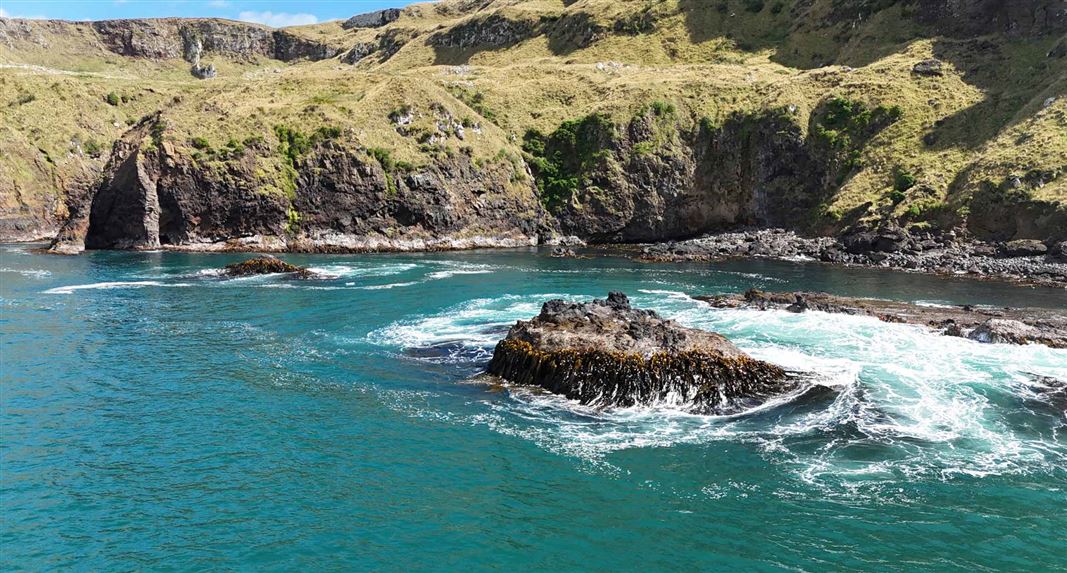
Ōrāu Marine Reserve spans a diverse and highly productive stretch of coastline from Harakeke Point to St Clair. It showcases a rich mix of habitats including sandy beaches, basalt headlands, rocky reefs, offshore stacks, lagoons, and sheltered bays.
Close to Dunedin, it offers an accessible and iconic place for people to experience marine nature, while protecting ecosystems that range from exposed, kelp‑covered reefs to sheltered soft‑sediment environments.
Dense rimurapa/bull kelp forests support abundant marine life such as moki, blue cod, butterfish, and kōura/rock lobster, alongside a nationally significant and relatively intact pāua population.
The coastline is also a biodiversity hotspot for wildlife, with important habitats for hoiho/yellow-eyed penguins, rāpoka/New Zealand sea lions, fur seals, kororā/little penguins, and a variety of seabirds. It also lies along the migration path of southern right whales.
Ōrāu Marine Reserve sits along a coastline that is not only rich in biodiversity, but also deeply shaped by Māori history and cultural connection.
The wider Otago Peninsula has been occupied for centuries by Waitaha, Kāti Māmoe and Kāi Tahu, with kāika (settlements) traditionally located in sheltered bays such as Sandfly Bay, where people relied on abundant kaimoana (sea food), seabirds, and coastal resources for sustenance.
This coast formed an important food-gathering and travel route, with rocky reefs, estuaries, and beaches all valued as mahinga kai (traditional food sources). Archaeological evidence shows early use of these areas for hunting and gathering, including moa and marine resources.
In later centuries, European sealing and whaling activity also concentrated along this coastline, due to its rich marine life.
Protect our marine reserves
- No fishing of any kind.
- Don't take or kill marine life.
- Don't remove or disturb any marine life or materials.
- Don't feed fish - it disturbs their natural behaviour.
- Take care when anchoring to avoid damaging the sea floor.
DOC Customer Service Centre
| Phone: | 0800 275 362 |
| Email: | info@doc.govt.nz |