This marine reserve came into effect on 1 July 2026.
Image gallery
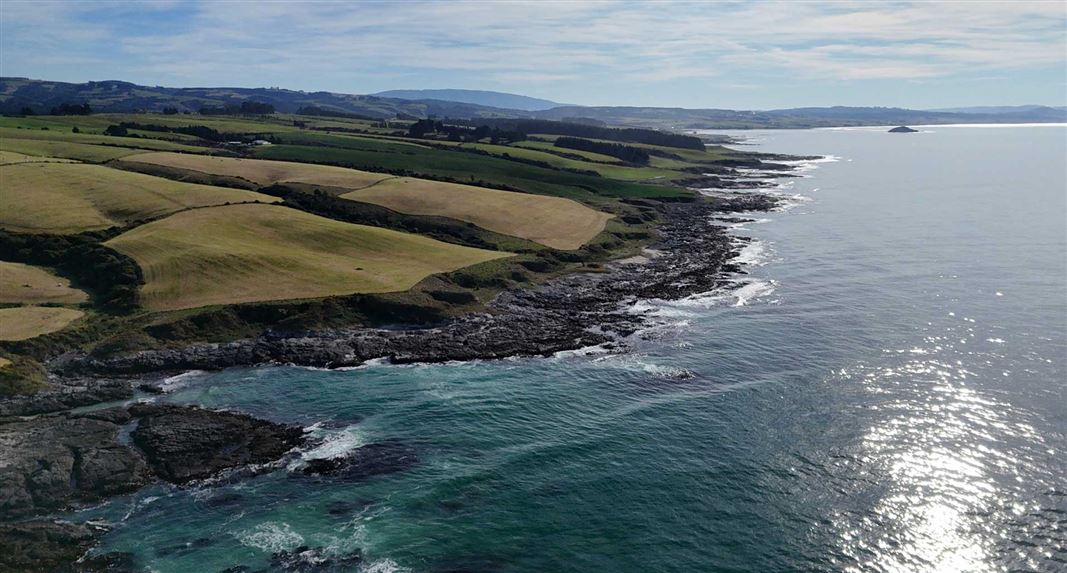
Hākinikini
An exposed rocky coastline shaped by schist formations, providing complex habitat for intertidal and reef species.
Hākinikini has limited road accesaccess but can be accessed on foot via Akatore Creek at low tide.
Check weather, swell, tides and local notices to mariners. Respect rāhui, seasonal restrictions and wildlife closures where signposted.
Know your boundaries
- Download the Marine Mate App, which can show your location in relation to the marine reserve boundaries when used with GPS capable smart phones.
- Download the GPS files available through the yellow map and boundaries button above. Input the coordinates into your chart plotter.
Know the rules
This marine reserve is a ‘no take’ area, meaning fishing and harvesting are not permitted.
- No fishing of any kind.
- Don't take or kill marine life.
- Don't remove or disturb any marine life or materials.
- Don't feed fish - it disturbs their natural behaviour.
Recreational, educational, and scientific activities
Recreational, educational and scientific activities are encouraged if they do not disturb or endanger marine life or natural features. A permit is required from DOC for any scientific research within the reserve.
Anchoring in marine reserves is permitted but take care to avoid damaging sensitive habitats.
Boats are permitted to launch from and transit through marine reserves. It is not an offence to carry fish or marine life within a marine reserve if it has been caught outside of the marine reserve area.
Report illegal or suspicious activity
Don't take, disturb, kill or damage anything within the reserve - it's illegal. If you see people taking anything from the reserve, report the activity as soon as possible.
You can call 0800 4 POACHER (0800 476 224) or 0800 DOCHOT (0800 362 468).
It is also an offence to pollute or litter the reserve, discharge any firearm in or into the reserve or erect any structure in the reserve.
This reserve protects an exposed intertidal and shallow rocky reef environment, contributing an important example of these habitats to the wider network and improving ecological connectivity with similar sites along the coast.
A rare occurrence of sea‑exposed schist creates unique and complex habitats, with quartz veins and crevices that support a rich diversity of intertidal and subtidal species, including kōura papatea/rock lobster.
Rocky reef habitats are largely confined to the nearshore zone, allowing effective protection of key ecosystems, including accessible rock platforms and pools. Macrocystis kelp occurs in the area, and the site offers strong potential for the recovery of historic kelp forests, enhancing its overall ecological and conservation value.
Protect our marine reserves
- No fishing of any kind.
- Don't take or kill marine life.
- Don't remove or disturb any marine life or materials.
- Don't feed fish - it disturbs their natural behaviour.
- Take care when anchoring to avoid damaging the sea floor.
DOC Customer Service Centre
| Phone: | 0800 275 362 |
| Email: | info@doc.govt.nz |