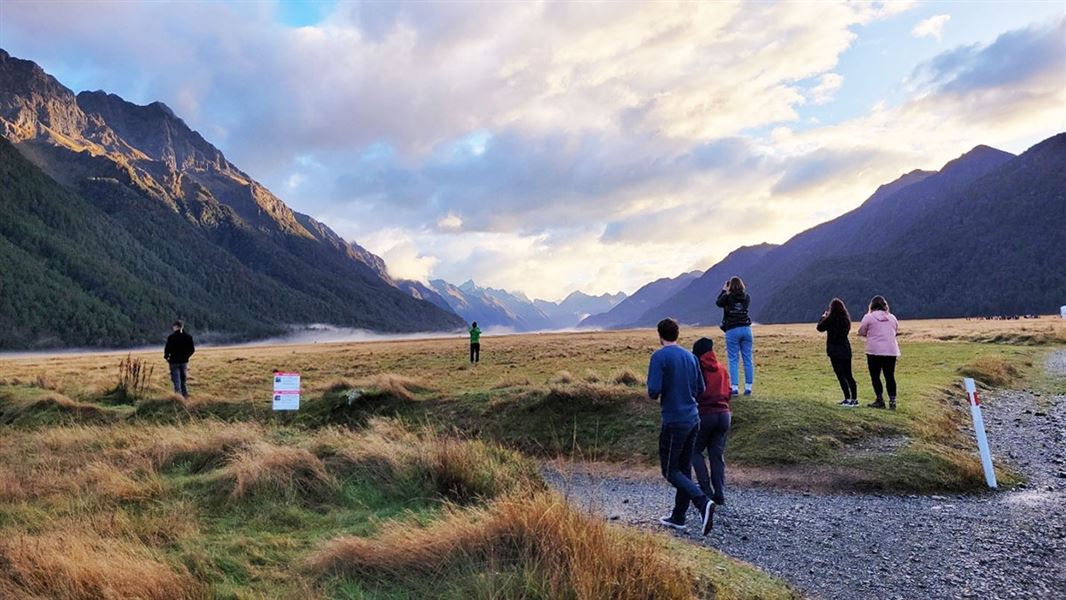
The 119 km drive from Te Anau to Piopiotahi Milford Sound passes through Fiordland National Park. Along the way you'll see glacier-carved valleys, native beech forest, lakes, waterfalls and dramatic mountain scenery.
Piopiotahi Milford Sound is one of New Zealand’s most popular destinations. In summer the Milford Road, car parks and sights can be busy.
Plan ahead, travel safely and allow plenty of time to enjoy the experience.
Image gallery
Plan your journey
Leave the driving to someone else
Take a coach so you can enjoy the beautiful scenery and relax on your way to your boat connection. If you are travelling from Queenstown, you can leave the nine-hour return drive to a professional.
For information about coach tours, local guides, scenic flights and other tourism operators in Piopiotahi Milford Sound, visit the Southland New Zealand website.
Avoid peak times
Arrive in Milford Sound after 1.30 pm to avoid the crowds.
The Milford Journey is busiest in summer between October and April. Traffic and parking are often busiest between 9.30 am and 1.30 pm.
If you're driving
The Milford Road (SH94) is a challenging alpine road shared by cars, buses, campervans and cyclists.
Allow plenty of time
The journey takes longer than many visitors expect. Allow more time than Google or other journey planners advise.
Driving times:
- Queenstown to Piopiotahi Milford Sound takes about 4.5 hours one way (without stops).
- Te Anau to Piopiotahi Milford Sound takes about 2.5 hours one way (without stops).
Allow extra time for sightseeing, traffic, road conditions and weather delays.
Traffic signals at Homer Tunnel can cause delays of up to 20 minutes. Build extra time into your journey.
If you're taking a cruise, allow one hour for parking and walking to the visitor terminal at Piopiotahi Milford Sound.
Drive carefully
The road is a challenging, narrow and winding drive and everyone will travel at different speeds.
The scenery can be distracting – take your time and be aware of other road users. If you wish to enjoy the views pull over with plenty of warning.
Make space for others when you park. Always be aware of pedestrians and wildlife.
Check road conditions before you travel
Road conditions can change because of weather, rockfalls, avalanches, maintenance work and other hazards.
Check the latest road status before you leave. Check the status of Milford Road SH94.
Roadside information signs at Te Anau, Knobs Flat and Piopiotahi Milford Sound provide current road condition updates.
Fuel up in Te Anau
Make sure you have a full tank of fuel before starting your journey. There are no fuel stations or shops between Te Anau and Piopiotahi Milford Sound.
Winter driving
Winter conditions (May to September) can be extremely challenging. Snow, ice and freezing temperatures can make driving hazardous, particularly in shaded areas where ice can remain throughout the day.
Drive with extreme care, especially in areas where the road is in the shade. If you are not confident driving in winter conditions, take a coach.
Traffic volumes are lower during winter, so it is advisable to leave later in the morning, from 9 am onwards.
Check the current road conditions as snow chains may be required. Snow chains are available for rent in Te Anau. Make sure you know how to fit them before starting your journey.
Avalanche areas
The section of road between the Hollyford Road junction and The Chasm is a restricted no-stopping zone because of avalanche risk.
Learn more about avalanche hazards and winter driving
Stay safe
Piopiotahi Milford Sound is exposed to natural hazards, including landslides, avalanches, earthquakes and severe weather.
In an emergency dial 111.
Conditions can change quickly and mobile coverage is patchy. Pack extra food, water, warm clothes, sunscreen and insect repellent.
Earthquake and tsunami risk
A large earthquake could trigger a landslide-generated tsunami in Piopiotahi Milford Sound.
If an earthquake is long or strong enough that it makes standing difficult:
- Drop, Cover and Hold until the shaking stops.
- Move immediately to higher ground and away from the water.
- If you see or hear a landslide, move uphill and away from the water as quickly as possible.
Learn more about earthquake and tsunami hazards at Piopiotahi Milford Sound.
Expect wet weather
This is one of the wettest places in Aotearoa New Zealand, with up to 7 metres of rain each year.
Weather can change quickly. Carry waterproof clothing and be prepared for changing conditions.
Protect wildlife
Do not feed endangered kea or other wildlife. Human food can harm them and change their natural behaviour.
Do not take your dog. Pets are not allowed in Fiordland National Park.
Public toilets
Public toilets are available at Te Anau, Knobs Flat and Piopiotahi Milford Sound.
Phone services
Mobile phone coverage is limited outside Te Anau. Phone services are available at:
- Knobs Flat (card phone)
- Homer Tunnel (emergency satellite phone)
- Piopiotahi Milford Sound (card phone)
Camping and campervans
There are several DOC campsites between Te Anau and The Divide.
Dump stations for campervans are available in Te Anau and Manapōuri. There are no dump stations at campsites along the Milford Road.
Do not discharge waste along the road or anywhere within Fiordland National Park.