This is a high protection area (HPA). Make sure you know what you can and can’t do in this area.
New marine protection
19 new marine protected areas are now in place in the Hauraki Gulf/Tīkapa Moana. These areas will contribute to a healthier Gulf for future generations.
Find boundaries and maps on this website and the marine mate app, ask your electronic chart provider or check signs at water entry points.
Approximately 20 km east of Tairua, The Aldermen Islands/Te Ruamahua are only accessible by private boat or charter. Most vessels launch from Whitianga, Hahei, Tairua, Pāuanui or Whangamata.
You may not land on these islands without a permit.
View a map and co-ordinates of Aldermen Islands/Te Ruamahua High Protection Area.
This is a High Protection Area.
Make sure you know Hauraki Gulf protection area rules and how you can help preserve this precious ecosystem.
Pakatoa is privately owned. Landing is not permitted.
Report illegal or suspicious activity
Don't take, disturb, kill or damage anything within the protection areas. It is illegal. If you see people taking anything from the reserve, report it as soon as possible.
Call 0800 4 POACHER (0800 476 224) or 0800 DOCHOT (0800 362 468).
It is an offence to pollute, litter, discharge fire arms and erect structures.
Report pests
Find-A-Pest lets you report potential pest species, including marine, plant, animal and fungal species.
If you come across something out of the ordinary, upload a picture to the app and a specialist will help identify it. If it's a biosecurity threat, this will be forwarded to Biosecurity New Zealand. If possible, take photos and record the location and name of the vessel.
Or call the Ministry for Primary Industries' Pest and Diseases hotline on 0800 80 99 66.
Prevent pests from spreading
Minimise the spread of pests on land and in water by thoroughly checking and cleaning your boat and gear. Keep your favourite spots pest-free for future generations by following these guidelines:
- clean your hull out of the water before you leave, including the propeller and anchor - see guidelines for hull cleaning
- clean all recreational and boating gear
- if leaving Auckland, check the marine pests website for biodiversity rules for other regions.
Check the marine pests website for more marine biosecurity information.
The Aldermen Islands/Te Ruamahua have two HPAs – a north and a south. They offer haven to plenty of marine life. These subtropical waters are influenced by the East Auckland current with reef systems extending out from the four islands. These islands are:
- Hongiora
- Middle
- Ruamahuanui
- Ruamahuaiti.
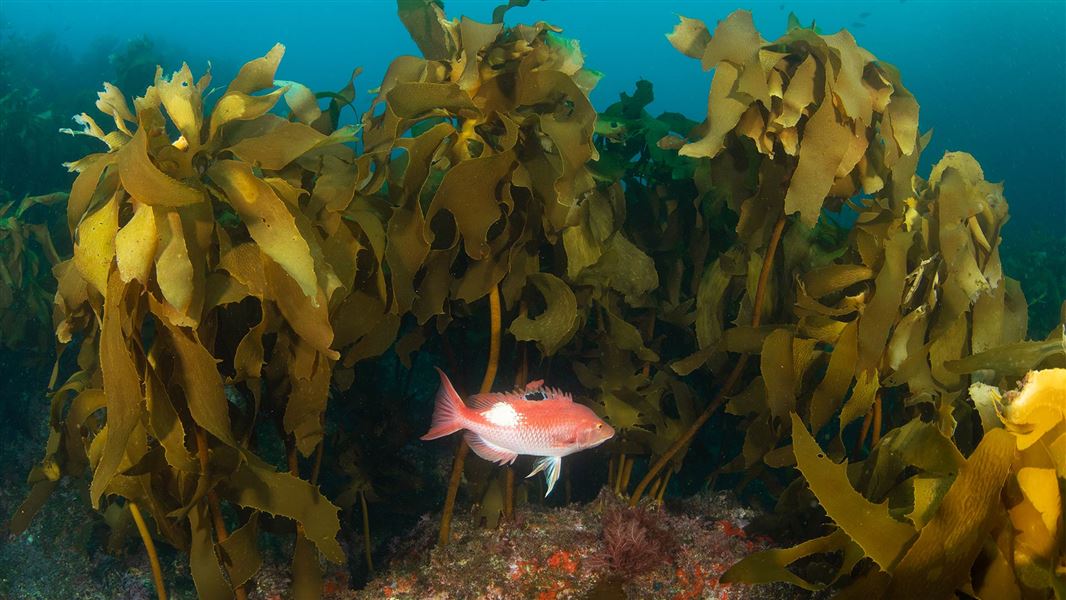
Marine habitats include rocky reefs and kelp forests with deeper reefs dominated by sponges, anemones and sea squirts.
In the area you’ll find:
- snapper/tāmure
- pink maomao/mata
- blue maomao
- wrasse/tangahangaha
- giant groupers/hapuku.
Open ocean species include:
- kahawai
- kingfish/haku
- marlin/taketonga
- manta rays/whai rahi
- various shark species/mako.
On land the pest-free islands are covered in regenerating coastal forest. They’re a breeding hotspot for seabird species including sooty shearwater/tītī, also known as muttonbirds. The vulnerable flesh-footed shearwater/toanui and New Zealand fur seals/kekeno are found here.
The Hauraki Gulf Marine Park/Tīkapa Moana/Te Moananui-ā-Toi has a rich history of human settlement. It includes the earliest places settled by Māori.
The area has supported the physical and spiritual wellbeing of mana whenua for centuries. Mana whenua use tikanga/customs that care for and protect the environment when collecting kaimoana/seafood. Mana whenua is the iwi or hapū that has customary authority in an area.
Around eight million years old, the five main islands are sometimes referred to as The Vanishing Volcanoes.
The islands are the eroded remnants of ancient volcanoes. They were once joined to the mainland but as sea levels rose the islands become separated from the rest of New Zealand.
The islands have been protected since 1933 when they were gifted to the people of New Zealand by Māori in 1969.
Located close to the mainland and pā sites, these islands have offered shelter and food to travellers for hundreds of years. Being so exposed to the elements, evidence of occupation is mainly limited to obsidian, shell and fish bones.
Captain Cook noted that the islands were occupied when he sailed past in 1769. Cook and his crew took the liberty of re-naming the islands The Court of Aldermendue to their resemblance to The Court of Aldermen in London.
Protection areas
These protection areas began in 2025. They were initiated from the Government response to the Sea Change – Tai Timu Tai Pari Hauraki Gulf Marine Spatial Plan. Sea Change was developed collaboratively by tangata whenua, environmental groups, and the fishing, aquaculture and agriculture sectors of the Hauraki Gulf between 2013 to 2017.
Help high protection areas
- No recreational or commercial fishing.
- No dumping or discharge of waste, sewage or litter.
- Take no more than a handful of shell, sand or driftwood.
- Anchoring is allowed.
- Certain Māori customary practices are allowed.
Some protection areas have exceptions to these rules.
DOC Customer Service Centre
| Phone: | 0800 275 362 |
| Email: | info@doc.govt.nz |
If you see any illegal or suspicious activity, contact the DOC emergency hotline 0800 DOC HOT (0800 362 468).