During the 1800s the dramatic Pink and White Terraces attracted global visitors and established Rotorua as New Zealand’s first tourist site.
Though the Terraces were soon lost, a rich historic reserve rises from their burial ground. With a wide variety of features, Tarawera has something for everyone.
Image gallery
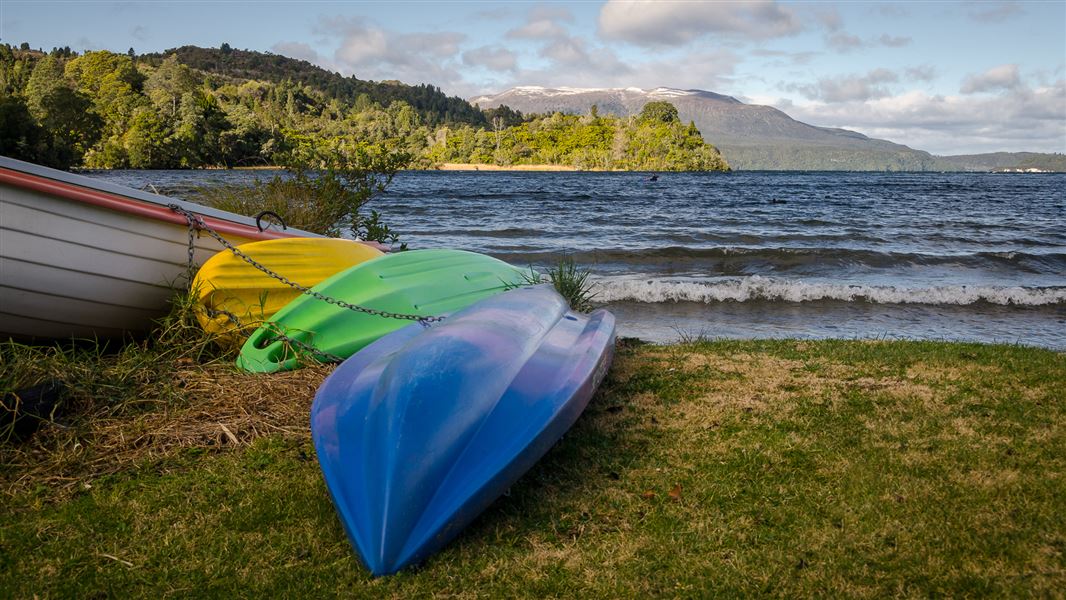
Visitors can still experience the rich, warm mineral waters that appealed to so many at Te Rātā/Hot Water Beach. Access to Tarawera Falls and Hot Water Beach follows a track through beautiful native forest, but those keen to trace the course of the original tourists can ride on a water taxi across the lake. Rock carvings, dated to pre-1886, are visible at Punaromia/The Landing. Lake Rotomahana, the resting place of the Terraces, is now twenty times the original size in Waimangu Volcanic Valley.
A thriving venture
In the 1800s, word spread of the eighth Natural Wonder of the World to be found at Tarawera – the spectacular Pink and White Terraces. The local tribes Tūhourangi and Ngāti Rangitihi, alongside non-Māori developers, profited greatly from this boom in tourism. Their success increased steadily until one night carved into the grounds of Tarawera – 10 June 1886.
Devastation in the dead of night
Predicted by the tohunga/priest Tūhoto Ariki, New Zealand’s deadliest volcanic eruption struck at around 10 pm. 120 people lost their lives, 6 settlements were buried, and the Terraces vanished overnight. Those who escaped the eruption sought shelter in Hinemihi whare, later relocated to Clandon Park in Surrey.
A forced migration and hopeful return
The nutrient-rich fields were covered by thick volcanic ash, so the survivors made the 17 km trek to Tikitapu/Blue Lake near Rotorua. Though they had no choice but to leave in order to find work, their descendants have returned to once again serve as guides.