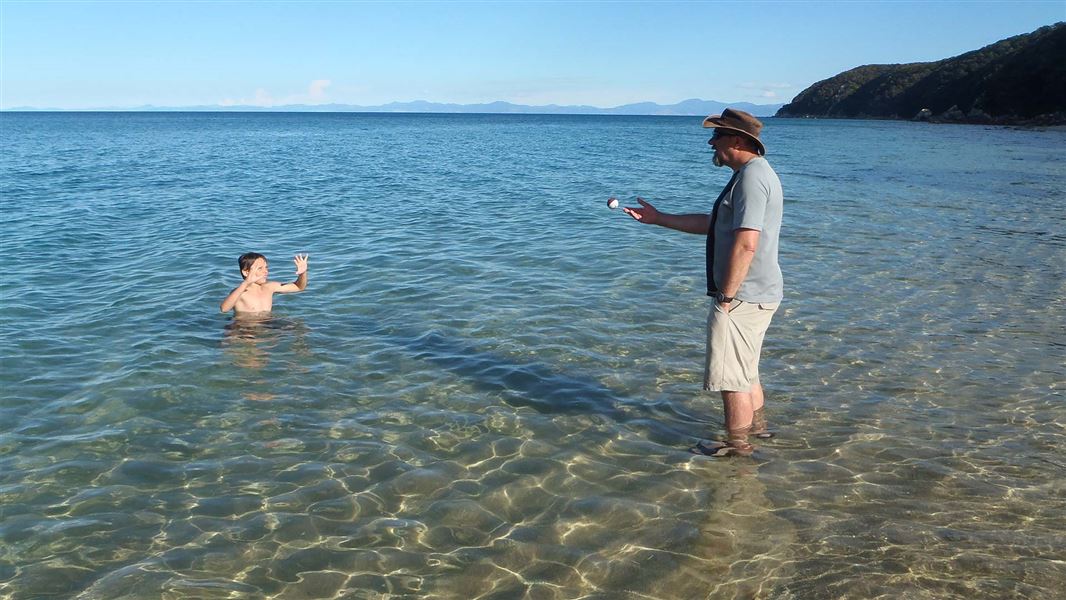
Know how to float
- If you get into trouble, float on your back with your ears in the water – this will increase your chances of survival. Relax and breathe normally.
- If you don't know how to float, get some lessons and practice before you enter the water.
Find the safest place
- Assess the conditions and look for hidden dangers like strong currents, sudden drop-offs, submerged rocks or logs, cold water, soft sand or mud, and river mouths. Learn about rips, tides, waves and other hazards (Surf Lifesaving NZ). Learn about river swimming and the dangers at rivers (Water Safety New Zealand).
- Find the safest place to get in and out of the water. Enter shallow and unknown water feet first.
- Places with lifeguards on duty are the safest. Find a beach with lifeguards. Listen to the lifeguards and pay attention to warning signs and flags.
If in doubt, stay out
- Check the weather before leaving home.
- If you're unsure about your skill level, the weather, or the water conditions, it's better to wait for another day.
- Choose a place that suits the least confident person in your group.
- The weather and water conditions can change quickly.
Take care of yourself and others
- Always go with a buddy and tell someone your plans.
- When wearing a lifejacket, make sure it fits properly. Lifejackets – Maritime NZ
- When children are in or near the water, a responsible adult should be within arm's reach and watching them carefully.
- Choose an activity that matches your skills, equipment, experience and confidence.
- Water and alcohol never mix.
Know how to get help
- If you get into trouble, raise your arm and call out for help.
- If you see someone who needs help, call 111 and ask for Police.