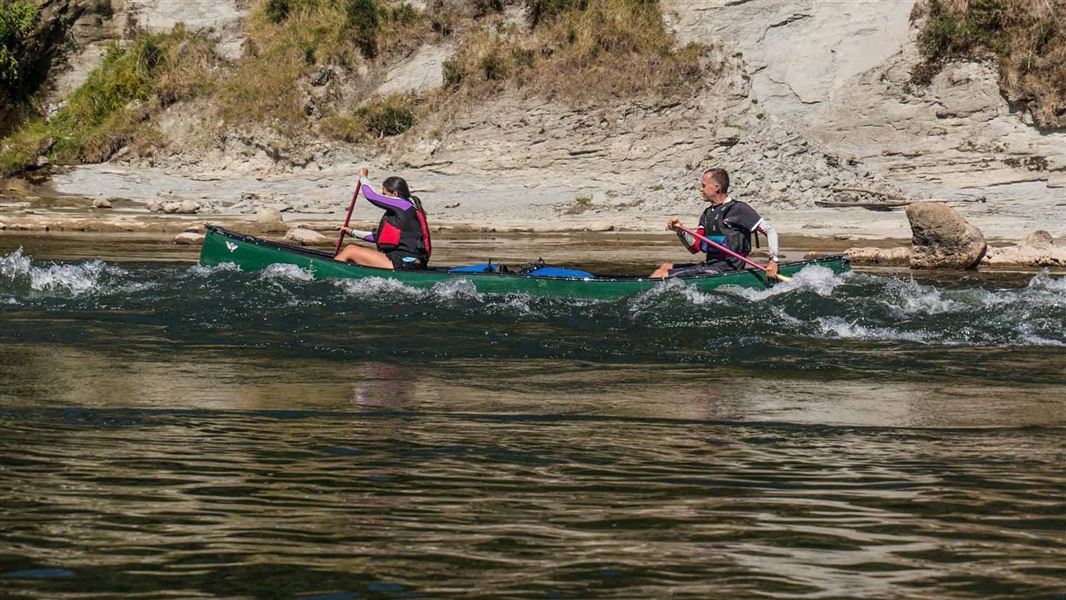
Wear your lifejacket
- Wear a lifejacket anytime you are on the water.
- Boats can sink very quickly. Wearing a correctly fitted lifejacket increases your survival time in the water.
Take two waterproof ways to call for help
- Take two waterproof ways to call for help. Wear or securely attach at least one directly to your body.
- Choose communication equipment that suits where you are going and the type of boating or paddling you are doing. VHF radio and distress beacons are recommended for boat users. Learn more about beacons.
- Do not rely on your mobile phone. It might end up overboard or out of range or battery.
- Share your plans with a trusted person including your exact starting location, route and the time you expect to return. Ask them to call 111 if you don’t return by your agreed-upon time and cannot be reached.
Check the marine weather forecast
- Check the local marine weather forecast before you go.
- New Zealand's weather can be highly unpredictable. Expect the weather and the state of the sea or lake to change.
Avoid alcohol
- Safe boating and alcohol do not mix.
- Things can change quickly on the water. You need to stay alert and aware.
Be a responsible skipper
- The skipper is responsible for the safety of everyone on board and for the safe operation of the boat.
- Stay within the limits of your vessel and your experience.
Know your limits and look after others
- There is a high chance of falling into the water and needing to paddle or swim while kayaking, canoeing or SUPing. Be aware of your swimming ability before heading out.
- Choose an activity that matches your skills, equipment, experience and confidence.
- Never leave children unattended when they are using a canoe, kayak, or stand up paddle board on the water.
Stay safe during bar crossings
- A coastal bar is a shallow sandbank at the entrance to a river or harbour estuary.
- Bar crossings can be dangerous. You need the right knowledge, skills, gear and conditions.
- Learn about bar crossing safety.