Beech masting is the seeding of beech trees triggered by a summer warmer than the previous one. Some other plants such as rimu and tussocks also mast.
Beech is New Zealand's dominant forest type. When it masts, the abundance of seed causes plagues of rats and stoats. These introduced predators prey on our endangered wildlife. Our predator control programmes protect our native wildlife from predators.
Climate change with more variable weather may increase the chance of a temperature difference between summers and make forest masts more common.
Video
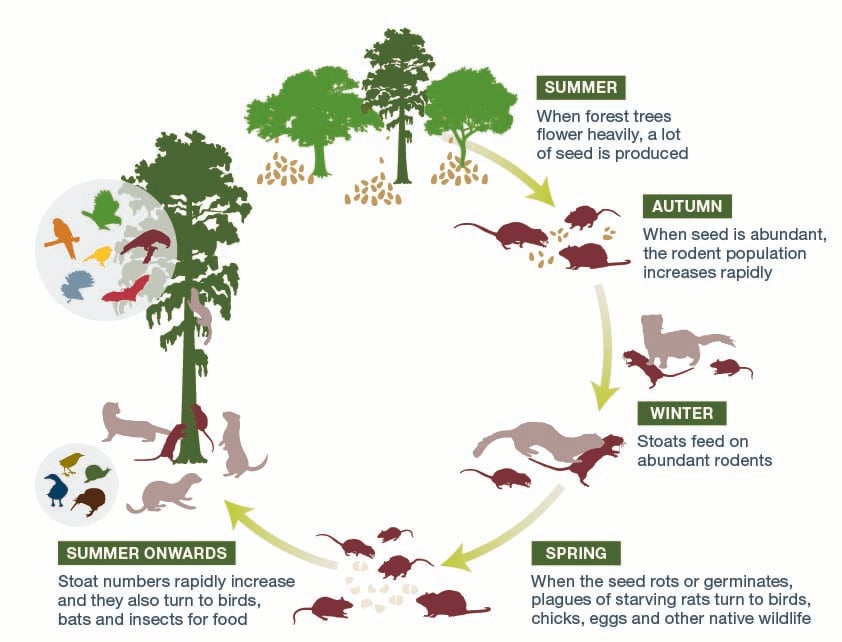
View a larger version of the predator plague cycle (PDF, 1,726K)
What the predator plague cycle diagram shows:
- Summer: When forest trees flower heavily, a lot of seed is produced.
- Autumn: When seed is abundant, the rodent population increases rapidly.
- Winter: Stoats feed on abundant rodents.
- Spring: When the seed rots or germinates, plagues of rats turn to birds, chicks, eggs and other native wildlife.
- Summer onwards: Stoat numbers rapidly increase and they also turn to birds, bats and insects for food.