Date: 23 April 2026
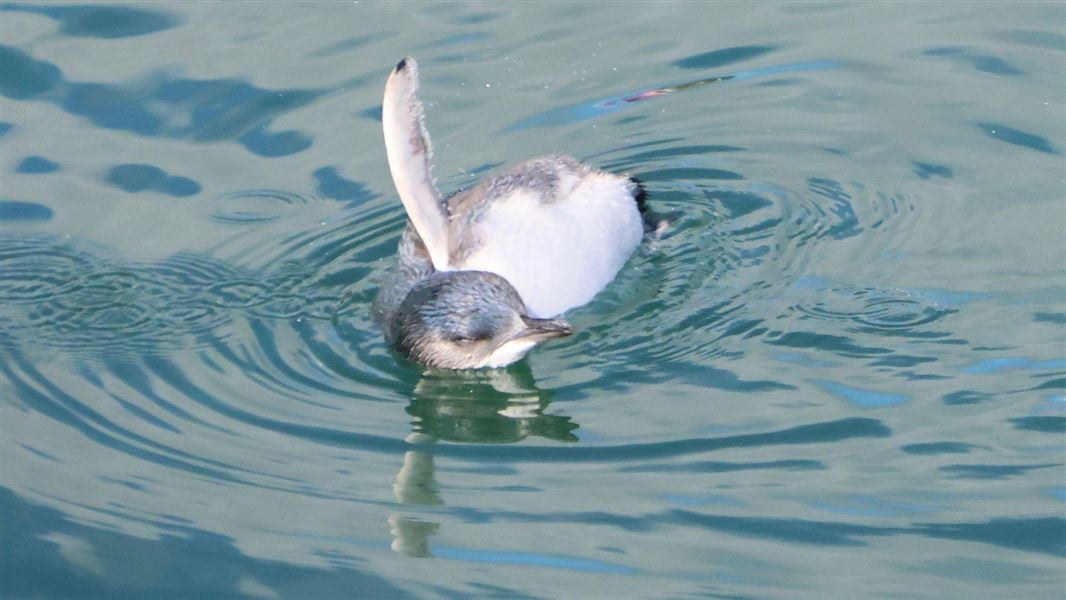
Nikki Grist, a Department of Conservation (DOC) Ranger, says she's been working with a team of wildlife response volunteers to observe the penguin regularly and sought advice from DOC's penguin experts.
"Currently the penguin is showing normal behaviours and is moving around well – it has been seen diving and swimming. It has good body condition such as a bit of fat on it and healthy-looking feathers, and the missing foot appears to be an older injury. All of this makes us think it's still capable of hunting and is healthy."
The kororā has been observed a few times swimming in circles while bathing and preening, this may be related to the missing foot.
"We will continue to keep an eye on it, but as it's currently very agile and appears to be doing OK, we don't plan to capture it for a further assessment," says Nikki Grist.
"Wild animals do live surprisingly close to people in Auckland. We have penguins that feed and nest all over the Hauraki Gulf and on Auckland's west coast beaches too."
The penguin has sparked interest during Conservation Week (20-26 April) – a week that encourages New Zealanders to get naturing by taking positive action for the environment and native wildlife.
Nikki says Aucklanders can support little penguins in many ways.
"You can join or donate to a local conservation group that monitors penguins, builds nest boxes, and advocates for them.
"Dog owners can commit to keeping their dogs on a lead at beaches and away from the sand dunes where kororā nest. Dogs are one of the main threats for little penguins."
Kororā are found throughout the Hauraki Gulf/Tīkapa Moana and are reasonably common on many of the islands. A small number breed in the inner harbour and port area.
NATURE LOOKS DIFFERENT FROM HERE
Nature isn’t scenery. Nature is a society that we rely on for everything, every day. It’s behind our identity and our way of life.
Contact
For media enquiries contact:
Email: media@doc.govt.nz