Date: 17 September 2026
A large team of rangers and volunteers take part in counting and recording the critically endangered parakeet each year and this years’ results were very encouraging.
Kākāriki Karaka Recovery Programme lead Wayne Beggs said during this year’s survey the team collectively counted over 285 birds on one day and 229 the next day almost 100 more than last year’s count.
“It’s a great indicator of the continued growth of this population and wonderful news for this critically endangered manu,” Wayne says.
The kakariki karaka is New Zealand's smallest and rarest parakeet with around 450 left, mainly in predator free sanctuaries like the Brook Waimārama Sanctuary in Nelson, or on islands like Blumine/Ōruawairua in Marlborough and Pukenui/Anchor Island in Fiordland. Small wild populations are found in two alpine beech forest valleys in Canterbury.
The Brook Waimārama Sanctuary now supports the world’s largest population of kākāriki karaka.
Chief Executive Chris McCormack says it’s very exciting to hear how noisy the kākāriki karaka population now sounds and to see them thriving.
“This survey is a fantastic result for this endangered manu. Since 2021 when the kākāriki karaka were first introduced into the sanctuary, they have really flourished. Watching this critically threatened species reclaim its place in the ngāhere is a real privilege and a fantastic conservation success not only for the sanctuary, but for Aotearoa New Zealand,” Chris says.
Another of DOC’s partner in the efforts to support the kākāriki karaka, The Isaac Conservation and Wildlife Trust, also has some good news.
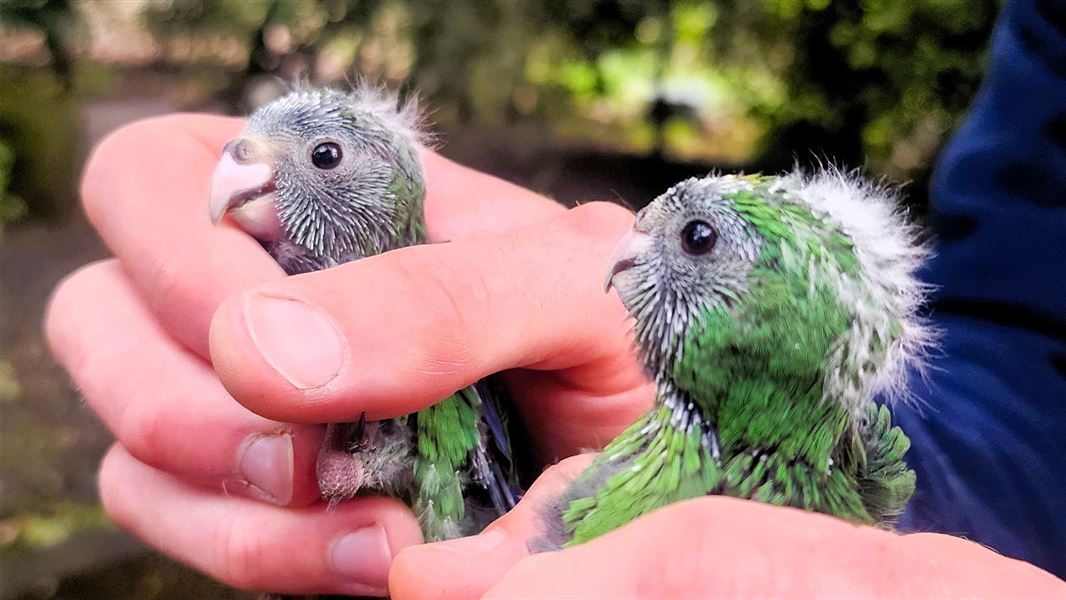
The “super parents” Trixie and Nacho who became world famous with their breeding effort, producing 55 chicks over just two seasons, have continued to help their species with 2 more offspring, now four weeks old.
Wildlife Manager Leigh Percasky says the famous pair did have a short break from parenting duties.
“We expect Trixie and Nacho to continue play a major role in the recovery of their species over the coming months and we will be keeping a very close on eye on them to make sure they both remain happy and healthy doing so,” Leigh says.
DOC’s Wayne Beggs says the celebrated bird couple may be the reason for a recent spike in donations to support the kākāriki karaka recovery programme via the New Zealand Nature Fund.
“We saw a big jump in donations after the news about Trixie and Nacho went global. This money really helps in our recovery efforts with this species. It shows that New Zealanders really care about nature and want to help where they can.
“The dream is to have them in big numbers in the wild and not just thriving in places like the Brook Waimārama Sanctuary in Nelson. To achieve that we need continued predator control, monitoring and good habitats for them. That’s means continued efforts and management by us and our partners. Imagine if we had them flying around in the native bush on the Port Hills near Christchurch. How amazing would that be?” he says.
Saving the Orange-Fronted Parakeet | Kākāriki karaka | NZ Nature Fund
Background information
DOC and Te Rūnanga o Ngāi Tahu lead a recovery programme which is vital to the species’ survival. It’s focused on monitoring and protecting those sites where kākāriki karaka are found, breeding birds in captivity to release into the wild, research, and finding safe new sites where the species can be introduced.
The programme works closely with captive breeding partners such as The Isaac Conservation and Wildlife Trust and Orana Wildlife Park. Canterbury University, RealNZ, Christchurch Helicopters, NZ Nature Fund and Formthotics also support the work.
NATURE LOOKS DIFFERENT FROM HERE
Nature isn’t scenery. Nature is a society that we rely on for everything, every day. It’s behind our identity and our way of life.
Contact
For media enquiries contact:
Email: media@doc.govt.nz