Date: 29 June 2026
From 29 June and through July, two contracted commercial vessels will be catching lobsters inside and outside marine protected areas around Te Hāwere-a-Maki/ Goat Island, Tāwharanui, Kawau Island, Te Hauturu-o-Toi/Little Barrier Island and the Mokohīnau Islands.
Around 50 baited, cage-like traps will be placed and checked regularly. Boaties can identify them by the surface floats and cattle tags stating “research”, along with a permit number and phone number.
Representatives from University of Auckland, local iwi, and commercial fishers who own the vessels will be on board alongside DOC staff to undertake the surveys.
Emma Kearney, a marine scientist at DOC, says potting can help build the understanding of lobster in the Hauraki Gulf.
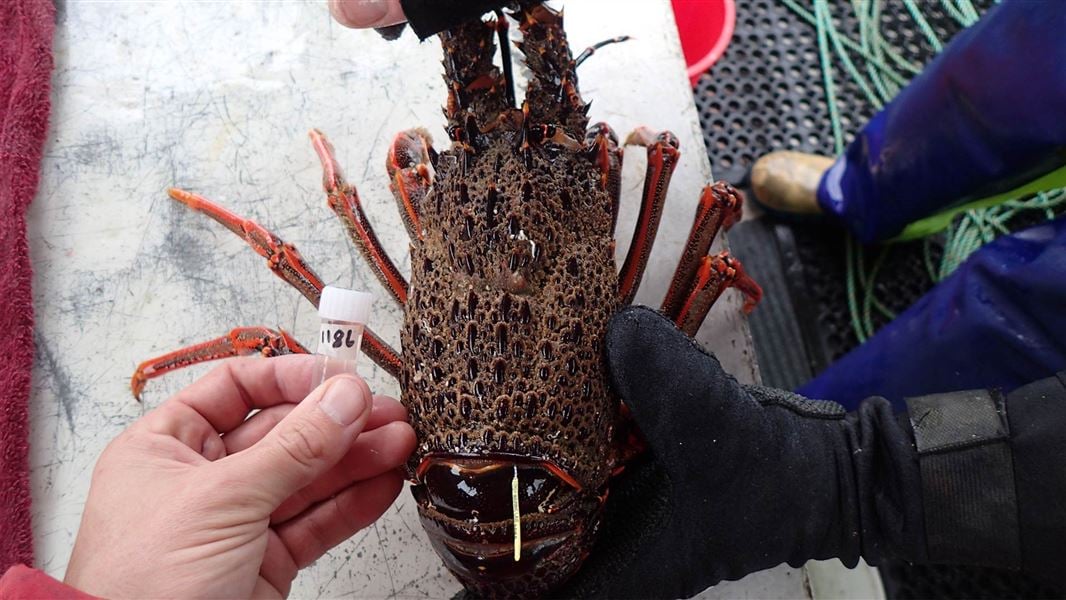
“We’ll be recording size and location details, then tagging them to help understand how they move between marine protections and surrounding fishing areas,” she says.
“We’ll also take a small clip of tissue for the university to undertake genetics studies on the species, furthering our understanding of the population.”
Following these measures, all lobsters will be returned live to the sea. Lobster potting, a common fishing method, will allow researchers to compare the research to fisheries data and to make comparisons between protected and fished areas.
“We wanted to let the community and boaties know we’d be on commercial vessels, Jackpot and Carolyn Marie, inside marine protected areas. If you see any lobster pots inside those areas, they’re there for research purposes - so please leave them as they are.”
The research is part of a wider programme to build an environmental snapshot of the marine environment in the first year of new marine protections.
“It’s exciting to be working in both traditional marine reserves and the new high protection areas, because over time we’ll learn about the outcomes of this new tool which combines protection and marine restoration.
“It’s a new frontier in conservation beneath the waves,” says Emma.
Anyone heading out naturing in the Gulf can learn more about marine protections on the DOC website: Hauraki Gulf/Tīkapa Moana marine protected areas
Background
The inner Hauraki Gulf is closed to rock lobster fishing. Check the rules before you head out.
Twelve high protection areas ban recreational and commercial fishing, and allow active restoration such as reseeding shellfish beds and reef restoration.
Wider programme of monitoring work: Marine scientists build snapshot view of Gulf’s ecosystems
Potting locations:
- Te Hāwere-a-Maki/ Goat Island
- Tāwharanui
- Kawau Island
- Te Hauturu-o-Toi/Little Barrier Island
- Mokohīnau Islands
Vessels: Jackpot and Carolyn Marie
NATURE LOOKS DIFFERENT FROM HERE
Nature isn’t scenery. Nature is a society that we rely on for everything, every day. It’s behind our identity and our way of life.
Contact
For media enquiries contact:
Email: media@doc.govt.nz