
Our work includes supporting communities, enabling science and innovation, national predator control to protect native species and large-scale eradication projects.
All the work we invest in is guided by the Predator Free 2050 Strategy.
Predator Free 2050 is a world-first goal and there is no step-by-step manual telling us how to achieve it. So we adapt as we go and learn from what works. We measure our progress against five-year goals to stay on track.
Empowering mana whenua and communities
We invest in work to inspire and empower iwi, hapū, individuals and communities to take action toward Predator Free 2050.

Support from tangata whenua, individuals and communities across Aotearoa is key to achieving Predator Free 2050. It is a collective effort and everyone has a role to play.
We invest in people through our ‘Mobilise for action’ focus area. Our work aims to:
- Inspire New Zealanders about a predator-free future. We want to grow awareness, build support and show that Predator Free 2050 is achievable. We will do this by sharing stories from Māori, Moriori and people across the country.
- Empower New Zealanders to take action for nature and support Predator Free 2050. We want to offer a range of ways and resources for people to get naturing.
Examples of work we support
The following work is a key part of the Predator Free 2050 programme.
Embedding kaitiakitanga and te ao Māori into Predator Free projects
Te ao Māori is at the heart of hapū and iwi led projects. These projects provide Māori with the opportunity to practice rangatiratanga and kaitiakitanga in their local environments.
This work includes the Kairaranga Pilot Project, which aims to embed roles that support kaitiakitanga and te ao Māori in large scale predator elimination projects.
Hosting kura reo
Te Tira Whakamātaki hosted kura reo to explore the depth and richness of te reo Māori as it relates to our environment, with a focus on its role in shaping pest management strategies.
Hosting wānanga on mātauranga Māori and pest management
Te Tira Whakamātaki hosted a series of wānanga grounded in mātauranga Māori. The wānanga enabled kōrero and exchange among kaitiaki about predator management and its relationship to Māori ways of being, doing and knowing.
Telling inspiring Predator Free 2050 stories
Many organisations tell stories about the people and places involved in Predator Free 2050.
Documentaries like Fight for the Wild and Fiordland Kiwi Diaries have inspired many New Zealanders to get involved.
Subscribe to our newsletter to get monthly updates and stories.
Creating toolkits for schools, groups and trappers
The Predator Free New Zealand Trust creates practical resources for people doing predator control.
Their resources include toolkits, a map of predator control groups, articles and a shop for traps and gear.
Apprenticeship programme to create career pathways
The Predator Free New Zealand Trust ran an apprenticeship programme to provide career pathways for people who want to work in predator control.
59 apprentices graduated from the programme and 98% were employed in the sector afterwards. They also shared their knowledge through 16,000 hours spent on-the-ground providing support to groups, landowners and projects.
Social science to understand how New Zealanders think about Predator Free 2050
The Predator Free New Zealand Trust surveys New Zealanders to understand how they feel about Predator Free 2050.
DOC also invests in social science to understand how people think about things like the use of different predator control technologies.
Examples of research can be found here: Research papers and reports.
By funding work to better understand the perspectives of New Zealanders, we can work towards a predator-free New Zealand that reflects people’s values.
Providing hands-on trapping courses and guides
DOC and the Nelson Marlborough Institute of Technology developed the Predator Trapping Methods course, designed to build practical skills for predator control. So far, 1,500 people have completed this course.
DOC also provides guidance for community trappers: Trap in your community.
Science and innovation
We invest in science and innovation to develop tools and methods needed to achieve Predator Free 2050.
We need a range of affordable, humane and socially acceptable tools and techniques.

Large-scale projects to eliminate predators
We support 20 large landscape predator control and eradication projects across New Zealand. These projects cover an area of over 1,000,000 hectares.

Maintaining the gains of Predator Free 2050
We invest in predator control to protect the progress already made for nature and communities.

Predator Free 2050 will take decades to achieve. In the meantime, we protect threatened native species by controlling predators and maintaining existing predator-free areas.
At sites across the country, there’s proof that removing predators helps native plants and animals recover.
Examples of work we support
The following work is a key part of the Predator Free 2050 programme.
National predator control programme
DOC’s National Predator Control Programme protects native wildlife and forests on public conservation land.
The programme controls predators regularly to protect more than 67 forest sites. It covers about 1.8 million ha or 20% of public conservation land.
National predator control programme
Regional pest management plans
Each council creates and runs its own pest management plan under the Biosecurity Act.
These plans set priority pests for the region, rules for landowners and council-led predator control programmes. Councils also fund and support community groups, landowners and iwi to manage pests.
Regional pest management plans
Community predator control
Community groups, Māori, Moriori and landowners play a vital role in predator control efforts to protect native species.
There are now over 9,000 community predator control projects across New Zealand. These projects benefit both communities and local nature.
Find a predator control project
Predator-free islands
New Zealand has more than 110 predator-free islands that provide safe habitats for some of our most threatened species.
Islands help prevent species from becoming extinct. One in seven threatened species relies on islands to survive.
Strong biosecurity measures are essential to keeping these islands secure. DOC developed an Island Biosecurity Framework/Tiakina Ngā Moutere to reduce risks and to ensure long-term protection for vulnerable species.
Eradicating predators from islands
Ecosanctuaries
Ecosanctuaries are critical arks for many rare and threatened species. They also help people engage with the vision of Predator Free 2050.
Visiting an ecosanctuary is a great way to experience what a predator-free future could look and sound like.
Threatened species translocation
Moving plants and animals to new areas helps conserve threatened species, restore ecosystems and maintain biodiversity.
Translocations help protect native species that are locally distinct and in trouble. They can help re-establish native species in areas where they have declined or disappeared.
Eradicating predators from islands
We continue to build on our track record of innovative island eradication work. We now have 110+ predator-free islands in New Zealand.
Preparing to accelerate a predator-free future
We have work underway to ensure we are ready to transition from eliminating predators at the local level to the national level.
With our current tools, we are not yet ready to remove predators across all of New Zealand. We are preparing for this next phase.
Our preparedness work includes building a workforce, forming long-term funding partnerships and understanding the risks and costs of different roll-out scenarios.
Examples of work we support
The following work is a key part of the Predator Free 2050 programme.
Scenario modelling tool
The Bioeconomy Science Institute – Manaaki Whenua is developing a modelling tool for Predator Free 2050.
This tool uses a supercomputer to compare the costs, benefits and opportunities of different ways we could achieve Predator Free 2050. It also helps us decide where new technologies or methods could be trialled.
National cat management group
Formed in 2014, the group brings organisations together to improve cat management.
Their work promotes a coordinated approach that supports cat welfare and protects native species.
Regulatory landscape
A recent review by the Place Group looked at regulatory challenges faced by researchers and practitioners working on predator elimination and species translocations.
You can read more about this and other research here: Research papers and reports.
Predator trapping methods course
This NZQA Level 3 course, run by Nelson Marlborough Institute of Technology and DOC, builds practical skills for effective and humane predator control. It builds the workforce needed for Predator Free 2050.
Predator trapping methods course
Measuring the impact of pest control on carbon storage
Zero Invasive Predators (ZIP) is studying how removing invasive browsing mammals (including possums) affects carbon storage in forests.
This will help assess carbon markets as a possible funding source for Predator Free 2050.
Detection dogs
Detection dogs are essential for predator elimination. They are used for operations, surveillance and confirming predators have been removed.
Work is underway to expand this capability nationwide.
We’re accelerating already
Where we have the skills and it makes sense, we're taking action now.
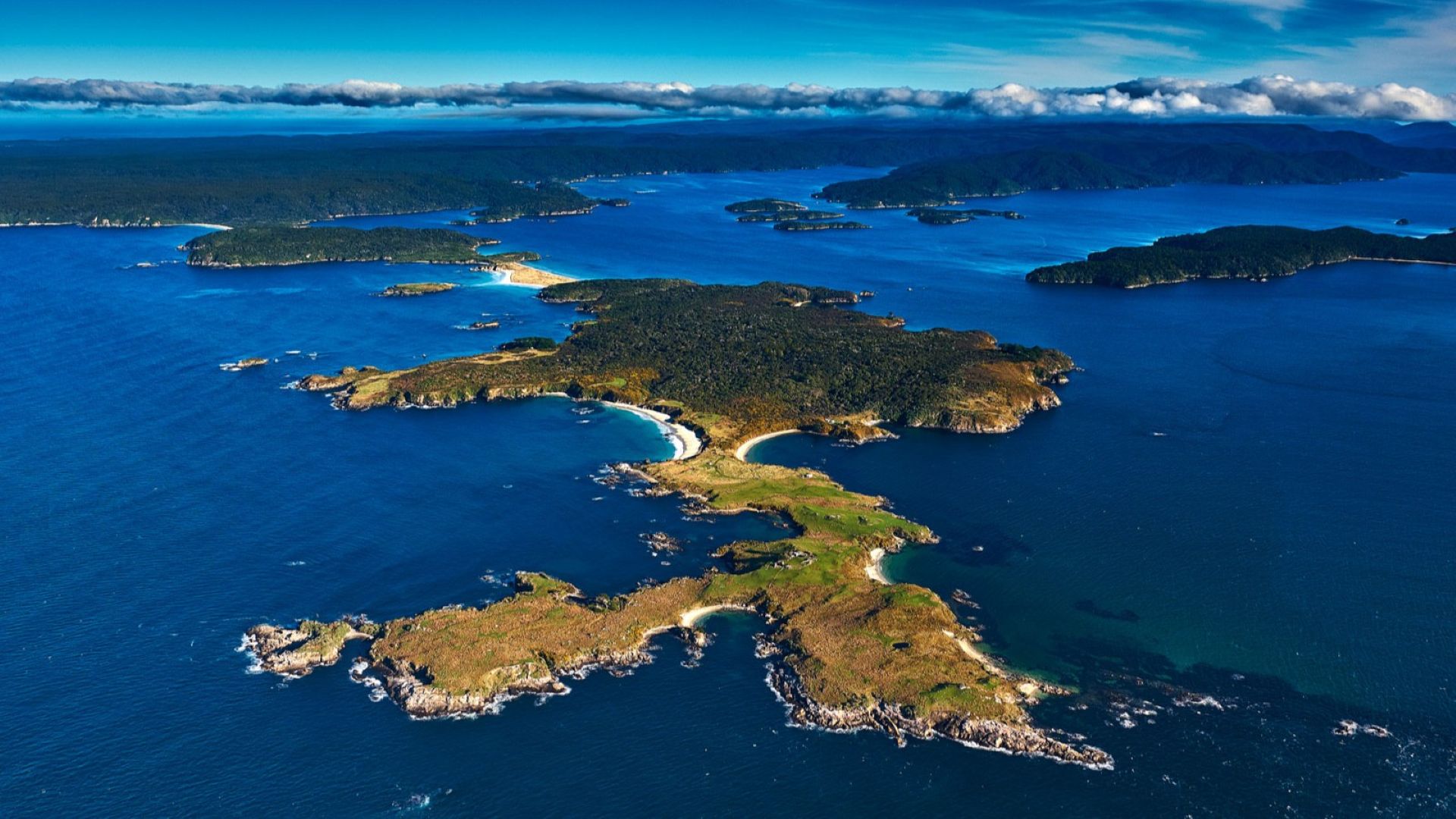
We’re building on our success at eradicating predators from islands by progressing our two largest eradication projects ever, on Rakiura/Stewart Island and Maukahaka/Auckland Island.
We’re also making progress on the mainland through large landscape projects.