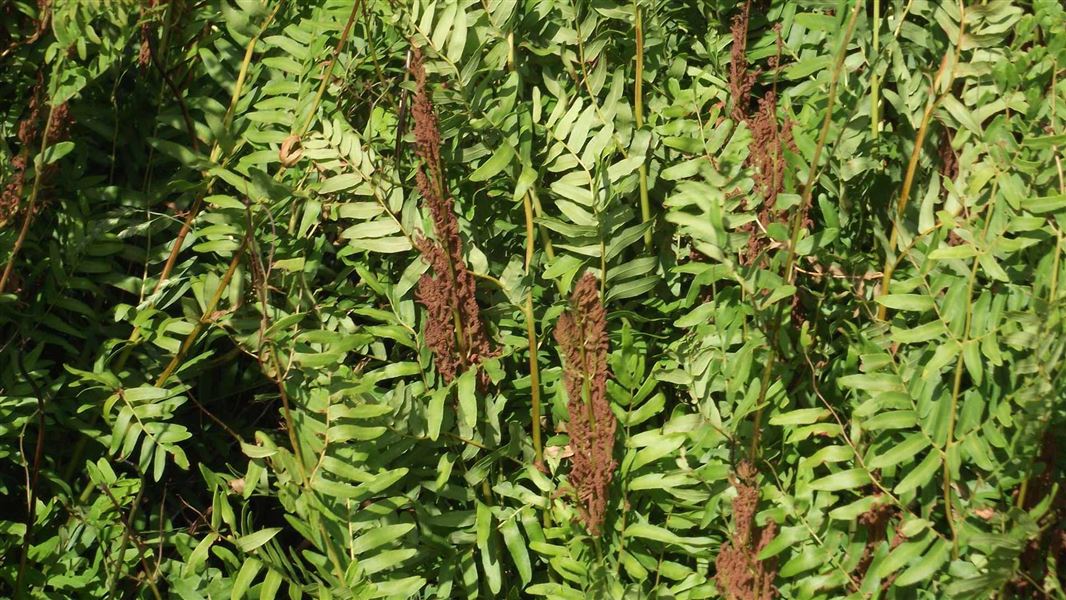
Royal fern has large, tough yellow-green fronds and grows to about 3 m high. The fern is deciduous, with the fronds turning a bright coppery orange in the autumn before falling off the plant. Fertile fronds produce clusters with thousands of tiny spores that are easily spread by the wind, birds and humans.
Royal fern plants were brought to New Zealand in 1890 as an ornamental plant and a source of fibre for growing orchids.
Why royal fern is a problem
Royal fern grows rapidly and can take over wetlands, crowding out slower-growing, rare native species. It’s challenging to control or eradicate because its spores are spread widely by the wind. It also colonises boggy wetland sites that are difficult to access on foot. Royal fern can survive frosts and live in poor soils.
Where royal fern is found
Plants are usually found in wetlands and in other wet areas, like roadside drains. The fern can live under open mānuka forest and grey willow trees, and on exposed clay banks next to lakes and rivers.
Royal fern occurs in scattered patches from Northland to northern Taranaki and is most abundant in Waikato. It was found and removed from Farewell Spit in 2024, with ongoing monitoring at the site to control any new plants. There are currently no known infestations of royal fern in the South Island.
How royal fern spreads
Royal fern produces thousands of tiny spores that are spread by the wind. Humans and animals can also spread the spores by disturbing the plants or brushing against them.
How DOC is managing royal fern
DOC is working with regional councils to eradicate the fern in Northland, and control it in the Bay of Plenty, Taranaki and Auckland.
Royal fern is less common south of Taranaki and Bay of Penty and any infestations in this area are being contained or targeted for eradication.
Royal fern is listed in the 2020 National Pest Plant Accord. The accord helps the government and plant producers prevent the sale, distribution, and propagation of highly damaging weeds.
You can help by reporting sightings
If you see a royal fern plant, post an observation on iNaturalist or contact us directly. Do not try and remove the plant yourself because you could accidentally spread it further.
Contact
Email info@doc.govt.nz to report sightings or for more information about our work to control royal fern.