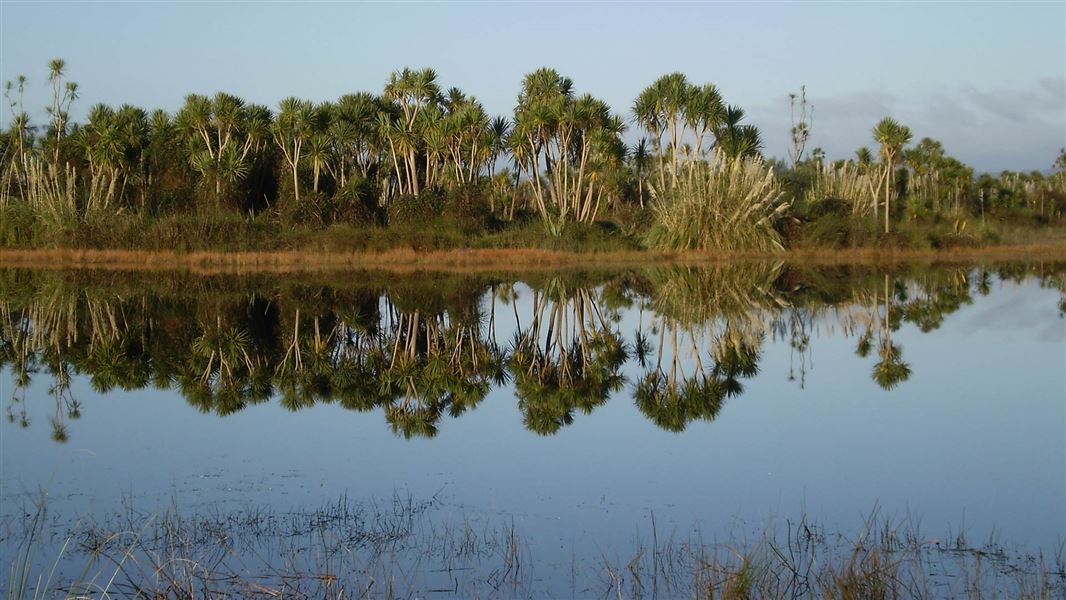
Threats to wetlands
Human activity provides most threats to New Zealand's remaining wetlands. Threats include:
- sand and gravel extraction causes changes in water levels, damages existing vegetation and provides access for weeds
- reclamation of lake and river margins, lagoons and estuaries, and draining of farm swamps, reduces wetland areas
- pollution by excess run-off of sediment and nutrients from farmlands
- plant and animal pest invasion
- stock grazing in wetlands and surrounding catchments damages vegetation, decreases soil stability and contributes to pollution
- careless recreation practices, including misuse of jet-skiing, hunting, kayaking, power boating and whitebaiting, disturbs plant and animal life and may destroy parts of the physical wetland environment
- forest harvesting close to wetlands may damage wetland vegetation and cause erosion
- loss of vegetation in surrounding catchments allow excess sediment to run directly into wetlands
- pine forests draw water away from ground water systems leaving depleted supplies, and poorly managed farming practices cause sediment and/or fertiliser run-off
- wetland drainage for urban or rural development.
Managing wetlands
That wet, soggy area on land, including farms, can perform many valuable functions, including trapping sediment and filtering nutrient run-off reducing the impact of floods and maintaining water tables.
Rather than draining or infilling wetlands, you can create a sustainable system.
Fencing out the wetland and planting a diversity of native trees and shrubs suited to the wet conditions will add commercial and environmental value.
As a landowner you can fence wetlands and waterways, and plant a buffer to protect wetlands on your property.
Just a few changes in the way land is managed can make a big difference to water quality and wetland conservation.
Managing the riparian margin responsiibly will help protect wetlands. The riparian margin is the surrounding area of land next to a water body. Ideally, this margin should be as large as possible to effectively protect water quality.
Maintenance of water levels helps promote healthy wetland vegetation while preventing weed invasion.
Plants for wetlands
Planting appropriate plants around wetlands will help stabilise soil and stop nutrient runoff flowing directly into water, especially when coupled with fencing to exclude stock.
Plantings can also provide nesting sites, food and shelter for wildlife as well as adding to the natural character of the area.
The water level and how much it fluctuates has a bearing on what plants and animals the wetland can support.
Areas continuously under water to a depth of 1.5 m sustain a variety of sedges and rushes including:
- raupo (Typha orientalis)
- spike rush (Eleocharis Sphacelata)
- lake club rush (Schoenoplectus validus)
- jointed twig rush (Baumea articulata)
Shallower water of 10 to 15 cm depth or water logged soils support:
- umbrella sedges (Cyperus species)
- rushes (Juncus species)
- pukio (Carex secta) and other carex species
- flax (Phormium tenax)
Wetland buffer plants
Around the edges of a wet area where there is permanently damp ground with periodic wetting the following species could be planted:
- toetoe (Cortaderia fulvida)
- cabbage tree (Cordyline australis)
- pukatea (Laurelia novae-zelandiae)
- kahikatea (Dacrycarpus dacrydioides)
- manuka (Leptospernum scoparium)
- mingimingi (Coprosma propinqua and tenuicaulis)
- swamp maire (Szygium mairie)
Some plants are more suited to drier ground e.g.:
- karamu (Coprosma robusta)
- mahoe (Melicytus ramiflorus)
- kowhai (Sophora species)
- ribbonwood (Plagianthus regius)
- kohuhu (Pittosporum tenuifolium)
Choose the right plants for the right place, and group and mix plants informally, for a natural appearance.
Wetlands weed control
Willows were planted widely in the past, to help with the reclamation and stabilisation of river banks. Two willow species—crack willow and grey willow—have spread widely and are now regarded as invasive weeds. Once established, they quickly become the dominant species, to the detriment of many of our native plants.
If willows are invading your wetland, the best way to get rid of them is to drill a hole into the base of the tree and fill it with an appropriate herbicide. The tree will eventually die and rot away, but in the interim will provide shelter for getting native plants established. If you do want to plant willow as food for waterfowl, be sure to choose a sterile form, i.e. the shrubby or booth willow.
Blackberry, broom and other weeds can also be a problem, and a control programme needs to be implemented in the early stages of restoration.
Funding and support
Funding may be available to protect existing wetlands or restoration work on private land. Ask your local DOC office or regional council about current funding available to assist with stream restoration or riparian protection.
The QEII Trust helps private landowners to protect significant natural and cultural features on their land, in perpetuity, through open-space covenants. Contact them for legal protection advice and possible funding for fencing.
More information
Find out more about how you can help protect our wetlands.