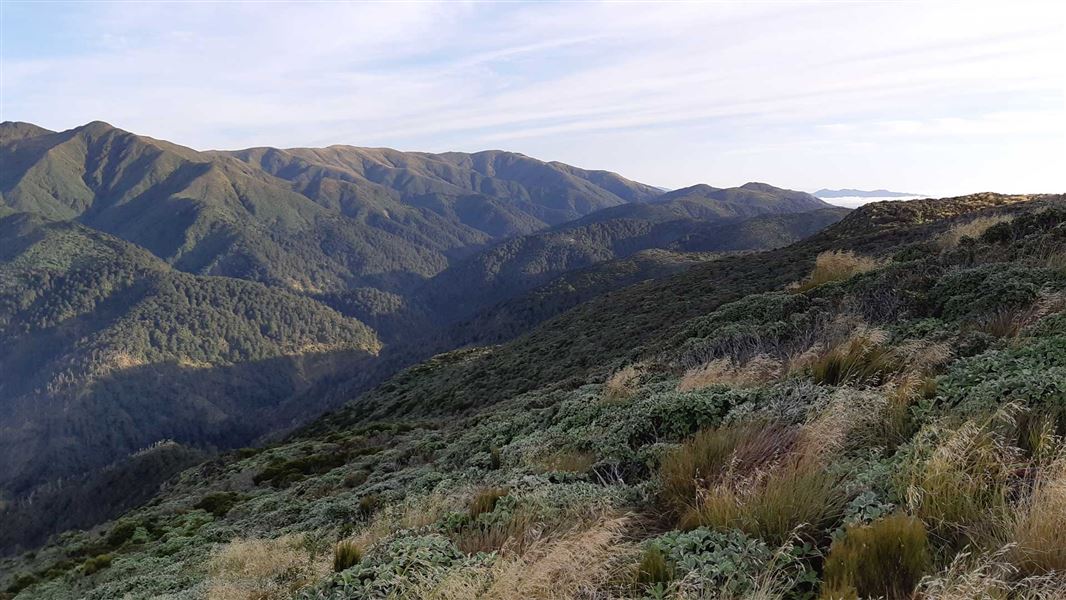
Ruahine Forest Park is a special place. Its forests, streams, and tracks are valued by hunters, whānau, and local communities.
Recreational hunters already remove large numbers of deer from the park each year. Despite this effort, monitoring shows wild deer numbers are still too high in some areas. This makes it harder for young native plants to grow and forests to recover.
In response, DOC works with Treaty Partners and alongside hunters, community groups and industry to reduce this pressure and support the forest to recover over time.
A local Deer Advisory Group (DAG) helps guide how wild deer are managed in the park, bringing together different perspectives and knowledge.
The Ruahine Wild Deer Management Plan
The Ruahine Adaptive Wild Deer Management Plan 2025–2030 (PDF, 2,531K)
The management plan sets out how different tools are used together to reduce wild deer numbers where they are too high and support forest recovery.
These include:
- Organised management hunts: Short, planned hunts run by the New Zealand Deerstalkers Association (NZDA). These hunts focus on removing female deer to help lower overall deer numbers. Potential management hunts led by iwi may occur in future.
- Commercial harvest: Commercial Wild Animal Recovery Operations (WARO) remove deer under standard permit conditions. This contracted work focuses on removing lighter animals and female deer to help reduce numbers across the park. Find data on WARO.
- DOC-led aerial management:
- Targeted management is focused in the north-west of the park, where naturally rare limestone ecosystems, wetlands and tarns sit alongside some of the park's most diverse podocarp and broadleaf forests. These habitats support a range of threatened native plants, kiwi, kākā, whio and other indigenous species. The area has been identified as a priority place for biodiversity management in the Wellington Conservation Management Strategy because of its high ecological values and vulnerability to browsing impacts from deer.
- This work complements ongoing predator control operations, helping to maximise overall biodiversity outcomes.
- The majority of aerial control will be undertaken between 1 May and 30 October each year. Work may occur outside these dates with appropriate notification
This is not about removing deer altogether, it is about reducing pressure to a level that allows ecosystems to recover.
Working together in Ruahine
Managing wild deer in Ruahine is a shared effort.
While recreational hunting already removes many wild deer across Ruahine Forest Park, additional targeted work is needed in some areas to reduce pressure to levels that allow the forest to recover.
The focus is on working together to achieve this over time.
Access for recreational hunters
Recreational hunters continue to play a part in reducing wild deer numbers.
There are 21 free and open public access points into Ruahine Forest Park. Some access routes cross private land and require landowner permission.
Before heading into the park, hunters should:
- check the Ruahine Forest Park access points map (PDF, 2,254K)
- check DOC’s online hunting maps
- use the Outdoor Access Commission’s maps
- or call 0800 ASK DOC (0800 275 362).
DOC works with landowners and partners to improve access where possible, such as in the newly opened Makaretu access where DOC has surveyed and poled a new access route.
Monitoring and adapting over time
Forest recovery takes time. Visible improvements may take five years or more.
A monitoring framework is being developed to track:
- trends in deer numbers
- how many young plants survive
- whether forest plants are recovering
- cultural values identified with Treaty Partners.
This information is used to adjust management over time.
Annual plans and reports
Annual plans and reports are prepared each year.
- Annual Operational Plan 2025-26: Wild Deer Management in Ruahine Forest Park (PDF, 716K)
- Ruahine Deer Management Annual Report 2024-25 (PDF, 2,337K)
- Wild animal monitoring - Ruahine Forest Park (PDF, 725K)