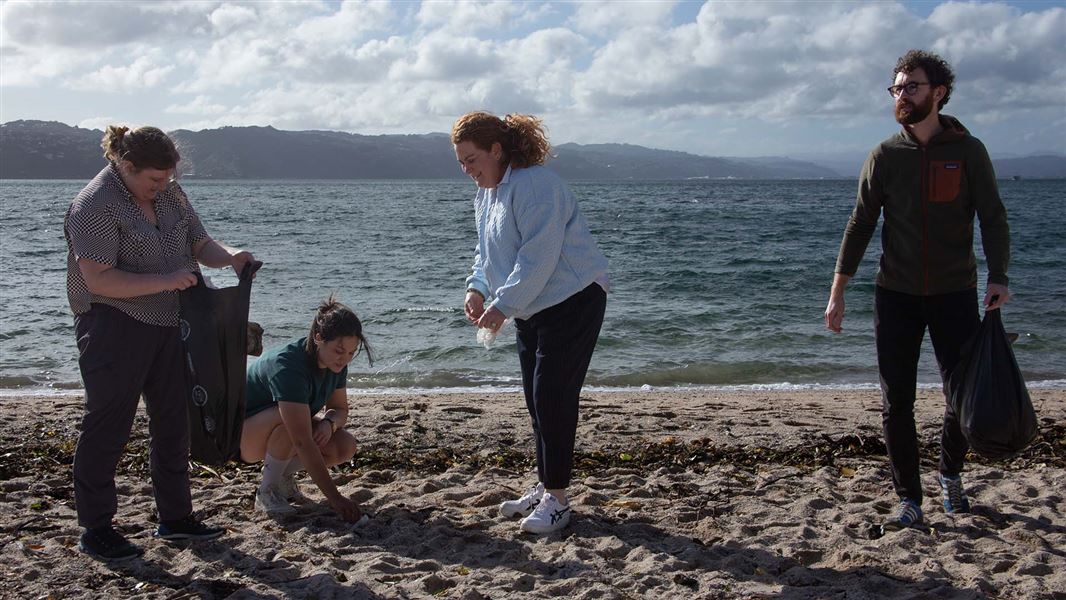
There are so many ways we can act for nature, big and small. While individual actions add up to meaningful change, sometimes it’s just really satisfying to muck in and see the results of your labour.
If you’re craving that type of satisfaction, why not get your team together to volunteer some time cleaning up your local area? It will be great for team spirit and te taiao (the natural world).
When thinking about running a clean-up there are a few steps you can follow to make things flow smoothly on the day.
One month before
Think about any groups you would like to invite along to your clean-up.
- Contact your local DOC office, regional council and district council about your event to see if they’d like to be involved. Some councils may even help with landfill fees if you contact them.
- Consider involving your local school. Contact the principal about the possibility of their pupils joining you for the day.
- Contact other groups that participate in beach clean-ups include rotary, lions clubs, Forest and Bird plus many others that may operate in your area. Ask them if they can help you find people who have access to resources like quad bikes and trailers which are great to transport large pieces of rubbish along a beach.
Consider if you need to develop a small media plan to let people know about your event.
- Social media, newspaper advertising, radio advertising, posters, school newsletters, and community noticeboards are good options.
- If you have a limited budget, providing some text and a couple of good photos to local community newspapers can be useful. It’s good to utilise key members of the community who have good contacts and can get people to attend on the day.
One week before
Make sure you have the right equipment.
- For bigger clean-ups, organise four-wheel drive vehicles and trailers for collection of rubbish. Don’t forget tie-downs or nets to contain the rubbish.
- It’s great to have an experienced person to help load and secure rubbish on-board.
- You should also bring a supply of gloves and a couple of shovels.
- A popular item on beaches is tyres which get buried and you’ll need these dug out.
One day before
Confirm school attendance and other community participants.
- Advise them of the weather that they should be prepared for, eg suntan lotion, wet weather parkas and gumboots.
Conduct a health and safety briefing.
- This should provide information on potential hazards, eg the sea, seals, broken glass, and how people should take care.
- You should also have a register of names to ensure everyone that starts the clean-up finishes the clean-up (this can be a useful way of collecting contact details for a database if you wish to run future events).
Finalise all equipment for the day. This can include the following:
- First aid kit including sunscreen.
- Bags – seed bags from factories are very useful. Normally they are free so ask for at least 50 (and don’t throw them away – reuse at your next clean-up).
- Your group should consider investing in wool fadges so people can empty their sack into fadges as they go.
- Radios – you may need to be in contact with others cleaning-up the beach so having portable radios is useful.
- Handwashing supplies, eg soap, water, buckets, antibacterial lotion.
- BBQ equipment – most volunteers appreciate a sausage and drink of water at the end of a beach clean-up. Things you’ll need include BBQ, full gas bottle, utensils, chilly bin, sausages, onions, tomato sauce, mustard, napkins and someone to cook the food (this should be started about 45 mins before end of clean-up).
- Tables, chairs and shelter for the end. Allocate someone who is organised to set-up.
On the day
- Have someone on-site at least 15 mins before event to speak to volunteers. The speaker needs to welcome everyone and talk briefly about why this beach is special.
- Run the health and safety briefing.
- Hand out bags and gloves.
- Ensure there is a good ratio of adults to children.
- Either have quad bikes or four-wheel drive vehicles in support of walkers. They can drive along the beach and collect large pieces of rubbish which can be taken straight to final base.
- Take the majority of trailers and vehicles to end where everyone is meeting for BBQ etc.
- Start BBQ.
- Take lots of photos for community papers.
- Have fun.