Image gallery
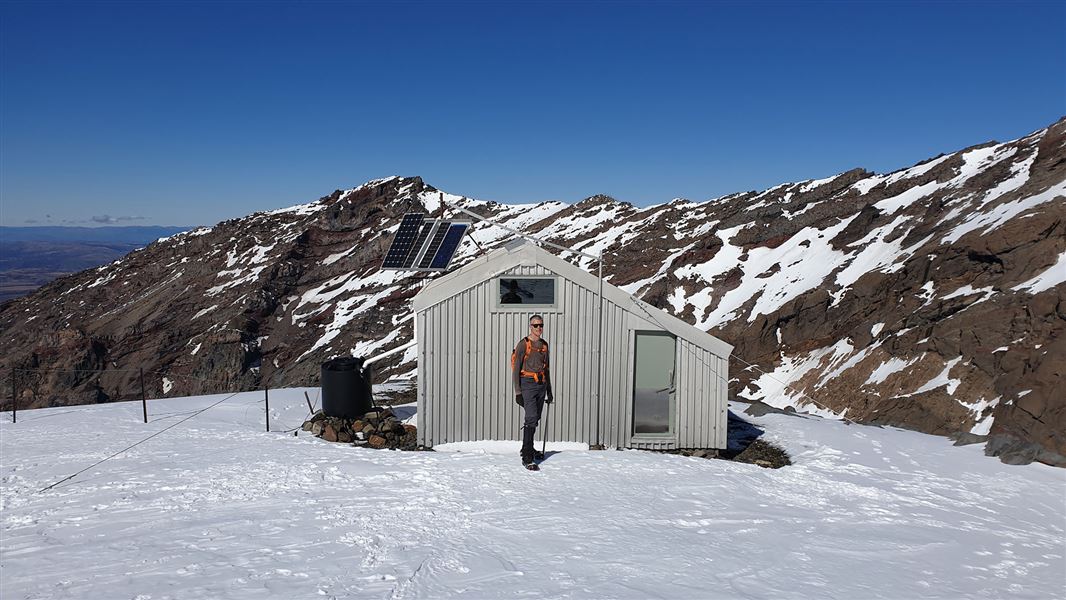
At 2,080 m on the eastern side of Mt Ruapehu, above the Whangaehu River.
The trip to this hut is challenging alpine terrain with no marked route, with extra hazards from May to November. There have been deaths and rescues in this area. Read the Know Before You Go section of this page to make sure you have the skills and gear for the trip.
An easier, alternative trip for less experienced hikers is to Rangipo Hut. This walk provides fantastic views and a similar landscape to the trip to Whangaehu Hut, but in less challenging terrain. There is often snow on this track in winter, so make sure you are prepared and turn back if the conditions are difficult.
Information about Whangaehu Hut on NZ Alpine Club website.
Fees
Backcountry Hut Passes and Backcountry Hut Tickets cannot be used at this hut.
Bookings
Book this hut, and check fees and availability on the New Zealand Alpine Club website.
This is an alpine backcountry hut in an exposed mountain environment with no DOC track access. You will need to plan your route and navigate yourself, using aids like a map, compass and GPS. Learn navigation skills.
Location
NZTopo50 map: BJ34
Grid/NZTM2000 coordinates: E1823279, N5648681
This is a challenging alpine area
The trip to Whangaehu Hut is off track and challenging. The unmarked route to the hut travels over an exposed mountain landscape, on steep, uneven and rocky surfaces. It is only suitable for people with alpine skills, equipment and experience.
Be ready for extreme weather at any time of year
The weather can change suddenly – be prepared for all conditions. Adverse weather conditions are common, including high winds, snow, ice, whiteouts/low visibility and freezing temperatures. Snow can turn to ice underfoot. The surface freezes quickly in the afternoon and becomes extremely slippery. Plan ahead, and make sure you are prepared to walk out in different conditions than the walk in.
Carry warm, waterproof clothing and survival equipment at all times of year.
Check the Tongariro National Park weather forecast – NIWA website
There are more hazards from May to November
In the winter months (May to November) additional hazards are present. You need to:
- know how to use crampons and an ice axe
- have the equipment, skills and experience to prevent a slide on icy terrain
- have the clothing for sub-zero temperatures and be able to survive if the weather gets worse
- have the knowledge and equipment to navigate without track markers in low visibility and heavy snow
- be able to tell when the weather or snow/ice conditions make it unsafe to proceed
The routes to Whangaehu Hut and up Mount Ruapehu travel through avalanche terrain
- know where avalanches are a risk and be able to rescue someone if an avalanche occurs. Read about avalanche risk in Tongariro National Park
- check the New Zealand Avalanche Advisory for Tongariro National Park.
Tongariro National Park Visitor Centre
| Phone: | +64 7 892 3729 |
| Email: | tongarirovc@doc.govt.nz |
| Address: | Whakapapa Village State Highway 48 Mount Ruapehu 3951 |
| Hours: | Visitor centre hours and services |