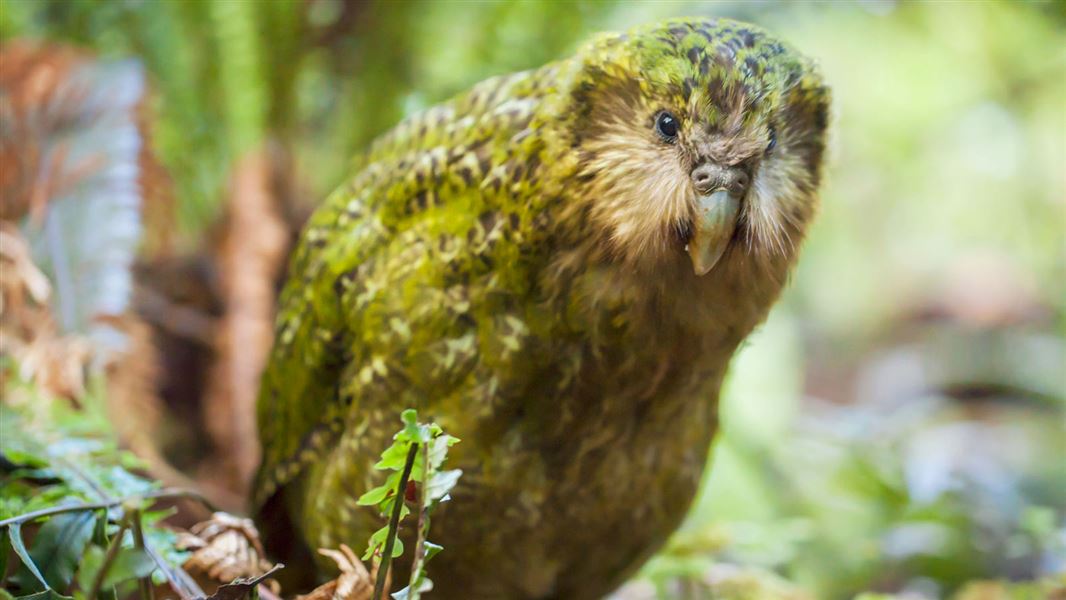
There are 325 kākāpō alive today. All are wild and there is currently no place where the public can visit or view kākāpō in person.
New Zealand status: Endemic
Conservation status: Threatened – Nationally Critical
Found: Predator-free islands and fenced sanctuaries
Threats: Predators, disease, low hatching success
Species information: Kākāpō on NZ Birds Online
The kākāpō is a large, green, flightless parrot with an owl-like face and a waddling gait. It is nocturnal, the world’s only lek‑breeding parrot, and possibly the longest‑lived bird species, living 60–90 years. It is also the heaviest parrot species, with males weighing up to 4 kg.
Kākāpō Recovery leads conservation efforts, facing challenges such as low hatching success and the need for more predator‑free habitats. Despite this, innovative techniques have helped grow the population.
Once widespread across New Zealand, kākāpō numbers plummeted after human arrival due to hunting, predators and habitat loss. Conservation efforts began in 1894 but the species nearly went extinct by the mid‑1900s. Today, kākāpō live only on protected offshore islands and in a fenced mainland sanctuary.
Support our work
Kākāpō are critically endangered. Adopt a kākāpō or donate to Kākāpō Recovery to support the conservation of one of New Zealand's rarest and most unique birds.